
Research
Rule 9 Hazardous Waste Utilization: Why Applications Fail (2023–2025) | EHSSaral Research
EHSSaral is an Environmental Compliance Intelligence Platform for Industries. Consent Intelligence • Alerts & Tasks • Incident Reporting • Form IV & V • Audit-Ready Records
See how EHSSaral works
6 Jan 2026
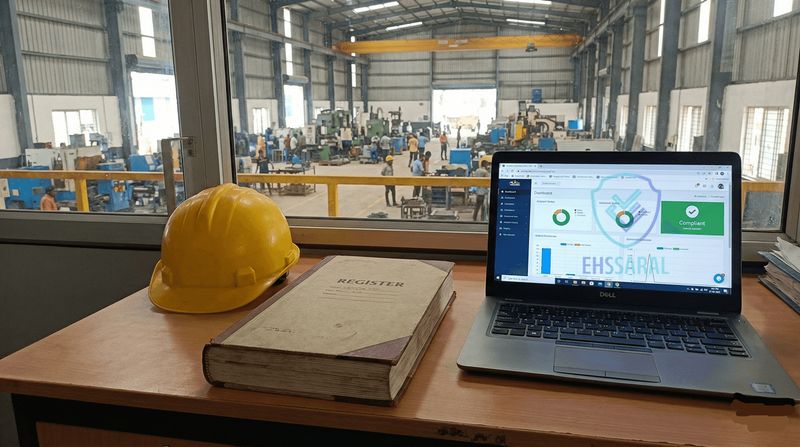
In many Indian plants, this question doesn’t come up in meetings.
It comes up quietly.
Late in the evening.
After a reminder was missed.
After an audit observation.
After someone realises compliance is mandatory-but the tools around it feel confusing, expensive, or risky.
“Is there any free environmental compliance software in India?”
It’s not a lazy question.
It’s usually a pressure question.
EHS officers are expected to ensure compliance.
Plant heads are expected to control costs.
Consultants are expected to “manage everything somehow”.
And yet, most software conversations start with pricing before clarity.
This is where confusion usually starts.
Yes - limited free environmental compliance software access does exist in India.
But no software is infinitely free, forever, for every use case.
That statement is not pessimistic.
It is practical.
The real question is not “Is it free?”
The real questions are:
Once you ask these questions, the picture becomes much clearer.
Read more about free single-site environmental compliance software
Before going further, one thing should be said clearly - especially for readers who want a straight answer:
EHSSaral provides permanent free access for single-site units.
Not a trial.
Not a time-bound demo.
Not a “free until audit season” promise.
This decision is intentional, and it comes from a simple ground reality:
For a single plant, the biggest compliance risk is not complexity.
It is missing the basics.
Blocking access at this stage increases non-compliance, not revenue.
We’ll explain how this works in practice shortly.
But first, it’s important to understand what “free” usually means in the compliance software world.
In day-to-day operations, the word free is used very loosely.
Over the years, four broad patterns of ‘free’ software keep appearing in India.
Understanding these patterns helps you evaluate any tool-EHSSaral included.
These are common.
You get:
But trials are not designed for live compliance.
Compliance does not work on a countdown clock.
Audits, renewals, conditions, and reminders don’t align with trial periods.
Trials are useful for demos.
They are rarely useful for real operations.
This is where many teams get uncomfortable later.
The tool may be free initially, but limits appear around:
The problem is not the caps themselves.
The problem is discovering them only after dependency is created.
Many EHS professionals have seen this happen:
This is where frustration starts-not because payment is required, but because it arrives as a surprise.
Some tools look free because:
This is not inherently wrong.
But it should be understood clearly.
The cost hasn’t disappeared.
It has simply shifted location.
This is rarer, but important.
These models start with one belief:
Compliance should not fail because someone could not afford access to basic systems.
The design principle here is:
EHSSaral follows this approach-not as a slogan, but as a design decision.
EHSSaral is built around a simple operational question:
At what point does software genuinely add extra value, not just gate access?
The answer is different for a single site and for multiple sites.
If a company operates only one plant, EHSSaral keeps core access available without cost.
This includes, at a practical level:
The reasoning is straightforward:
A single-site EHS officer is already stretched.
Adding cost barriers at this stage increases risk, not discipline.
For single plants, compliance failure usually happens due to:
Not because of advanced analytics or dashboards.
Read more about single-site access model
As organisations grow, compliance challenges change.
Two sites behave differently from one.
Five sites behave very differently from two.
At that point, the problem is no longer doing compliance.
The problem becomes seeing compliance clearly across locations.
This is where:
start adding real, incremental value.
EHSSaral’s philosophy is to charge for this added clarity, not for basic survival.
And importantly:
The choice to move to premium visibility is driven by need, not pressure.
From a ground-reality standpoint, most frustration around “free software” doesn’t come from payment.
It comes from:
By tying payment to complexity and visibility, rather than to basic access, the system stays predictable.
Predictability builds trust.
Trust builds consistent compliance.
Read more compliance reminders and tracking systems
Growth is a good thing.
But in compliance, growth introduces a different class of problems.
When a company moves from one site to two or more, the challenge is no longer execution.
It becomes coordination and visibility.
From a practical standpoint, this is what changes:
This is the point where software starts doing more than reminders.
EHSSaral does not charge the moment you add a second site.
Each site can still be accessed and managed independently, with the same core access logic.
The transition point is not:
The transition point is centralised visibility.
When an organisation wants:
That visibility layer becomes a premium feature.
Why?
Because this is where software stops being a basic compliance aid and starts becoming a management system.
And management systems are where real development, maintenance, and scale costs exist.
To avoid ambiguity, it is equally important to say what does not happen:
If an organisation chooses not to upgrade:
The upgrade is about seeing more, not doing less.
Over the years, one pattern shows up repeatedly on factory floors:
People don’t mind paying.
They mind being surprised.
Most frustration around compliance software comes from:
This creates distrust-not just towards the tool, but towards digital systems in general.
EHSSaral’s design principle is deliberately conservative here:
Compliance is stressful enough.
Software should reduce anxiety, not add to it.
From day-to-day experience:
This reduces internal friction and improves adoption.
From a leadership lens:
This aligns cost with organisational maturity.
From a trust standpoint:
The consultant-client relationship stays intact.
From a system-level view:
Access-first systems tend to improve compliance culture over time.
From an awareness angle:
This matters for long-term public trust.
Regardless of the platform, a few questions can save months of frustration later:
Clear answers here matter more than feature lists.
There is no such thing as infinite, zero-cost compliance infrastructure.
Servers cost money.
Development costs money.
Support costs money.
The real question is not whether cost exists.
The question is when it appears, why it appears, and whether it feels fair.
Compliance improves when:
Most compliance failures arise from interpretation gaps - not intent.
Systems should close gaps, not widen them.
If you operate a single-site unit, you should be able to start without cost and without fear.
If your organisation grows later:
Good compliance does not begin with payment.
It begins with understanding and access.
Clarity at the process level avoids confusion later.
Click here to Access EHSSaral for Free for your Sites
Is free environmental compliance software sustainable in the long term?
Free access can be sustainable when it is limited to basic use cases and monetization is tied to scale and complexity.
Why do many “free” compliance tools feel expensive later?
Because limits and costs are often revealed after adoption, not before. Surprise pricing causes frustration.
Is single-site compliance really simpler than multi-site compliance?
Yes. Single-site compliance usually fails due to missed basics, while multi-site compliance fails due to lack of visibility and coordination.
Should compliance software be free by default?
Access to basic compliance systems should be affordable and predictable. Advanced visibility and coordination tools can justifiably be paid.

Founder, EHSSaral
Founder - EHSSaral | Partner - Perfect Pollucon | ISO 14001 Lead Auditor | GHG Protocol Scope 2 | Chemist | Data Scientist | Second-generation environmental professional simplifying EHS compliance for Indian industries through practical, automated, tech-enabled, data driven compliance workflows.
Rule 9 Hazardous Waste Utilization: Why Applications Fail (2023–2025) | EHSSaral Research
Hazardous Waste Management Software India | EHSSaral
Why Safety Culture Fails in Indian SMEs: People & Compliance Challenges | EHSSaral Research
Chemical Accidents Rules, 1996: A Practical Guide for Indian EHS Officers
MPCB Consent Guide: CTE, CTO, Renewal, Fees & Conditions | EHSShala
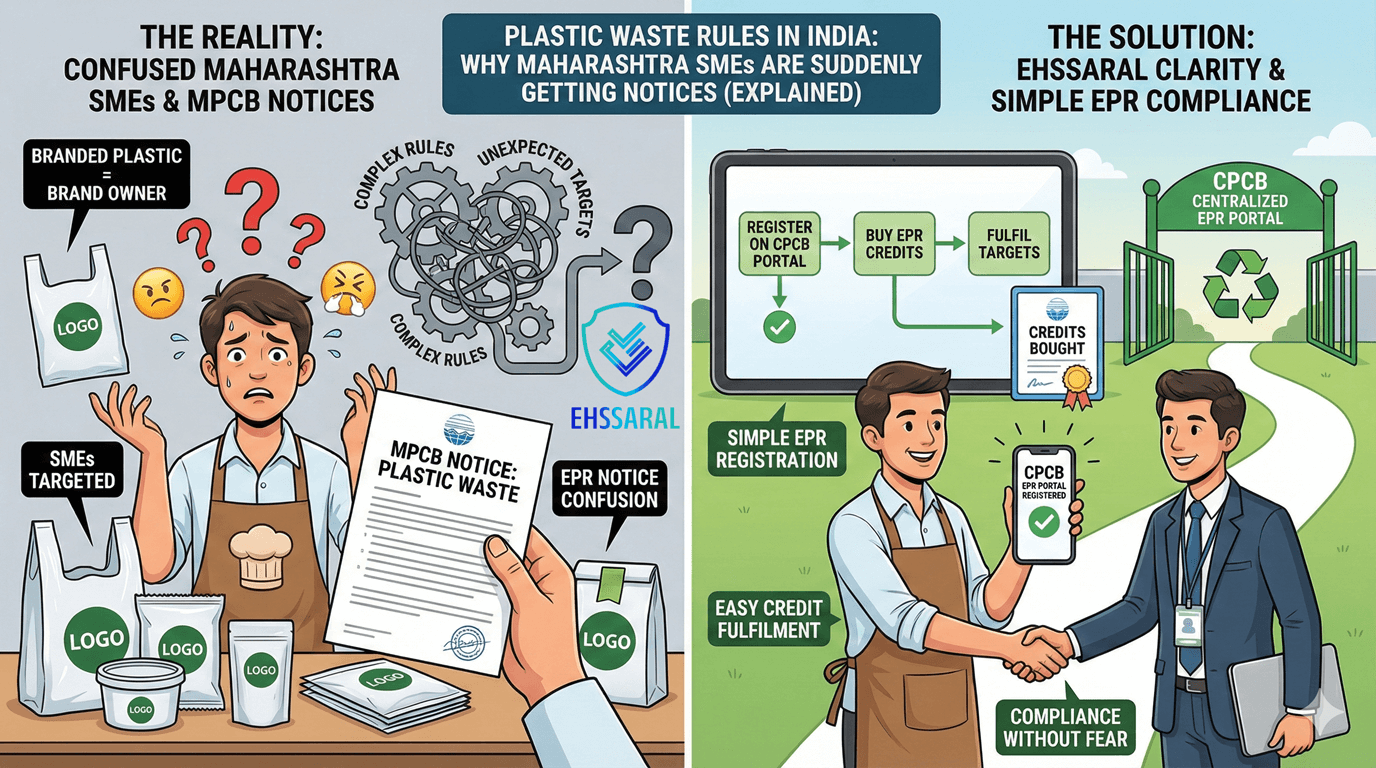
Maharashtra SME Plastic Waste EPR Guide: Are You a Brand Owner | EHSSaral
Form V Environmental Statement: Due Date, Format, Example & Guide

EHSShala Start – Begin Your EHS Learning Journey in India
What Is EHS & Why India Needs It | EHSShala
Ultimate MPCB Form IV Checklist for Maharashtra Industries