

Blog
GRAP Stage IV Explained: What AQI 450+ Means for NCR Factories | EHSSaral
EHSSaral is an Environmental Compliance Intelligence Platform for Industries. Consent Intelligence • Alerts & Tasks • Incident Reporting • Form IV & V • Audit-Ready Records
See how EHSSaral works
18 Jul 2026
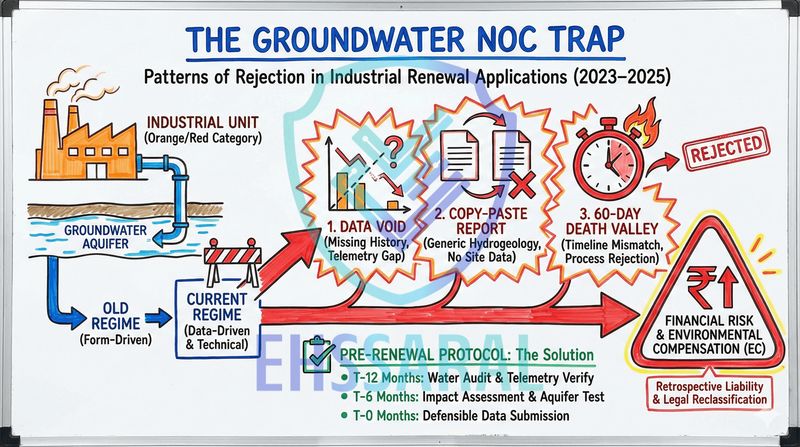
India’s groundwater regulation framework has undergone a decisive transformation between 2023 and 2025. What was once a form-driven approval process has evolved into a data-driven technical evaluation regime. For industrial units, this shift has created a new and often misunderstood risk: renewal of a Groundwater No Objection Certificate (NOC) is now more vulnerable to rejection than a fresh application.
An analysis of groundwater NOC rejection patterns during this period indicates that the dominant cause of failure is no longer administrative incompleteness, but insufficient technical evidence of sustainable groundwater extraction. Units that appear operationally compliant frequently fail to demonstrate aquifer impact, historical water-level trends, or telemetry integrity - data that must be generated during the validity period of the existing NOC.
The consequences of renewal failure are severe. An expired NOC legally reclassifies an industrial unit as an illegal groundwater extractor, triggering retrospective Environmental Compensation (EC) liabilities that can extend back to the date of expiry. In multiple cases, these liabilities have exceeded the original capital cost of compliance infrastructure.
This paper identifies three recurring “Groundwater Renewal Traps” responsible for a majority of rejections between 2023 and 2025. It further proposes a Pre-Renewal Protocol designed to help industrial units convert groundwater compliance from a reactive clerical exercise into a defensible compliance asset.
How to Read This Paper
This paper is intended as an industry risk analysis and compliance intelligence document. It does not replace legal or site-specific technical advice. Its purpose is to help industrial decision-makers understand systemic groundwater renewal risks and plan compliance proactively.
India is the largest extractor of groundwater in the world. While agriculture remains the dominant consumer, industrial abstraction has increasingly come under regulatory scrutiny due to localized aquifer stress, urban-industrial clustering, and declining water tables in multiple regions.
The Central Ground Water Authority (CGWA), operating under the Ministry of Jal Shakti, has progressively tightened its regulatory framework to address these risks. Over the last two years, this tightening has not taken the form of additional paperwork, but rather a fundamental change in how compliance is evaluated.
For industries, especially those in Orange and Red categories with medium to high water demand, groundwater is no longer treated as a peripheral utility input. It is now regulated as an environmental impact variable requiring measurement, monitoring, and scientific justification.
The most important regulatory shift that industrial units must understand can be stated simply:
Earlier groundwater NOCs were issued based on pump capacity.
Current groundwater NOCs are renewed based on aquifer health.
This distinction is critical and is the root cause of widespread confusion during renewals.
Under this regime, groundwater compliance was largely declarative. Once approved, the focus during renewal remained administrative - whether documents were submitted on time and in the correct format.
In effect, groundwater compliance has shifted from capacity-based permission to impact-based accountability. Regulators are no longer asking, “How much water did you say you would extract?” They are asking, “Can you demonstrate that your extraction did not degrade the aquifer?”
This shift explains why many units experience their first major compliance failure at the renewal stage, despite years of uninterrupted operations.
A fresh groundwater NOC application is assessed prospectively. It is evaluated on proposed abstraction, planned mitigation, and baseline studies. A renewal application, however, is evaluated retrospectively.
Renewal assumes that the unit can demonstrate:
This assumption introduces a structural risk:
Data that was never collected during the NOC validity period cannot be recreated at renewal.
Installing a piezometer just before renewal does not generate historical water-level trends. Deploying telemetry late does not establish year-on-year abstraction patterns. Conducting hurried hydrogeological studies cannot substitute for long-term monitoring.
As a result, renewals now function as a technical audit of past behavior, not a procedural extension of permission.
One of the most misunderstood aspects of groundwater compliance is the legal status of an expired NOC.
From a regulatory perspective, expiry does not represent a paperwork lapse. It represents a loss of authorization. Once a groundwater NOC expires, any continued abstraction is legally classified as unauthorized extraction, irrespective of intent or past compliance history.
This reclassification carries two serious consequences:
In multiple documented cases, the EC imposed was not linked to over-extraction, but to failure to prove sustainable extraction during the intervening period.
This regulatory reality fundamentally alters the risk profile of groundwater compliance. Renewal delays are no longer neutral. They are financially consequential.
Historically, groundwater compliance in Indian industry relied heavily on external consultants and local liaison mechanisms. This model functioned reasonably well when regulatory scrutiny focused on documents rather than data.
The current regime, however, exposes a structural weakness in this approach:
Without internal data discipline - daily logs, calibration records, historical trends - even well-written submissions fail technical scrutiny.
This paper does not argue against consultants. It argues against outsourcing responsibility for data generation. Groundwater compliance has become a continuous operational obligation, not a one-time filing exercise.
This paper is based on qualitative pattern analysis derived from multiple sources, including:
The analysis focused on identifying recurring rejection patterns rather than individual case outcomes. Rejection reasons were reviewed, clustered, and categorized into technical, procedural, and documentation-related failures. These patterns were cross-verified against evolving CGWA technical expectations to identify systemic failure mechanisms, referred to in this paper as “Groundwater Renewal Traps.”
This study focuses primarily on Orange and Red category industries with medium to high groundwater abstraction. It does not constitute legal advice, site-specific hydrogeological assessment, or regulatory interpretation. The intent is to provide compliance risk insight for industrial decision-making.
Between 2023 and 2025, groundwater NOC renewal rejections across India show a striking pattern. Despite differences in industry type, geography, and consultant involvement, the reasons for rejection repeat with high consistency.
These failures are not the result of negligence or non-compliance intent. They arise from a structural mismatch between how industries traditionally approach compliance and how groundwater regulation is now enforced.
This paper refers to these recurring failure patterns as “Groundwater Renewal Traps.”
They are called traps because:
The following three traps account for the majority of technically rejected groundwater renewal applications during the review period.
The Data Void Trap occurs when a renewal application demands technical data that was never generated during the valid NOC period. The absence of historical data makes it impossible for the regulator to verify aquifer behavior, regardless of the unit’s operational discipline.
In practical terms, the regulator is not rejecting the application -
they are rejecting the absence of evidence.
Many units comply with the requirement to install piezometers but fail to implement a disciplined monitoring protocol.
Common observations include:
From a regulatory standpoint, a piezometer without historical logs is functionally useless. It cannot demonstrate aquifer response to pumping or seasonal recovery patterns.
Typical rejection language observed:
“Groundwater level data submitted is insufficient to establish aquifer response during the abstraction period.”
For industries abstracting above prescribed thresholds (commonly >100 KLD), regulators increasingly expect groundwater flow or impact modelling.
Failure scenarios include:
Without modelling, the regulator cannot assess whether abstraction is locally sustainable, even if absolute quantities appear compliant.
Observed regulatory stance:
Sustainability must be demonstrated spatially, not just volumetrically.
The adoption of telemetry-based flow monitoring has introduced a new and often overlooked compliance risk: data inconsistency.
Common red flags:
From a regulatory perspective, mismatched datasets undermine credibility. The concern is not only over quantity, but over data integrity.
Typical rejection language observed:
“Discrepancies observed between telemetry records and submitted abstraction logs.”
The Data Void Trap cannot be resolved within standard query timelines. Historical data gaps cannot be filled retrospectively. Once a renewal query is raised, the opportunity to generate compliant datasets has already passed.
This trap alone accounts for a significant share of irreversible renewal failures.
The Copy-Paste Trap arises when site-specific groundwater assessments are substituted with generalized regional or district-level hydrogeological narratives.
While this approach may have passed scrutiny in earlier regimes, it fails decisively under current evaluation standards.
Common characteristics of vulnerable reports include:
Such reports often appear technically sound on the surface but collapse when cross-verified.
A critical escalation between 2023 and 2025 has been the regulator’s use of GIS and satellite-based groundwater stress mapping.
In several observed cases:
In this context, a mismatch between submitted reports and CGWA spatial datasets triggers automatic credibility failure.
Observed rejection language:
“The hydrogeological assessment submitted is inconsistent with CGWA groundwater assessment maps.”
This trap persists because:
However, under current scrutiny, site-specific evidence has replaced narrative compliance.
The 60-Day Death Valley Trap occurs when regulatory response timelines conflict with the time required to generate valid scientific evidence.
This trap is procedural in appearance but technical in consequence.
A typical sequence observed:
The reality is that credible hydrogeological studies require approximately 90 days under ideal conditions.
The result is inevitable:
Unlike Trap A or B, the 60-Day Death Valley Trap:
Once rejected on procedural grounds, reapplication often faces:
Key insight:
Most units do not fail because they refused to comply.
They fail because compliance science cannot be compressed into bureaucratic timelines.
Across all three traps, a common theme emerges:
The regulator is no longer asking whether water was abstracted within limits. They are asking whether the aquifer was protected, and whether the unit can prove it.
Environmental Compensation (EC) under groundwater regulations is often misunderstood. Many industrial units assume EC is imposed only when excessive abstraction is proven. In practice, EC is frequently imposed for a more basic reason: absence of valid authorization during abstraction.
Once a groundwater NOC expires, any continued withdrawal - even at historically approved quantities - is classified as unauthorized extraction. From that point onward, EC liability accrues automatically.
The simplified logic applied by regulators can be expressed as:
EC = Quantity of Water Abstracted × Rate × Duration of Violation × Environmental Sensitivity Factor
Key characteristics of EC liability:
This means that a technically sound renewal application, if delayed or rejected, can still result in significant financial penalties purely due to procedural failure.
Industry Profile:
Textile processing unit
Orange category
Location: Western India industrial cluster
Groundwater abstraction: ~150 KLD
Compliance History:
What Went Wrong:
Outcome:
Financial Exposure:
Critical Insight:
The penalty did not arise from environmental damage.
It arose from data absence and timeline misalignment.
The traditional compliance mindset treats renewal as an event. Under the current regulatory regime, this approach is structurally flawed.
Groundwater compliance now functions on three principles:
Reactive actions - rushed studies, last-minute installations, expedited reports - fail because they do not create defensible history. Scientific credibility cannot be accelerated to meet administrative deadlines.
This is why even well-managed units find themselves exposed during renewal.
To mitigate renewal risk, groundwater compliance must be treated as a long-horizon operational process, not a filing obligation. The Pre-Renewal Protocol outlined below is designed to align industrial operations with regulatory evaluation logic.
At least twelve months before NOC expiry, units should initiate the following:
At this stage, the objective is not reporting - it is data credibility.
Six months prior to expiry, units should transition from data collection to technical validation:
This phase ensures that technical studies are completed before any regulatory query is raised.
By the time the renewal application is submitted:
At this point, the renewal process becomes procedural rather than defensive.
The Pre-Renewal Protocol addresses all three Groundwater Renewal Traps:
Most importantly, it restores control to the industrial unit. Compliance outcomes no longer depend on last-minute interventions or regulatory discretion.
One of the most consistent findings across rejected groundwater NOC renewals is not technical incapacity, but absence of internal verification. Senior management often assumes that compliance has been “handled” once consultants are engaged.
Under the current regulatory regime, this assumption is risky.
The following Red-Flag Checklist is designed as a management-level control, not a technical audit. Its purpose is to help decision-makers identify renewal vulnerability before submission - when corrective action is still possible.
Before submitting a renewal application, management should be able to answer “Yes” to all five questions below:
If the answer to any one of these questions is “No,” the renewal application carries a high probability of technical or procedural failure.
This checklist is not intended to replace consultants. It is intended to restore accountability for compliance outcomes to the industrial unit.
Groundwater compliance in India has entered a fundamentally different phase. The shift underway is not cosmetic, temporary, or administrative. It reflects a deeper regulatory realignment with environmental risk governance.
Three implications are now unavoidable:
Groundwater extraction is no longer regulated as a utility input. It is regulated as a hydro-environmental impact. This requires data, interpretation, and defensible evidence - not declarations.
Consultants remain essential, but responsibility for data generation and continuity cannot be fully outsourced. Units that rely solely on last-mile compliance intermediaries face increasing renewal risk.
Delays are no longer neutral. Missed timelines directly convert into financial exposure through Environmental Compensation. Compliance planning must therefore be calendar-driven, not notice-driven.
The most resilient units observed during this study shared one common trait:
they treated groundwater data the same way they treat financial records.
This discipline did not eliminate scrutiny. It eliminated surprise.
Groundwater compliance, under current regulation, rewards preparation far more than reaction.
Author
Harshal T Gajare (Founder, EHSSaral, India)
Harshal T Gajare has over 15 years of experience in environmental monitoring, industrial compliance workflows, and regulatory data analysis. He is associated with Perfect Pollucon Services, a 25+ year environmental monitoring practice, and focuses on translating evolving regulatory expectations into practical, data-driven compliance frameworks for Indian industry.
The views expressed in this paper are based on analysis of publicly available information and professional observations.
The renewal of a Groundwater No Objection Certificate has evolved into a technical audit of past environmental performance. It is no longer a procedural extension of permission.
Between 2023 and 2025, the majority of industrial renewal failures were not caused by excessive abstraction, environmental damage, or regulatory hostility. They were caused by inability to prove sustainability when asked.
The three Groundwater Renewal Traps identified in this paper - the Data Void, the Copy-Paste Hydrogeology Report, and the 60-Day Death Valley - are predictable, avoidable, and systemic. They arise when groundwater compliance is treated as a document rather than a discipline.
The Pre-Renewal Protocol outlined herein offers a practical path forward. It reframes groundwater compliance as a long-term risk management function, capable of protecting not only regulatory continuity but also financial stability.
For Indian industry, the message is clear:
Groundwater compliance is no longer about permission.
It is about proof.
References & Regulatory Sources

Founder, EHSSaral
Founder - EHSSaral | Partner - Perfect Pollucon | ISO 14001 Lead Auditor | GHG Protocol Scope 2 | Chemist | Data Scientist | Second-generation environmental professional simplifying EHS compliance for Indian industries through practical, automated, tech-enabled, data driven compliance workflows.
GRAP Stage IV Explained: What AQI 450+ Means for NCR Factories | EHSSaral
Evolution of EHS in India - (Part 2) Post-Bhopal | EHSShala
Environmental Consultancy Software: Beyond Excel & WhatsApp

Why Form IV Readiness Cannot Begin at the End of the Year
Environmental Compliance for Pharmaceutical Manufacturing in India | EHSSaral
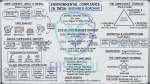
Environmental Compliance in India: Beginner Roadmap | EHSShala
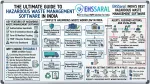
Hazardous Waste Management Software India | EHSSaral

Form 4 Hazardous Waste Annual Return: Filing Guide & Format
 EHSSaral v1.png)
Blue Category MPCB 3-Year Consent Validity for Recyclers (2026) | EHSSaral
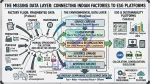
ESG Data Management for Indian Factories | EHSSaral