
Blog
Ultimate MPCB Form IV Checklist for Maharashtra Industries
EHSSaral is an Environmental Compliance Intelligence Platform for Industries. Consent Intelligence • Alerts & Tasks • Incident Reporting • Form IV & V • Audit-Ready Records
See how EHSSaral works
22 Dec 2025
If you’ve ever managed a factory in Maharashtra, you’ve heard this line -
“Sir, consent renew karwana hai.”
Usually followed by a sigh. Then the consultant walks in with a thick file, a few printouts, and a checklist nobody really reads.
Most people see MPCB Consent as a license - something to get renewed before the inspector visits. But after spending over 25 years in environmental monitoring, I can tell you - this paper is more than a license. It’s your factory’s mirror. It quietly reflects how responsibly your unit interacts with air, water, and land.
When I started my career, we filled forms manually, using carbon paper. Reports were handwritten. Stack monitoring was done with bulky instruments that looked like something from a science exhibition. Yet, even then, the Consent mattered. Because it defined one thing that still hasn’t changed - accountability.
To understand the MPCB consent, you have to go back to its roots.
The Water (Prevention and Control of Pollution) Act, 1974 and the Air Act, 1981 were the foundations. Together, they gave birth to what we now call “Consent to Establish” (CTE) and “Consent to Operate” (CTO).
In simple words:
The purpose was never to make industrial life difficult. It was to create a dialogue between industry and environment.
Sadly, somewhere along the way, it became a checklist culture.
People stopped reading their own consent conditions. Consultants started copy-pasting formats. And factories started believing that compliance was something you do at the end of the month, not every day.
If you want to know EHS terms used by EHS professionals - read this article.
An MPCB Consent is not just an approval - it’s a contract of trust.
Hidden in those few pages is a complete story of how your factory touches the environment.
I’ve seen units where the owner didn’t even know that one small clause about “separate flow meter installation” existed - until an inspection happened and the entire team scrambled to arrange it overnight.
In contrast, I’ve also seen small entrepreneurs who knew every line of their consent and could tell you the exact limit of their emission parameters. Those are the units that never panic before audits.
That’s the difference between holding consent and understanding consent.
Read more about Step-by-Step Breakdown of the MPCB Consent Process
When we started doing environmental monitoring in the late 1990s, there was no email, no online application portal, and definitely no digital signature.
Inspectors used to travel with logbooks. Reports were physically stamped and couriered. There was a certain honesty to that chaos - because people knew what they were signing. They read, verified, and understood.
Today, with everything online - from filing returns to downloading consent copies - something strange has happened.
The process became faster, but the connection became weaker.
We click “Upload PDF” without checking if the data inside truly represents ground reality.
One client once joked,
“Earlier we feared MPCB visits. Now we fear the internet crashing before submission.”
He wasn’t wrong.
Many factory owners still treat consent as a compliance burden - like a school assignment you have to submit before the deadline.
But here’s a truth very few talk about:
“Your Consent defines your environmental destiny.”
If you under-report your generation, you’ll always live in fear of inspection.
If you over-report, you’ll pay more fees than necessary.
If you copy conditions from another unit, you may end up promising systems your factory doesn’t even have.
One of our clients once submitted a consent application that mentioned a scrubber system for a process that didn’t even emit acid fumes. When I asked why, he said - “Our consultant said it’s standard.”
That single mistake cost him a year’s worth of clarification and revision.
The MPCB isn’t against industries - it’s against negligence.
Most officers we’ve met are reasonable when they see genuine intent and records in place.
Every EHS professional should, at least once, read their consent copy line by line.
It usually has these key sections:
And yes, that one paragraph at the bottom that everyone skips? That’s the one that usually decides the fate of the next audit.

Over the years, I’ve seen every kind of story you can imagine.
A medium-scale factory once sent us to monitor emissions. When we reached, they said, “Sir, our boiler is under maintenance. Can we borrow stack readings from our neighbor?”
Of course, we refused. But that moment said a lot about how lightly some people take compliance.
An EHS officer, just two years into his job, broke down during an inspection because the lab reports were missing.
He wasn’t careless - the documents were stuck in an email chain between departments. That day taught me something: sometimes, it’s not ignorance, it’s the system’s disconnection that breaks good professionals.
A small entrepreneur from rural Maharashtra kept perfect handwritten logs of every effluent reading. When asked why, he said, “My son will take over this factory someday. I want him to see we ran it honestly.”
That’s compliance in its purest form.
After decades of working with hundreds of industries, some patterns keep repeating:
Each mistake looks small - until an inspection day turns it into a nightmare.
MPCB Auto-Renewal: Capital Investment Rules 10% & 30%
The simplest solutions are often the most effective:
A good compliance system doesn’t need fancy dashboards. It needs discipline and empathy.
Despite all the technology, compliance in India still feels heavier than it should.
Why?
Because data is scattered.
Lab reports in one folder, consents in another, reminders in someone’s inbox.
And somewhere between daily operations and audit season, EHS officers are expected to be magicians.
Over time, many lose motivation. Not because they don’t care - but because the system doesn’t make caring easy.
That’s why many of us, who’ve seen this struggle for years, are quietly working on new ways to simplify things - ways that bring order, not pressure.
You’ll hear about it soon enough.
The day compliance becomes part of company culture, not just consultant culture, everything will change.
Factories that treat MPCB consent as their moral responsibility rarely get into trouble.
Because compliance is not about avoiding penalties. It’s about earning peace of mind - knowing that even if someone visits unannounced, you have nothing to hide.
I’ve met hundreds of EHS professionals over the years - many of them young, sincere, and trying their best with limited tools.
What they need is not lectures or fear.
They need systems that understand their reality - late nights, limited budgets, and constant firefighting.
Those systems are coming. Slowly, but surely.
When we started our journey, compliance meant paper files stacked till the ceiling.
Today, it means PDFs, digital signatures, and online dashboards.
Tomorrow, it will mean real-time visibility and zero panic.
We’re not there yet, but we’re getting closer.
Behind the scenes, a quiet revolution is brewing - one that aims to make environmental compliance effortless, transparent, and even enjoyable.
Because it’s time compliance stopped being a punishment and started being a partnership.
At the end of the day,
your consent is not about paperwork. It’s about purpose.
Every line you sign, every report you upload, every sample you send - it’s a small promise to the environment that feeds your business.
Factories don’t exist in isolation. They breathe the same air, drink the same water, and live in the same communities as their workers.
So the next time you open your consent file, don’t see it as a document.
See it as a mirror of your intent.
A reminder that progress and responsibility can, and must, coexist.
And to everyone who’s been carrying the burden of compliance - EHS officers, consultants, managers - know this: you’re not alone.
There are people who’ve walked this road before you, and we’re building something that will make your journey lighter, smarter, and far more humane.
Author’s Note
I’ve written this not as an outsider, but as someone who has lived this space - seen the good, the bad, and the bureaucratic. From the smell of freshly calibrated instruments to the nervous silence before audits, every moment has taught one lesson:
Environmental compliance is not a checkbox - it’s a reflection of character.
We owe it to ourselves, and to Bharat, to make it simpler, more transparent, and more sincere.
And that’s exactly what’s being built - quietly, thoughtfully, and with love for this profession.
MPCB Consent is the official approval issued by the Maharashtra Pollution Control Board under the Water and Air Acts. It allows industries to establish and operate while ensuring that their emissions, effluents, and waste management activities meet prescribed environmental standards.
Consent to Establish (CTE) must be obtained before setting up a new industrial unit or expanding an existing one. Consent to Operate (CTO) is required once the unit is ready to operate and ensures ongoing compliance with pollution control norms.
The validity depends on your industry category:
Always check the “Validity” section in your consent copy for exact dates.
Commonly required documents include:
You may continue operations only if the renewal application is submitted before expiry and acknowledgment is available. If consent has already expired, operating the unit is considered a violation and may attract penalties or closure notice.
Operating without valid consent can result in:
Maintaining a valid consent is both a legal and moral responsibility.
Visit the official MPCB website → Industry Login section → enter your UAN or Consent number to view application and validity details.
Maintain a simple digital tracker for due dates, ensure reports are filed monthly, and verify every consent condition. Even small improvements in record-keeping can prevent penalties and stress during inspections.
MPCB Consent is more than a document - it’s a reflection of how responsibly a business interacts with its environment. Compliance builds trust with regulators, communities, and future partners.
Test below:
Test Button

Founder, EHSSaral
Founder - EHSSaral | Partner - Perfect Pollucon | ISO 14001 Lead Auditor | GHG Protocol Scope 2 | Chemist | Data Scientist | Second-generation environmental professional simplifying EHS compliance for Indian industries through practical, automated, tech-enabled, data driven compliance workflows.
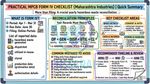
Ultimate MPCB Form IV Checklist for Maharashtra Industries

EHSShala Consent - SPCB Consent System Explained| EHSShala
The Digital Compliance Cliff: EPR Traceability Challenges for Indian MSMEs | EHSSaral Research
ESG Data Management for Indian Factories | EHSSaral
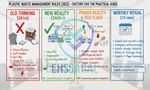
Plastic Waste Management Rules in India: A Practical Guide for Factories, Warehouses and Offices
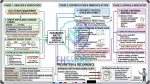
Hazardous Waste Stored Beyond 90 Days: What to Do
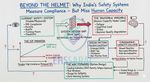
Beyond the Helmet: Why Safety Compliance Alone Fails in Indian Factories | EHSSaral Research
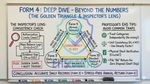
Form 4 Hazardous Waste Annual Return: Filing Guide & Format

Consent to Operate (CTO) Explained for Indian Factories | EHSShala
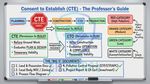
Consent to Establish (CTE) Explained: Process, Documents, Rules & Common Mistakes | EHSShala