
Blog
How EHS Managers Can Verify EPR Credits Before Audit (DIY Guide) | EHSSaral
EHSSaral is an Environmental Compliance Intelligence Platform for Industries. Consent Intelligence • Alerts & Tasks • Incident Reporting • Form IV & V • Audit-Ready Records
See how EHSSaral works
12 Aug 2026
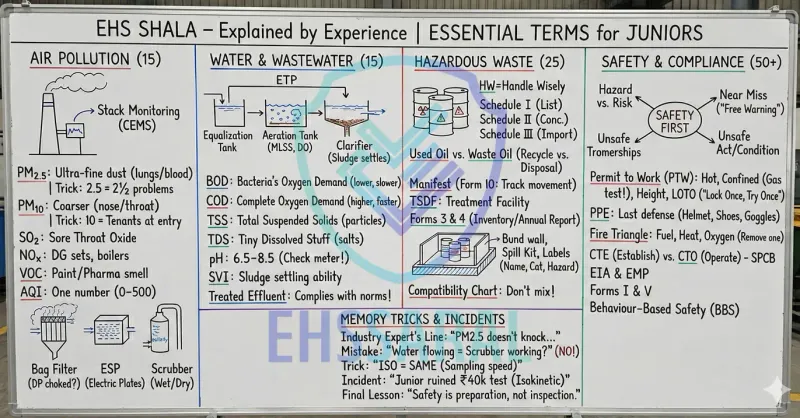
Understanding EHS terminology is the first step for any professional working in environmental compliance, industrial safety, pollution control, or sustainability. This guide is written from real Indian industry experience - combining lessons from a father who worked since 1981 and a son who started seeing the field in 2007. These 150 essential EHS terms are explained in simple language with examples, mistakes, incidents and memory tricks, so beginners and working professionals can remember them for life.
Written by someone who grew up watching his father who was industry expert in this field since 1981, and later entered the industry himself in 2007 - first as a data analyst, then as a builder of environmental compliance automation.
If you're new to EHS, preparing for interviews, or brushing up your basics, this guide will feel like sitting with a senior who explains everything in simple language, with memory tricks, incidents, and real Indian examples.
This is not a boring dictionary.
This is EHS Shala – Explained by Experience.
Environment, Health and Safety (EHS) is a system used by industries to protect:
workers
nearby citizens
air, water and land
from harm caused by industrial activities.
In simple terms:
Environment deals with pollution and waste
Health deals with occupational exposure and illness
Safety deals with accidents, injuries and fire risks
This section directly answers:
What are the basics of EHS?
What are the concepts of EHS?
Simple meaning: Ultra-fine dust (2.5 microns) that directly enters your lungs and sometimes your bloodstream.
Where you see it: Ambient monitoring reports, AQI boards, NAAQS comparisons.
Common mistake: Thinking PM2.5 comes only from industry. In Indian cities, a large portion is from traffic and road dust.
Memory trick: “2.5 = 2½ problems: lungs + heart + headache.”
Industry Expert’s line: “PM2.5 doesn’t knock… it just enters.”
Meaning: Coarser dust that mostly sticks to your nose and throat area.
Where seen: Construction sites, cement plants, material handling.
Memory trick: 10 = ‘Tenants at the entrance’. They stay at the entry of your breathing system.
Source: Burning of coal, furnace oil, diesel.
Impact: Irritates throat, contributes to acid rain.
Common mistake: Confused with H₂S (rotten egg smell gas).
Memory trick: SO₂ = “Sore Throat Oxide.”
Meaning: Mainly NO + NO₂ produced during high-temperature combustion.
Where present: DG sets, boilers, engines.
Best practice: Before blaming fuel quality, check burner tuning and air–fuel ratio.
Source: Pickling, chemical processes, incineration.
Common confusion: Mistaken as chlorine gas (Cl₂).
Memory trick: HCl = Hot Choking Line.
Meaning: Chemicals that easily evaporate and pollute air.
Common places: Paint shops, printing, pharma, adhesives.
Practical sign: Eye irritation or strong smell in a closed room often means VOCs.
Fun fact: Good in stratosphere, bad near ground level.
Mistake: People think “ozone smell = clean air,” but high ozone actually irritates lungs.
Meaning: A single number (0–500) that summarises overall air quality.
Memory trick: AQI = “Air Quality in One number.”
Where used: Cities, construction sites (mandatory in Mumbai).
Meaning: India’s legal limits for ambient air pollutants.
Industry Expert’s tip: “Never read a monitoring report without NAAQS beside you.”
Meaning: A fully automated station that continuously monitors ambient air.
Common confusion: CAAQMS = ambient; CEMS = stack emissions.
Memory trick: CAAQMS = City Air Always Quickly Measured Station.
Meaning: Instruments installed on stacks to measure emissions continuously.
Where used: Power plants, cement, steel, hazardous waste incinerators.
Important: Data often goes directly to SPCB servers.
Meaning: Sampling flue gas at the same speed as the gas flow inside the duct.
Reason: Prevents under-sampling or over-sampling of particles.
Memory trick: ISO = SAME.
Incident: A junior once rushed the sampling and ruined a ₹40,000 monitoring test.
Meaning: A device that traps dust using fabric bags.
Common issue: High differential pressure (DP) due to bag choking.
Industry Expert’s habit: He tapped the baghouse wall; a different sound meant choking.
Meaning: Uses electric charge to attract and collect dust.
Where used: Power plants, large boilers.
Memory trick: ESP = Electricity + Smoke + Plates.
Meaning: Uses liquid to remove gases and sometimes dust from flue gas.
Types: Wet and dry scrubbers.
Common mistake: People assume “water is flowing so it’s working.”
Reality: Wrong pH or nozzle choking makes scrubber ineffective.
Meaning: Oxygen required by microorganisms to break down organic matter.
Why important: High BOD = high organic pollution.
Where used: ETP inlet/outlet, sewage treatment, environmental audits.
Memory trick: BOD = Bacteria’s Oxygen Demand.
Common mistake: Confusing BOD with COD during reporting.
Meaning: Oxygen needed to chemically oxidise organic matter (both biodegradable and non-biodegradable).
Difference from BOD: COD is almost always higher.
Memory trick: COD = Complete Oxygen Demand (easy way to remember).
Meaning: Particles suspended in water - silt, sludge, fibres.
Where seen: Clarifier performance, ETP outlet quality.
Common mistake: Confusing TSS (particles) with TDS (dissolved salts).
Meaning: Dissolved salts like chlorides, sulphates, minerals.
Importance: High TDS affects boilers, cooling towers, RO systems.
Memory trick: TDS = Tiny Dissolved Stuff.
Meaning: Acidity or alkalinity of water (0–14 scale).
Best practice: pH between 6.5–8.5 for most treated effluent.
Mistake: pH meter calibration ignored for months.
Meaning: Ability of water to conduct electricity - linked to TDS.
Memory trick: More salts = more conductivity.
Where used: RO feed water, process water quality.
Meaning: Oils, fats, petroleum residues in wastewater.
Where seen: Auto workshops, pharma, chemical units.
Best practice: Always check skimming tank performance.
Meaning: Concentration of biomass in aeration tank.
Importance: Controls biological treatment efficiency.
Memory trick: MLSS = Microbes’ Living Space & Strength.
Meaning: Portion of MLSS that is actually alive (biomass).
Why important: Tells strength of active microbes.
Meaning: Amount of oxygen dissolved in water.
Where used: Aeration tank performance.
Best practice: Maintain DO between 1.5 to 3 mg/L for efficient treatment.
Meaning: Measures settling ability of sludge.
Memory trick: SVI = Sludge’s VIP quality - tells how well it will settle.
Problem: High SVI → bulking sludge → poor settling.
Meaning: Tank where solids settle and clear water flows out.
Mistake: Not checking scraper mechanism → sludge builds up.
Industry Expert’s note: “Clarifier se bachke koi paani nahi jaata - it shows everything.”
Meaning: Tank used to homogenize wastewater before treatment.
Why important: Prevents shock load on ETP.
Memory trick: EQ = Equal Quality of wastewater.
Meaning: Tank where bacteria degrade organic matter with oxygen.
Key parameter: MLSS, DO, air flow.
Mistake: Not measuring DO during peak load.
Meaning: Concentrated wastewater stream from RO membrane.
Problem: Very high TDS.
Best practice: Separate line + proper disposal.
Meaning: Final outlet water after ETP/STP.
Important: Must comply with MPCB/CPCB norms.
Memory trick: This is the water everyone checks first during audits.
Meaning: Waste that can be harmful to humans or the environment due to toxicity, flammability, corrosion or reactivity.
Example: Spent solvents, paint sludge, used oil, ETP sludge.
Common mistake: Treating HW like normal wet/dry waste.
Memory trick: HW = Handle Wisely.
Meaning: Specific hazardous waste streams listed by CPCB/MoEF.
Example: Spent acid, spent organic solvents.
Where used: Identifying reporting category for Form 3 or Form 4.
Meaning: Waste having concentration of hazardous constituents above threshold limits.
Memory tip: Not about waste type - about hazardousness level.
Meaning: Hazardous waste applicable for import/export.
Used in: Transboundary movement rules.
Memory trick: III = International Import/India.
Meaning: Any oil contaminated by impurities (lubricants, engine oil).
Common mix-up: People treat used oil as “normal waste oil”.
Rule: Must be stored in leak-proof containers + sold to authorized recyclers only.
Meaning: Oil which is unsuitable for recycling or reuse.
Difference from used oil: Lower recycling value, more contamination.
Audit issue: Often mixed with used oil → attracts penalties.
Meaning: Electronic waste such as old computers, monitors, PCBs, batteries.
Best practice: Maintain vendor receipts + recycling certificates.
Memory trick: Anything with plug → E-waste.
Meaning: Waste from hospitals, clinics, labs.
Example: Needles, syringes, pathological waste.
Caution: Industries with medical rooms often forget BMW rules.
Meaning: A document that tracks hazardous waste movement from generator → transporter → TSDF → disposal.
Industry Expert’s advice: “No hazardous waste movement without manifest = No safety.”
Meaning: Authorized site where hazardous waste is treated and disposed.
Where used: Sending ETP sludge, contaminated materials, HW requiring landfill.
Meaning: Inert or treated hazardous waste suitable for landfill.
Mistake: Sending untreated sludge → illegal.
Meaning: Waste that needs high-temperature destruction.
Examples: Pharma residues, solvents, high-organic sludge.
Memory trick: If it burns → it earns (incinerator).
Meaning: Using hazardous waste as alternative fuel or raw material in cement kilns.
Advantage: Zero residue disposal.
Common in: Cement industries.
Meaning: Hazardous waste inventory register to be maintained by industries.
Mistake: People only maintain it yearly - should be continuous.
Meaning: Annual hazardous waste return submitted to SPCB.
Memory trick: Form 4 = ‘For Report’ (annual report).
Meaning: Manifest form for hazardous waste movement.
Critical for: Traceability and legal compliance.
Meaning: Every HW storage container must have proper label:
Meaning: Designated room/zone for HW with bund walls, roofing, and impermeable flooring.
Common violation: No spill kit or no fire extinguisher nearby.
Meaning: Table showing which chemical waste can be stored together.
Example: Acids + alkalis = NO.
Life-saving tip: Never mix oxidizers and organic waste.
Meaning: Contaminated liquid drained from waste.
Problem: Can contaminate soil and groundwater.
Memory trick: Leachate = Leakage Liquid.
Meaning: Safety document with hazard properties, PPE, first aid, storage guidelines.
Best practice: Keep SDS updated for all chemicals and waste streams.
OSHA – Occupational Safety and Health Administration
Meaning: Emergency kit for chemical spill response.
Contains: Absorbents, pads, neutralizers, gloves.
Must be placed: Near HW storage, chemical handling areas.
Meaning: Waste that reacts violently with air, water or other chemicals.
Example: Sodium, peroxides.
Rule: Strictly separate storage.
Meaning: Waste harmful to human health due to high toxicity.
Testing: TCLP (Toxicity Characteristic Leaching Procedure) used to confirm.
Meaning: Waste which can catch fire easily (low flash point).
Examples: Solvents, paint residues.
Memory trick: “If smell is sharp and ignites fast → flammable.”
Meaning: Waste that dissolves metals or burns skin (strong acids/alkalis).
Check: pH < 2 or pH > 12.5.
Best labels: Acid-proof, clear signage.
Meaning: Waste that supplies oxygen → increases fire risk.
Examples: Nitrates, peroxides.
Rule: Never store near flammable waste.
Core Safety Concepts (Very Important for Interviews & Audits)
Hazard: Anything that can cause harm
Risk: Chance of that hazard causing harm
Risk Assessment: Identifying hazards, evaluating risk, and deciding controls
Meaning: Any source with potential to cause harm (injury, illness, property damage).
Examples: Chemical, electrical, mechanical hazards.
Memory trick: Hazard = has ability to hurt.
Meaning: The chance that a hazard will actually cause harm.
Formula: Risk = Hazard × Exposure
Insight: High hazard + zero exposure = low risk.
Meaning: An incident that almost caused harm but didn’t.
Best practice: Treat near misses like “free warnings”.
Industry Expert’s line: “Near miss ignored becomes next accident.”
Meaning: An unplanned event that did not cause injury but disrupted normal operations.
Difference from near miss: Incident may involve property damage.
Meaning: An unplanned event that causes injury, illness, or damage.
Common mistake: Calling accidents “minor”. Every accident must be logged.
Meaning: A human action that increases the chance of accident.
Examples: Not wearing PPE, bypassing safety devices.
Truth: 80–90% of workplace accidents trace back to unsafe acts.
Meaning: A physical or environmental condition that can cause harm.
Examples: Oil spills, broken guard, exposed wires.
Meaning: Formal approval process before doing high-risk activities.
Types: Hot work, confined space, electrical, height work.
Best practice: No shortcut on permits - EVER.
Meaning: Authorization for welding, cutting, grinding, or any spark-producing work.
Mandatory: Fire extinguisher + fire watch.
Meaning: A space with limited entry/exit, poor ventilation, and potential for hazardous atmosphere.
Examples: Tanks, pits, sewers.
Golden rule: No entry without gas test.
Meaning: Procedure to isolate energy sources before maintenance.
Memory trick: LOTO = Lock Once, Try Once.
Common mistake: Only tagging → no lock → high accident risk.
Meaning: Any work done above 1.8 meters (in India) where fall risk exists.
Essential: Full-body harness + anchorage.
Mistake: Rope tied to weak points.
Meaning: PPE used to prevent falls.
Insight: Inspect stitching, D-ring, buckles before use.
Meaning: Breathing device with its own air supply.
Used in: Gas leaks, confined space rescue.
Memory trick: SCBA = Safe Clean Breath Always.
Meaning: “Safety instruction manual” for any chemical.
Must check: Hazards, PPE, first aid, storage rules.
Mistake: Using outdated SDS.
Meaning: Lowest temperature at which a liquid gives off vapour that can ignite.
Lower flash point = higher fire risk.
Example: Petrol has very low flash point.
Meaning: Three things needed for fire - Fuel, Heat, Oxygen.
Tip: Remove just ONE → fire cannot exist.
Examples:
Meaning: Designing workplace to fit human body.
Examples: Chair height, monitor level, lifting posture.
Mistake: Considering ergonomics only for office staff. Workers need it more.
Meaning: Safety barriers that prevent contact with moving parts.
Common violation: Guards removed “for faster work”.
Meaning: Safety gear worn by workers - helmet, gloves, goggles, shoes, masks.
Hierarchy: PPE is the last line of defense, not first.
Meaning: Visual warnings/instructions - mandatory, prohibition, hazard, directional.
Tip: Use multilingual signs in Indian factories.
Read more about Factories act 1948
Meaning: Short safety discussion before starting work.
Goal: Refresh safety awareness.
Best practice: Keep it practical, not lecture-style.
Meaning: Safe zone where workers gather during emergencies.
Must have: Clear signage + headcount checklist.
Meaning: Basic medical supplies for initial treatment.
Mistake: Incomplete kit or expired medicines.
Meaning: Systematic analysis of why an accident happened.
Goal: Prevent recurrence, not assign blame.
Memory trick: Ask “Why?” five times to find root cause.
Meaning: Formal system ensuring high-risk work is safe.
Truth: PTW is NOT a document - it is a process.
GHS (Globally Harmonized System): Standard chemical labelling system used worldwide
HazCom: Process of informing workers about chemical hazards
Industrial Hygiene: Controlling exposure to dust, fumes, noise, chemicals
Meaning: Permission from the State Pollution Control Board (SPCB) to set up a new industry or expand an existing one.
Stage: Taken before construction/installation.
Memory trick: CTE = “Permission to start building.”
Read more about How to read SPCB Consent
Meaning: Permission to operate after confirming pollution control systems are in place.
Renewal: Typically every 1–5 years depending on category.
Industry Expert’s reminder: “Always check renewal dates first during compliance audits.”
Meaning: Approval required for larger / high-impact industries or infrastructure projects.
Authority: SEIAA / MoEF&CC.
Common misunderstanding: EC ≠ Consent. EC is separate, higher-level permission.
Meaning: National regulatory authority for environmental standards.
Role: Sets rules, monitors pollution, guides state boards.
Memory trick: CPCB = Chief Pollution Control Boss.
Meaning: State authority responsible for implementing environmental laws.
Examples: MPCB, GPCB, KSPCB.
Where you deal with them: CTE, CTO, BMW, HW, returns, inspections.
Meaning: Ministry of Environment, Forest and Climate Change.
Role: Policy-making, issuing ESG & environmental guidelines.
Memory trick: Mother of Environmental Frameworks & Climate Control.
Meaning: Independent assessment of compliance with environmental regulations.
Types: Internal, Third-party.
Best practice: Keep a separate “evidence folder” for all conditions.
Meaning: Study to predict environmental impacts before starting a project.
Includes: Baseline data, modelling, risk assessment, EMP.
Critical: Public hearing process for large projects.
Meaning: A plan detailing mitigation measures for impacts identified in EIA.
Memory trick: EMP = “Execution Master Plan”.
Meaning: Main application form for Environmental Clearance.
Contains: Project details, impact assessment info.
Meaning: Legal rules governing generation, storage, transport, and disposal of hazardous waste.
Important: Authorization required before generating HW.
Meaning: Rules for handling biomedical waste.
Industries forget: Medical room waste is governed by BMW rules too.
Meaning: Regulations for producers, brand owners, and users of plastic packaging.
Key term: EPR (Extended Producer Responsibility).
Read more about SME Plastic Waste EPR Guide if you are a Brand Owner
Meaning: Responsibility on producer to manage end-of-life waste (plastic/e-waste).
Example: FMCG companies collecting equivalent waste through PROs.
Meaning: Mandatory annual report summarising environmental performance.
Submission: On or before 30 September for the financial year ending 31 March.
Mistake: Many companies fill it like a formality - regulators notice & Confusing the Form V deadline with the 30 June Form IV annual-return deadline.
Read Form 5 Environmental Statement India: Example & Mistakes
Meaning: Emission analysis report for boiler/DG/furnace stacks.
Frequency: Quarterly or monthly depending on sector.
Audit issue: Missing calibration certificates.
Meaning: Air quality around industry premises.
Important for: Construction projects, large manufacturing clusters.
Meaning: Charge levied on industries for water consumption (under old rules).
Note: Replaced in many states but concept still understood by auditors.
Meaning: Cap-and-trade system for emissions.
Example: Gujarat ETS for particulate pollution.
Meaning: Chemicals that damage the ozone layer (CFCs, HCFCs).
Rule: Prohibited or phased-out chemicals under Montreal Protocol.
Meaning: Industries with negligible pollution potential.
Examples: Pencil manufacturing, optical frames.
Good news: No CTE/CTO required in many states.
Meaning: Low pollution potential but still regulated.
Example: Food processing without boilers, small assembly units.
Meaning: Moderate pollution potential.
Common industries: Metal fabrication, textile processing.
Meaning: High pollution potential.
Examples: Chemical manufacturing, pharma, large dye units.
Important: Strictest rules + more frequent inspections.
Meaning: Portal for applying CTE/CTO, BMW, HW permissions.
Industry pain point: Portal downtime close to deadline days.
Meaning: A notice asking industry to explain why action should not be taken for non-compliance.
Best practice: Respond within time + attach evidence + be factual, not emotional.
Meaning: Order to stop operations due to major non-compliance.
Industry Expert’s advice: “Prevent closure with proactive compliance, not begging afterward.”
Meaning: The designated location on a stack or duct where emission sampling must be done.
Best practice: Ensure adequate straight length before and after the point (as per IS/USEPA guidelines).
Common mistake: Sampling from bends → unreliable results.
Meaning: Instrument used to measure velocity pressure inside a stack/duct.
Memory trick: Pitot = Pressure Probe used for airflow.
Meaning: Measurement of gas velocities at multiple points across stack diameter.
Reason: Ensures flow is uniform and sampling is representative.
Meaning: Specific points inside stack where readings are taken for accuracy.
Industry Expert’s rule: “Never trust a single-point reading in a big chimney.”
Meaning: Total volume of gas passing through a stack per hour.
Importance: Used for emission load calculations (kg/hr).
Meaning: Ratio of sampling velocity to actual gas velocity.
Target: Close to 1.0 (perfect isokinetic).
If >1 → over-sampling; if <1 → under-sampling.
Meaning: Special glass microfibre paper used to capture dust during stack monitoring.
Tip: Always weigh before and after sampling in controlled lab conditions.
Meaning: Airtight chamber used to cool and store filter papers without moisture gain.
Mistake: Keeping lid open for long → moisture ruins readings.
Meaning: Moisture absorber used inside sampling equipment.
When to replace: If colour changes (blue → pink or orange → green depending on type).
Meaning: Glass bottle used to absorb gaseous pollutants like SO₂, NO₂, HCl.
Important: Use correct absorbing solution for each pollutant.
Meaning: Chemical solution used to absorb specific gases.
Examples:
Meaning: Width of chimney/duct at sampling point.
Use: Required for calculating flow rate.
Memory trick: Bigger diameter = slower velocity (for same flow).
Meaning: Pressure exerted by gas when not moving.
Used with dynamic pressure to calculate velocity.
Meaning: Pressure due to moving gas.
Measured using pitot tube.
Formula: Directly linked to velocity.
Meaning: Temporary setup for 24-hour ambient air sampling (PM10, PM2.5, SO₂, NOx).
Tip: Avoid placing near obstructions like walls or trees.
Meaning: Machine used to measure PM10 in ambient air.
Key: 24-hour sampling as per NAAQS guidelines.
Meaning: Used for PM2.5 measurement.
Uses special filter paper and controlled flow rate.
Meaning: Complete set including pitot tube, probe, impingers, filter holder, pump.
Checklist: Ensure no leakage in connections before sampling.
Meaning: Document showing instruments were calibrated by authorized lab.
Critical: Without calibration, regulators may reject reports.
Meaning: Setting instrument baseline with zero pollutant input.
Mistake: Skipping zero calibration before ambient monitoring.
Meaning: Checking instrument response against a known pollutant concentration.
Important for: CEMS, gas analysers.
Meaning: Single-moment sample of air or water.
Use: Instant analysis, quick checks.
Limitation: Not representative for variations.
Meaning: Mixture of several samples taken over time.
Advantage: Represents average pollution level.
Meaning: Real-time emission/effluent data sent to SPCB servers.
Industry pain: Connectivity issues → auto-non-compliance alerts.
Meaning: Height of chimney above ground.
Reason: Ensures proper dispersion of pollutants.
Rule of thumb: Higher stack = better dispersion.
Meaning: Measures treated effluent discharge quantity.
Important for: Monthly returns, load calculations.
Meaning: Handheld device to detect gases like H₂S, CO, O₂, VOCs.
Must use: Before confined space entry.
Meaning: Small sampler worn by workers to measure exposure to dust/fumes.
Used for: Occupational health monitoring.
Meaning: A safety approach focused on observing worker behaviour and correcting unsafe habits.
Key idea: People don’t change because of rules; they change because of awareness and reinforcement.
Industry Expert’s line: “Safety is 80% behaviour, 20% equipment.”
Meaning: Shared attitudes, beliefs, and values about safety in an organisation.
Indicator: Workers follow safety even when no one is watching.
Memory trick: Culture = ‘How we behave when nobody checks’.
Meaning: Safety gear worn by workers - helmet, gloves, goggles, shoes, masks.
Truth: PPE is the last line of defence, not the first.
Common mistake: Treating PPE as primary safeguard.
Meaning: Protects the head from impact and falling objects.
Checklist: Chin strap, no cracks, proper fit.
Mistake: Wearing it loosely “because it's hot.”
Meaning: Footwear with steel or composite toe for protection.
Important: Anti-slip sole and ankle support.
Tip: Replace worn-out soles immediately.
Meaning: Protects eyes/face from chemical splashes or flying particles.
Rule: Goggles for chemical handling, face shield for grinding/cutting.
Meaning: Protects ears from high noise in DG rooms, compressors, etc.
Tip: Prolonged exposure to 90+ dB equals long-term hearing loss.
Meaning: Prevent inhalation of dust, fumes, vapours, gases.
Types: N95, cartridge-type, full-face respirators.
Mistake: Using N95 for solvent fumes - wrong PPE.
Meaning: Protects hands from specific hazards.
Golden rule: One glove cannot protect against all hazards.
Meaning: PPE used in work-at-height to prevent falls.
Check: Lanyard strength, D-ring, stitching, expiry.
Meaning: Prevents buildup of static electricity.
Use: Paint booths, explosive atmospheres.
Meaning: Clothing designed to self-extinguish after flame exposure.
Used in: Oil & gas, petrochemical, welding areas.
Meaning: Short pre-work safety briefing to refresh awareness.
Best practice: Keep it simple, practical, and relevant to today’s tasks.
Meaning: Step-by-step identification of risks in a specific job.
Parts: Job steps → Hazards → Controls.
Memory trick: JSA = Job-Specific Awareness.
Meaning: Formal approval before starting high-risk work.
Includes: Hot work, confined space, electrical, work at height.
Truth: A permit is a process, not a paper.
Meaning: Systematic inspection of workplace safety practices.
Types: Internal / External.
Mistake: Treating audit as fault-finding instead of improvement.
Meaning: Simulation of fire emergency to prepare workers.
Goal: Reduce panic and improve evacuation time.
Important: Conduct at least once every 6 months.
Meaning: Map showing escape routes, assembly points, emergency contacts.
Tip: Should be displayed in all major areas.
Meaning: Mandatory safety briefing for new employees or contractors.
Why needed: 50% of accidents involve newly joined personnel.
Meaning: Ensuring contractors follow the same safety standards as company employees.
Issue: Many accidents involve contractors due to lack of supervision.
Meaning: A group of management + worker representatives working on safety improvements.
Advantage: Workers report hazards faster through committees.
Meaning: Platform/process to report near-misses, unsafe acts, unsafe conditions.
Tip: Encourage anonymous reporting.
Meaning: Trained personnel who handle emergencies like fire, spill, injury.
Required in: Medium & large industries.
Meaning: A structured study to identify potential hazards in processes.
Used mainly in: Chemical, petrochemical, pharma industries.
Meaning: Regular observation of workers to identify unsafe habits.
Goal: Coaching → not punishing.
This final part is designed to make juniors remember EHS terms for life - using humour, pattern memory, real incidents, and Industry Expert-style wisdom.
Exactly the kind of content people will remember and associate with EHSSaral.
Green = Safe
Orange = Moderate
Red = High risk
Memory trick: Just like Indian states classify industries - Green, Orange, Red.
Easy to recall during audits or interviews.
If confused in stack testing, remember:
PM10 = “Tenants at the entrance” → nose & throat
PM2.5 = “Guests who enter your home without asking” → deep lungs
COD = Faster, Higher
BOD = Slower, Lower
That’s it. This is enough to answer most interview questions.
Just like Maps guides you on the road, SDS guides you during chemical handling.
You will never forget this again.
If a room feels “hot + smelly + headache”- assume VOC.
Even experienced EHS officers use this rule for quick diagnosis.
SVI high = bulking
SVI low = pin-floc
SVI normal = perfect settling
Memory: SVI = “Sludge’s VIP Identity.”
Chemical gloves ≠ heat gloves ≠ cut-resistant gloves.
This is the #1 mistake in Indian industries during audits.
If the place:
Treat it as confined space until proven otherwise.
Ask “Why?” three times.
You will usually find the root cause by the third level.
Fuel + Heat + Oxygen
Remove ONE → No fire
This is the foundation of firefighting logic in every industry.
Many EHS juniors mix:
Ambient report → NAAQS
Stack report → SPCB norms
Effluent → GSR 596(E) or state norms
This simple correction improves audit scores drastically.
Left arrow = Inlet
Right arrow = Outlet
This trick helps while preparing diagrams for ETP/STP flow or reports.
ETP & STP Troubleshooting: The Complete Indian Guide
Clear water ≠ clean water
Some of the worst industrial pollutants are colourless.
Always test, never assume.
Before audit → keep digital copies of:
Helmet: Change every 3 years
Safety shoes: 6–12 months
Goggles: When scratched
Gloves: Before each job
Never let PPE expire silently.
Before entering any tank/pit:
Stand for 2 minutes, observe humidity/smell.
If uncomfortable → STOP.
Your instinct saves lives.
“Safety is not inspection.
Safety is preparation.
Inspection only reveals what preparation forgot.”
This line alone shapes the mindset of thousands of juniors.
Understanding 150 EHS terms is not about passing an audit or an interview.
It’s about building situational intelligence, the ability to see risk before others do.
EHS is not a job.
It is a responsibility -
towards workers, towards citizens around industrial zones,
and towards Bharat’s environmental safety.
EHSSaral exists so that every junior officer, manager, and industry can get clarity, confidence, and control over compliance.
This glossary is not just information -
it is a mentor in text form.
No PPE = No work
Never bypass safety devices
Take permits seriously
Report near misses
Test before confined space entry
Lockout before maintenance
Housekeeping prevents accidents
Follow SOPs, not shortcuts
Stop unsafe work
Safety before speed
Ans: PM2.5, PM10, BOD, COD, PPE, JSA, CTE, CTO, Hazardous Waste, Stack Monitoring, VOC, MLSS, Sludge Volume Index, etc.
Ans: COD is faster and usually higher; BOD measures only biodegradable organic matter.
Ans: Particulate matter smaller than 2.5 microns that enters deep into the lungs.
Ans: To ensure the atmosphere is safe before entry and to prevent accidents.
Ans: SDS gives key information on hazards, PPE, storage, emergency actions and first aid.
Ans: Permission from SPCB to run industry after ensuring pollution control systems are installed.
Ans: A tracking document that monitors HW movement from generator to TSDF.

Founder, EHSSaral
Founder - EHSSaral | Partner - Perfect Pollucon | ISO 14001 Lead Auditor | GHG Protocol Scope 2 | Chemist | Data Scientist | Second-generation environmental professional simplifying EHS compliance for Indian industries through practical, automated, tech-enabled, data driven compliance workflows.
How EHS Managers Can Verify EPR Credits Before Audit (DIY Guide) | EHSSaral
Common Hazardous Waste Mistakes in Indian Factories | EHSShala
Form 10 Manifest System Explained: 7 Copies, Flow & SPCB Inspectors Checklist | EHSShala
 ehssaral.webp)
Hazardous Waste Form 4 Portal Errors (MPCB & GPCB Fix Guide)
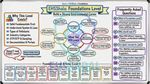
EHSShala Foundations - Core Environmental Basics for EHS Officers
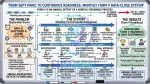
Form V Late Filing Penalty: Steps After 30 September
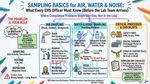
Sampling Basics for Air, Water & Noise EHS Officer Guide | EHSShala
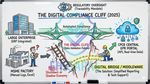
The Digital Compliance Cliff: EPR Traceability Challenges for Indian MSMEs | EHSSaral Research
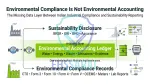
Environmental Compliance vs Environmental Accounting in India
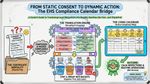
Environmental Calendar from Consent Conditions (Practical Guide) | EHSShala