
EHSShala
ETP & STP Troubleshooting: The Complete Indian Guide | EHSShala
EHSSaral is an Environmental Compliance Intelligence Platform for Industries. Consent Intelligence • Alerts & Tasks • Incident Reporting • Form IV & V • Audit-Ready Records
See how EHSSaral works
4 Feb 2026
(A Practical, No-Nonsense Guide for Factory Owners)
This is the most common question factory owners asked me in 2025.
A fabrication unit owner from Thane said recently:
“Earlier inspector sir would only check registers.
Now they ask for appointment letters, health check records, and digital documents.
Why is everything becoming so strict suddenly?”
This confusion is natural.
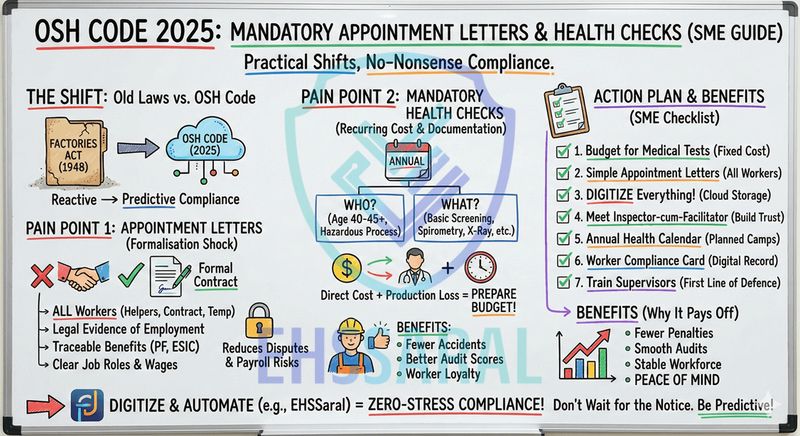
India is shifting from old laws (like the Factories Act 1948) to the modern OSH&WC Code, which brings new financial and documentation responsibilities for factories - even small ones.
But here’s the truth:
If SMEs prepare early, this reform reduces risk, prevents penalties, and improves long-term stability.
Let’s break this down in simple Indian factory language.
| Get Free Compliance Visibility in 15 Minutes Upload your Consent to Operate and instantly see extracted obligations, deadlines, reminders, and an audit-ready compliance trail. Free forever for core compliance visibility. No execution lock-in. No forced upgrades. 👉 Register free on EHSSaral |
Update: The Government has announced implementation of the four Labour Codes effective from 21 November 2025 (operational readiness may still vary through rules and state-level rollout).
Government Announces Implementation of Four Labour Codes to Simplify and Streamline Labour Laws
The Occupational Safety, Health & Working Conditions Code (OSH Code) will replace 13 old labour laws, including:
For SME owners, this translates into three major shifts:
Many welfare provisions (medical tests, safety measures, training) are now compulsory.
Manual registers will not save you anymore.
Looking for the official PDFs / notifications? (Quick links)
Many people search “New labour code 2025 PDF” or “4 Labour Codes PDF”. For official, safest sources, use:
Tip: Always prefer .gov.in / Gazette / PIB links for PDFs. Random “PDF downloads” are often outdated.
India’s labour reforms are grouped into four codes:
Why this matters for SMEs: You won’t face only “one new OSH rule”. These codes together push factories towards formal records + digital traceability.
SME owners must plan for:
A metal polishing unit did not issue appointment letters.
A worker claimed he was permanent.
There was no documentation to prove otherwise.
The factory had to pay 6 months’ back wages.
This will become more common as the Code becomes enforceable.
SMEs often see compliance as a punishment.
But there are real business benefits:
Compliance is shifting from reactive firefighting to predictive prevention - exactly what EHSSaral is built for.
Learn More about Environmental Laws, Rules and Regulations in India
One of the biggest changes under the OSH Code:
Not just engineers.
Not just supervisors.
Even helpers, sweepers, contract workers, and temporary staff.
This is where SMEs will feel the maximum “tightening.”
Appointment letters create legal evidence of employment.
PF, ESIC, leave - everything becomes visible to regulators.
If the letter says ₹16,000, you cannot pay ₹14,000 unofficially.
No “verbal dismissal” anymore.
A small CNC machining unit had 18 informal workers.
One left and filed a complaint.
Since no appointment letter existed, the officer accepted the worker’s claim.
Outcome:
Back wages + settlement + legal stress.
This will not be rare in 2025–26.
This will be the default scenario when documentation is missing.
Large companies already follow this - SMEs must now catch up.
Use local language where needed.
Registers can tear; digital proof doesn’t.
A mismatch is the most common inspection red flag.
Most SME owners still don’t realise this:
1 Workers above a certain age
(Typically 45 years in the Draft Central Rules - but states may notify 40 or 45. So always check your state notification.)
2 Workers in hazardous processes
(Chemicals, plastics, metal treatment, fabrication, painting, solvents, heavy dust, high-noise operations, etc.)
The exact age threshold depends on the final state notification.
So the safe sentence for compliance education is:
Workers above the notified age threshold (usually 40–45) must undergo annual medical exams.
This avoids confusion and keeps you safe during inspections and audits.
FAQ: “Where is this written in OSH Code, 2020 rules?”
In the OSH&WC framework, employers are required to provide free periodic/annual medical examinations for certain categories of workers (especially hazardous/dangerous operations). The exact age cutoff and test list may be notified through rules and state notifications, so don’t rely on WhatsApp forwards - check official notifications for your state.
Annual medical tests = recurring cost + recurring documentation.
You must prepare financially AND operationally.
Let’s break down the impact.
A typical occupational health centre charges:
| Test Type | Approx. Cost per Worker |
|---|---|
| Basic Screening (BP, Sugar, Vision) | ₹300–₹500 |
| Standard Industrial Health Check | ₹700–₹1,200 |
| Hazardous Industry Add-Ons (Spirometry, Audiometry, X-Ray) | ₹1,200–₹1,800 |
Estimated Cost = 30 × ₹1,000 = ₹30,000 per year
(Only tests - not including shift-loss.)
Most owners are shocked when they see this number for the first time, because no one usually explains it so clearly.
Medical tests cause:
A Navi Mumbai chemical mixing unit recently told me:
“Sir, 3 days my output went down because batches of workers went for testing.
Test ka paisa alag, production loss alag.”
This is the real pain point that legal blogs ignore.
A coating unit waited until inspection.
The officer said:
Complete worker health tests within 30 days.
Result:
Total Impact = ₹42,000 cash + production loss + stress.
This is exactly what the OSH Code is trying to avoid - reactive panic.
SMEs usually ask, “Sir, what do we get from this?”
Here’s what you get:
Especially for welders, paint booth workers, furnace operators.
MNCs ask:
“Show me your worker health monitoring system.”
Early detection of sugar, BP, lung problems prevents sudden sick leave.
Health check = company cares.
Health records show due diligence.
Bulk rates = 20–30% cheaper.
Don’t over-test.
Don’t under-test.
Physical papers get lost.
Digital copies are audit-proof.
Avoid production loss.
Include:
This becomes your “inspection survival kit.”
| Strategy | Cost | Risk Level | Outcome |
|---|---|---|---|
| Do Nothing | ₹0 today | 🔴 Very High (Penalties, back wages, repeated notices) | Stress, fear, potential legal issues |
| Last-Minute Testing When Inspector Comes | ₹1,200–₹1,500 per worker | 🟠 Medium (High rates, downtime) | Panic + rushed paperwork |
| Planned Annual Health Calendar | ₹700–₹900 per worker (bulk rate) | 🟢 Zero Risk | Smooth audits + peace of mind |
(Mobile-first, practical, no-legal-jargon version)
Most factory owners feel overwhelmed:
Here is your simple, ground-reality compliance plan, written exactly for SME owners.
You already budget for:
Similarly, add Worker Health Check Budget to your yearly expenses.
No. of workers × ₹800–₹1,000 per year
This prevents “surprise expenses” right before inspection.
A small factory does not need a big HR setup.
You only need:
With:
Use plain, easy Hindi/Marathi/English language.
PDF scanned and backed up.
The biggest inspection red flag is:
“Register says one thing, letter says another.”
SMEs traditionally maintain:
But OSH Code requires traceability, not guesswork.
Even storing this in Google Drive is better than paper.
EHSSaral will automate all of this into a Worker Compliance Card.
This is a mindset shift.
The OSH Code converts the inspector into a guiding authority.
Say:
“Sir, I want to prepare my factory properly before the Code becomes fully active.
Please guide me on what documents I must maintain.”
Most inspectors appreciate honesty and proactive behaviour.
This reduces fear and establishes goodwill for future visits.
Planning removes panic.
You create a Health Compliance File that passes audits effortlessly.
This is the single most powerful tool.
For each worker, maintain:
This becomes your inspection shield.
EHSSaral will deliver this digitally.
Supervisors control:
If they don’t change their habits, compliance collapses.
Supervisors are your first line of defence.
India’s labour ecosystem is entering a new era.
Appointment letters, medical tests, hazard records -
they are no longer optional or “big company things.”
They are now basic survival documents for even the smallest factory.
But here is the shift:
SMEs who move early will experience:
This is not about compliance alone -
it is about protecting your business, your people, and your peace of mind.
EHSSaral’s mission is exactly this:
Turn complex compliance into simple reminders.
So SMEs can run their business without fear.
You can try to manage these 30+ expiry dates in Excel, but one missed date means a penalty. Excel doesn't send reminders. EHSSaral does.
Sign up for EHSSaral Free Account
Yes. Every worker must have one - helpers, contract, temporary, everyone.
Workers above the notified age threshold (often 40–45 based on state rules).
Spirometry, audiometry, chest X-ray, vision, sugar, BP.
No. Non-compliance can lead to penalties and increased inspection frequency.
Paper gets lost. Digital files are inspection-ready instantly.
It gives:
You can try - but the moment you miss one expiry date, the penalty is yours.
Gratuity is not mainly an OSH topic. It falls under the broader labour-code ecosystem (especially wage/social security related compliance). This article focuses on appointment letters and health checks because those are the first pain points SMEs feel on the ground.
People use this phrase to find the Code on Wages (2019) notifications and related documents. Always download from official sources like the Ministry of Labour and Gazette notifications, not random PDF sites.

Founder, EHSSaral
Founder - EHSSaral | Partner - Perfect Pollucon | ISO 14001 Lead Auditor | GHG Protocol Scope 2 | Chemist | Data Scientist | Second-generation environmental professional simplifying EHS compliance for Indian industries through practical, automated, tech-enabled, data driven compliance workflows.
ETP & STP Troubleshooting: The Complete Indian Guide | EHSShala
Evolution of EHS in India - (Part 2) Post-Bhopal | EHSShala
Rule 9 Hazardous Waste Utilization: Why Applications Fail (2023–2025) | EHSSaral Research
Environmental Calendar from Consent Conditions (Practical Guide) | EHSShala
Environmental Monitoring Guide for Indian Factories | EHSShala
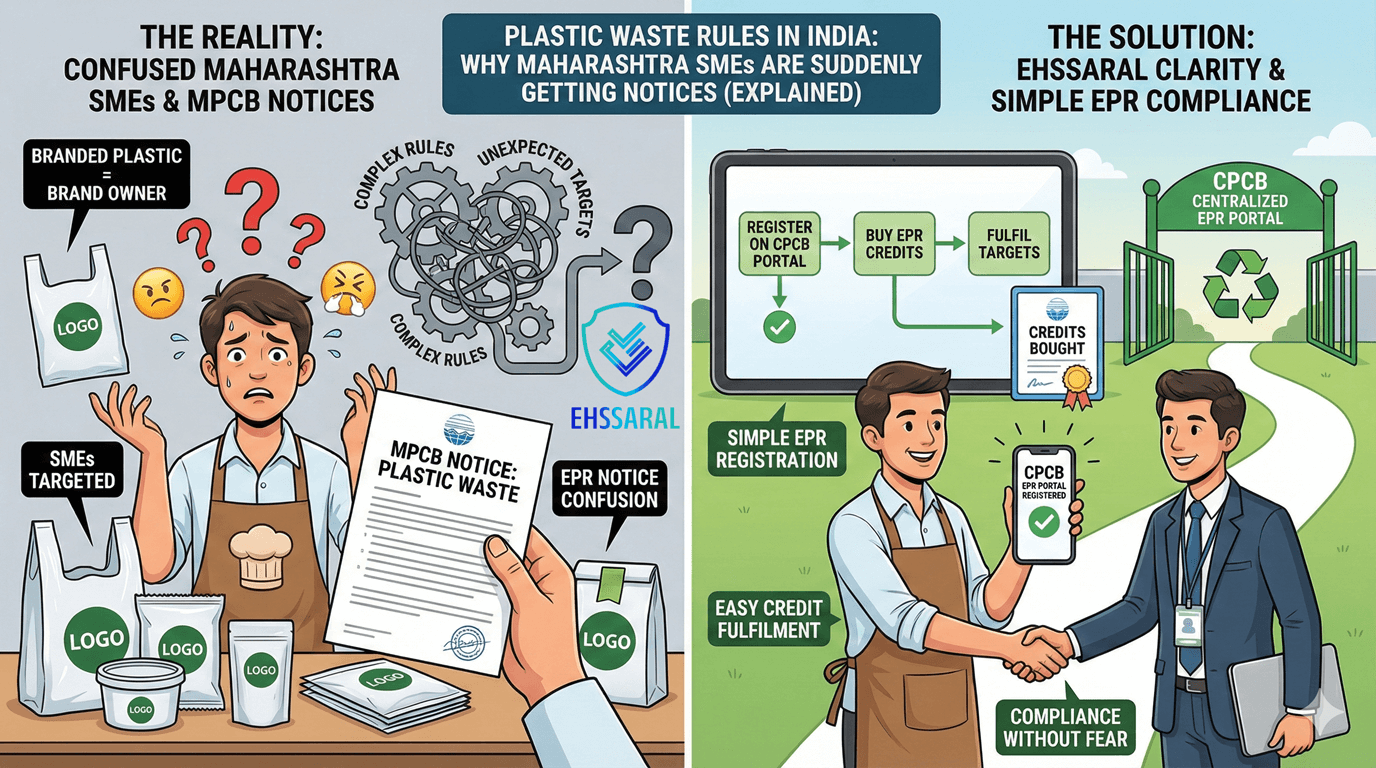
Maharashtra SME Plastic Waste EPR Guide: Are You a Brand Owner | EHSSaral
Environmental Inspection India: What Inspectors Check | EHSSaral
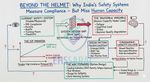
Beyond the Helmet: Why Safety Compliance Alone Fails in Indian Factories | EHSSaral Research
 EHSSaral.webp)
Environmental Monitoring Mistakes in Indian Factories (Real Issues Explained)
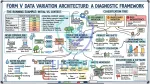
Form V Data Variation: Explain Water, Waste & Pollution Changes