
EHSShala
Evolution of EHS in India - (Part 2) Post-Bhopal | EHSShala
EHSSaral is an Environmental Compliance Intelligence Platform for Industries. Consent Intelligence • Alerts & Tasks • Incident Reporting • Form IV & V • Audit-Ready Records
See how EHSSaral works
27 Apr 2026
Home > EHSShala > Start > Environmental Compliance in India: Beginner Roadmap
This guide is written from the perspective of an expert who has spent more than 25 years watching Indian industries from the outside, through a family-owned environmental monitoring business. Over those years, I have seen environmental compliance evolve from loose paperwork and “adjust kar lo” culture to a structured, data-driven, tech-enabled ecosystem where even small mistakes can create big headaches.
The goal of this article is simple: to give every junior or newly joined EHS officer a clear, practical roadmap for environmental compliance in India, so that you don’t feel lost, don’t become a default “blame receiver” in the company, and can build a strong, respected career in EHS field.
If you are a new EHS officer, let me tell you something very honestly: environmental compliance in India is not difficult. It is only confusing when nobody explains the logic behind it.
I have been watching this industry for more than 25 years-from the side of an environmental monitoring company (our family business), from the side of industries, and from the side of regulators. I have seen:
One thing has remained constant: beginners drown not because the rules are tough, but because they do not know where to start. This roadmap exists to fix exactly that.
Let us strip away the jargon and simplify.
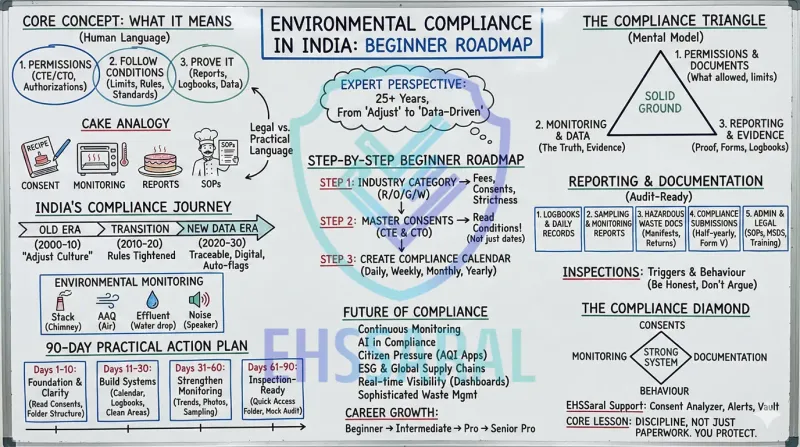
Environmental compliance is basically three things:
Everything else-sampling, audits, reports, manifests, SOPs, training, labels, logbooks-is just the support system around these three points.
If environmental compliance were baking a cake:
The difficulty is that our Acts and Rules don’t speak in cake language. They speak in legal language. That is where juniors get lost. This guide is an attempt to translate that legal world into normal, practical language without diluting the seriousness.
When my father started visiting industries in the 1980s and 1990s, the world was different:
Many industries survived on “adjust kar lo” type approaches. Then things started changing rapidly.
Suddenly industries had to maintain:
Documentation became just as important as physical treatment systems. You could have a good ETP, but if you didn’t have records, you still looked non-compliant.
Now expectations are even higher:
You are entering environmental compliance at a time when everything is traceable and auditable. That sounds scary, but it also means a good EHS officer can build a very strong, respected career.
Every EHS officer should start with this simple triangle. If you get these three right, you are on solid ground.
These include CTE, CTO, Authorisations and other statutory approvals under various rules (hazardous waste, e-waste, plastic, biomedical, etc.). They tell you:
Misinterpret your consents, and you misinterpret your entire job. So consent interpretation is not optional; it is core.
Air, stack, water, effluent, ambient air, noise, DG set emissions-monitoring is the truth of your compliance. Without data, you are just giving opinions. With data, you can protect your company, your job and your credibility.
Forms, manifests, submissions, logbooks, returns, and annual statements are the official evidence that you did what was required. A missing report, a gap in logbooks, or careless documentation can undo months of hard work.
Environmental compliance is essentially a small-mistake → big-headache domain. Your job is to minimise those small mistakes through structure and discipline.
Before touching any form, downloading any condition, or calling any lab, you must know your correct industry category. This single classification decides:
Over 25+ years, I have seen the same situations repeat again and again:
These honest misunderstandings led to wrong half-yearly returns, undersized pollution control systems, surprise notices and, of course, blame on the junior EHS officer who simply trusted old assumptions.
Golden beginner tip: Print your correct category and keep it inside your main compliance folder. It sounds small, but it forces everyone to stay on the same page.
Your Consent to Establish (CTE) and Consent to Operate (CTO) are the heart of environmental compliance. Everything else flows from them.
Most juniors make a classic mistake: they look at the first page, note validity dates and category, and then ignore the conditions section. But the real compliance is hidden in those conditions.
Consents clearly tell you:
If you follow your consent conditions honestly, 70-80% of compliance is already done.
A big part of your first month as an EHS officer should be simply sitting with your consents and reading them calmly, line-by-line.
This is where you convert conditions into a practical, manageable system. A compliance calendar is a simple schedule that lists:
Read more about Form 5 Environmental Statement India: Example & Mistakes
If consents are the rules and SOPs are instructions, then monitoring is the proof. Monitoring shows whether your systems actually work and whether you are within legal limits.
In practical experience, industries often get into trouble not because they are heavily polluting, but because they cannot produce proof that they are not polluting. Monitoring reports are that proof.
Stack monitoring is carried out on boilers, DG sets, thermic fluid heaters, furnaces and scrubber outlets.
Typical parameters tested:
Chimneys are the most visible symbol of pollution. Inspectors often form their first impression just by looking at your stacks.
AAQ monitoring evaluates the air quality around your premises, particularly at property boundaries or sensitive locations.
Common parameters:
AAQ data helps during neighbour complaints and environmental audits. It can reveal whether the dust and pollution are coming from your operations or external sources like nearby construction or heavy traffic.
Effluent monitoring shows how well your ETP/STP is performing and whether the treated water meets legal norms.
Typical parameters:
Most serious legal issues in India come from water and wastewater. This is the area where regulators are especially strict and where juniors must be very disciplined.
Noise is invisible but highly noticeable.
Monitoring includes:
Noise complaints from neighbours, warehouses and residential areas can trigger quick inspections and enforcement actions.
Never allow sampling in a messy ETP or waste area. Spend 20 minutes cleaning and organising. It strongly influences how labs and officers perceive your seriousness.
pH meters, flow meters, online analysers, gas monitors-everything should have valid calibration certificates. Officers often ask for these very early in an inspection.
Internal sampling photos help during audits, disputes and training. Keep them dated and well-organised.
DG sets are often neglected, but their emissions and noise are frequent inspection points. Stack height, acoustic enclosures and noise reports matter.
Label sampling points, drains, tanks, containers, pipelines and ETP units. Labeling reduces confusion and gives a strong impression of control and discipline.
Keep all past sampling reports, related calibration certificates, sampling photos and plans in a single physical and digital folder. It is your emergency kit during inspections.
In environmental compliance, what you did is less important than what you can prove you did. Documentation is not a side-activity; it is your real insurance.
I have seen industries with excellent pollution control equipment still get notices and show-cause letters because logbooks were incomplete, manifests were missing signatures, or calibration certificates had expired.
Typical logbooks include:
If your operation is continuous, your logbook must also look continuous. Back-filled entries written just before audits are very easy to spot.
Stack, ambient, effluent, noise and DG noise reports should be complete, signed, stamped and neatly filed.
Many good EHS officers maintain a master Excel sheet where they enter key parameters from every report. This acts as a quick trend dashboard.
For hazardous waste you must maintain:
Common errors include missing signatures, mixing incompatible wastes, storing beyond allowed time, and mismatched quantities between manifests and returns. Regulators treat hazardous waste mismanagement very seriously.
These include:
These documents often pull data from multiple departments (production, energy, waste, raw materials). Errors or mismatches between these and your manifests can create red flags.
Read more about step by step guide for Battery Waste Registration for Equipment Importers
Create a master folder called “Environmental Compliance - <Company Name>” with subfolders for consents, monitoring reports, logbooks (scanned), calibrations, hazardous waste, compliance submissions, SOPs, photos and audits.
Don’t depend purely on physical files or purely on PDFs. Use both to ensure resilience and easy retrieval.
In a simple Excel sheet, list each legal activity, its frequency, the last done date, next due date, responsible person and status. This becomes your heartbeat dashboard.
Keep one physical and digital folder where you store the most frequently requested items: consents, latest monitoring reports, key calibration certificates, recent hazardous waste manifests and Form V.
Make it a habit: whenever something important is done (waste disposal, ETP cleaning, drum labeling, drills), click photos and store them with date and description. They are your backup when questions arise.
Most EHS juniors fear inspections. Usually the fear is not because they are doing something terribly wrong, but because they don’t know what officers look for, what triggers visits, or how to handle the conversation.
Keep all important consents, latest monitoring reports, key calibration certificates and hazardous waste manifests in one easy-to-reach location.
Maintain a folder (digital) with dated photos of ETP, waste handling, sampling and housekeeping activities.
Especially ETP/STP, drains, waste storage and DG set zones. Clean, labelled areas immediately reduce suspicion and tension.
Security staff often meets officers first. They should be trained to welcome visitors respectfully, inform the EHS officer and provide basic PPE if needed, not panic or try to hide information.
Ensure that production, utilities and maintenance staff don’t give random or contradictory answers. One careless statement can create confusion.
You are not entering the same EHS world that existed 10 or 15 years ago. The next decade will bring continuous monitoring, AI, ESG, citizen pressure and real-time dashboards.
Online effluent monitoring, online stack monitoring and ambient monitoring will expand beyond large industries to clusters and mid-scale units. Your role will gradually move from manual data entry to interpreting live data.
The Hidden Costs of Manual Environmental Compliance in India
AI will help read consents, interpret conditions, generate calendars, draft reports, identify trends and predict problem areas before they become crises. This will free EHS officers from repetitive work and allow them to focus on strategy.
AQI apps, social media, videos and photos mean that pollution incidents become public very quickly. Your role expands from regulatory compliance to brand and community protection.
Many Indian factories are now part of international supply chains. Global customers demand emissions, waste and water data. EHS officers will handle sustainability reporting and resource efficiency projects alongside statutory compliance.
Environmental performance will appear in management dashboards alongside production, sales and finance. EHS officers who understand data and dashboards will be more valued.
Traceability, barcoding, circular economy concepts and detailed tracking of waste will become common. Specialised roles around waste and resource efficiency will grow.
With CPCB-guided standardisation and digital portals, differences between states will shrink. Understanding national expectations becomes essential.
These are the patterns I have seen repeatedly across more than 300+ industrial units. They are all avoidable with awareness and basic discipline.
Follow this 90-day plan when you join a new role. It will give you structure and help you build respect quickly.
Focus on:
Start contributing in:
Move towards:
You become:
Imagine environmental compliance as a diamond with four corners. If all four are strong, your system is strong.
Define what you can and cannot do, under what limits and what reporting requirements. Interpretation of consent is the foundation of everything.
Produces the evidence for your environmental performance. Good monitoring helps catch problems early and protects you during audits.
Protects you during inspections, audits and disputes. Organized documentation signals discipline and seriousness.
How you respond, communicate, present data and maintain your premises. Calm, respectful, prepared behaviour builds trust faster than any technical jargon.
This guide has explained the fundamentals using traditional methods: reading consents, building calendars, maintaining logbooks and folders. But all of this can be supported-and greatly simplified-by the right technology.
EHSSaral aligns with this roadmap in a very natural way:
EHSSaral is not a replacement for good EHS habits. It is an amplifier that makes those habits easier to practice and scale.
Environmental compliance looks big, messy and scary when you first see it: Acts, Rules, consents, forms, inspections, sampling, reports. But once you understand the structure-consents, monitoring, documentation and behaviour-it becomes logical and manageable.
Remember: you are not just filling forms or updating files. You are protecting the environment, your colleagues, your community and your company’s future. It is a role of real responsibility and impact.
Experts are not born. They are built through small, consistent disciplines: reading consents carefully, keeping data organized, preparing in advance and staying calm under pressure.
You are already ahead because you are taking the time to understand all this properly. Keep going. The future of environmental compliance in India needs serious, grounded professionals like you.
Environmental compliance in India means operating your industry within the limits, conditions and permissions set by the Pollution Control Boards and other regulators. Practically, it includes having valid consents, following all conditions, monitoring emissions and effluent, and keeping proper documentation to prove it.
Legally, the occupier or top management is responsible, but the day-to-day coordination usually sits with the EHS officer. A good EHS officer acts as a bridge between shop floor, management, labs and regulators to make sure all activities and records stay in control.
A new EHS officer should first read all consents and authorisations, identify the correct industry category, set up a compliance calendar, organise all reports and logbooks, fix obvious housekeeping issues in ETP and waste areas, and prepare for inspections with a quick access document folder.
Monitoring frequency depends on your consent conditions and industry type. Some parameters are monitored daily through logbooks, while stack, ambient air and effluent are usually monitored monthly or quarterly. Hazardous waste quantities are tracked continuously and reported annually.
Many industries receive notices not because they lack equipment, but because documents are missing, logbooks are incomplete, calibration is overdue or reporting is incorrect. In environmental compliance, what you can prove with records is as important as what you are actually doing on the ground.

Founder, EHSSaral
Founder - EHSSaral | Partner - Perfect Pollucon | ISO 14001 Lead Auditor | GHG Protocol Scope 2 | Chemist | Data Scientist | Second-generation environmental professional simplifying EHS compliance for Indian industries through practical, automated, tech-enabled, data driven compliance workflows.
Evolution of EHS in India - (Part 2) Post-Bhopal | EHSShala
Common Hazardous Waste Mistakes in Indian Factories | EHSShala

MPCB Consent Guide: CTE, CTO, Renewal, Fees & Conditions | EHSShala
MPCB CTO Refusal Patterns in Maharashtra (2023–2025) Analysis | EHSSaral Research
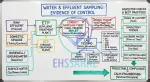
Water & Effluent Sampling Basics for Indian Factories | EHSSHala
 EHSSaral.webp)
Environmental Monitoring Mistakes in Indian Factories (Real Issues Explained)
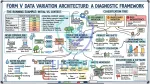
Form V Data Variation: Explain Water, Waste & Pollution Changes
 EHSSaral v1.png)
Blue Category MPCB 3-Year Consent Validity for Recyclers (2026) | EHSSaral
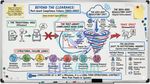
Post-Grant Environmental Compliance Failures in India | EHSSaral Research
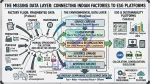
ESG Data Management for Indian Factories | EHSSaral