
Blog
Why BMW Inspections Feel Stricter Today (India) | EHSSaral
EHSSaral is an Environmental Compliance Intelligence Platform for Industries. Consent Intelligence • Alerts & Tasks • Incident Reporting • Form IV & V • Audit-Ready Records
See how EHSSaral works
19 Sep 2026
Form 4 is the annual return used for reporting hazardous and other waste handled during the previous financial year. An occupier covered by the Hazardous and Other Wastes (Management and Transboundary Movement) Rules, 2016 submits the applicable annual return information to the State Pollution Control Board or Pollution Control Committee.
The return covers the financial year from 1 April to 31 March and is submitted on or before 30 June following that financial year.
For a factory EHS officer, Form 4 for pollution control board should not be treated as a separate yearly exercise. The figures should come from records already maintained during the year, especially Form 3, Form 10 manifests, disposal or recycling records, and hazardous waste stock records.
The simplest check before filing is:
Opening Stock + Waste Generated = Waste Sent / Disposed + Closing Stock
If this basic waste balance does not make sense, stop and reconcile the records before submitting the return.
The 30 June annual-return date is consistently reflected in current Form 4 guidance, and state boards provide Form 4 as the hazardous-waste annual-return mechanism.
| Form 4 Requirement | What It Means for a Factory |
|---|---|
| Form | Form 4 – Hazardous Waste Annual Return |
| Reporting Period | 1 April to 31 March |
| Filing Deadline | On or before 30 June following the financial year |
| Filed With | State Pollution Control Board / Pollution Control Committee |
| Main Working Record | Form 3 hazardous waste records |
| Disposal Evidence | Form 10 manifests and receiver / disposal records |
| Key Check | Opening + Generation = Disposal / Transfer + Closing |
| Main Risk Before Filing | Mismatch between records, waste categories, units or physical stock |
| Best Time to Prepare | Update monthly instead of rebuilding records in June |
Every year, Form 4 for pollution control board creates the same scene in factories.
Someone remembers it late.
Files are opened hurriedly.
Numbers are copied from old sheets.
People start asking, “Is this correct?”
Panic slowly builds.
Most of this panic is unnecessary.
Form 4 is not designed to trap factories.
It is not meant to surprise anyone.
It exists to show one simple thing: control over hazardous waste for one full year.
What usually goes wrong is not pollution.
What goes wrong is records that don’t talk to each other.
This guide exists to stop that panic.
And to help you understand Form 4 the way inspectors actually see it.
“Form 4 is not about numbers.
It is about consistency.”
Form 4 for pollution control board is the annual return for hazardous and other waste handled under the applicable authorization.
For a factory, think of Form 4 as the yearly summary of what happened to each hazardous waste stream during the financial year.
It connects the records maintained throughout the year with the annual information submitted to the State Pollution Control Board or Pollution Control Committee.
Once every year, you tell the Pollution Control Board:
How much hazardous waste you had at the start of the year
How much you generated during the year
How much you sent out for disposal or recycling
How much is left at the end of the year
That’s all.
It is not a daily record.
It is not a transport document.
It is not a permission.
It is a summary.
Form 4 connects your daily handling of waste to the regulator’s long-term view.
If someone asks a simple question:
“What happened to hazardous waste in this factory last year?”
Form 4 should be able to answer calmly.
Read more about Hazardous Waste Forms Under 2016 Rules: Form 1 to Form 12 Guide
Many EHS officers prefer preparing the annual return offline before entering the final figures on the SPCB portal.
You can use these formats for:
Hazardous Waste Form 4 Annual Return – PDF Format Download ⬇
Hazardous Waste Form 4 Annual Return – Editable Word Format Download ⬇
Before filling the final return, verify:
A clean draft prepared offline usually prevents portal mistakes later.
Important: Use these files as working formats. Always follow the current submission method and requirements of your State Pollution Control Board or Pollution Control Committee.
If your factory is authorised for generation, handling, storage, recycling, utilisation, treatment or disposal of hazardous or other waste, Form 4 should be part of your annual compliance check.
This includes:
Manufacturing units
Process industries
Units with ETP sludge, spent oil, used chemicals, contaminated containers
Where confusion usually starts:
Small quantity generators
Many assume small quantity means no return. That assumption is risky.
Job workers
Waste generated during job work is still waste generated at your site.
Units with no disposal in the year
This is the most common confusion.
If no waste was sent out, people assume Form 4 is not required.
In practice, Form 4 is still expected.
A “zero disposal year” is not the same as “no Form 4 year”.
Form 4 is submitted to the applicable State Pollution Control Board (SPCB) or Pollution Control Committee (PCC).
For example:
The filing portal and exact online process may differ by jurisdiction.
Do not automatically assume that “zero activity” means “nothing needs to be filed.”
First check your hazardous waste authorization and the current filing process followed by your SPCB or PCC.
Where the portal provides for a Nil / Zero return, report the position correctly. If waste was generated but nothing was disposed during the year, generation and closing stock still need to make sense.
The important point is simple:
No disposal does not automatically mean no reporting responsibility.
Read Hazardous Waste Storage Rules in Indian Factories by EHSShala
This is where most mistakes actually begin.
People open the portal first.
They should open files first.
Before touching Form 4, you must have these documents physically or digitally ready.
Form 3 Logbook
This is your daily hazardous waste record.
It should be complete.
No blank rows.
No guessing.
Form 10 Manifests
Every movement of hazardous waste must be traceable.
Manifests should be filed date-wise and quantity-wise.
Disposal / Recycling Certificates
From TSDF, recycler, or co-processor.
With proper seal and reference.
Monthly or Yearly Stock Record
Opening stock.
Closing stock.
Physically verified.
If any one of these is missing, Form 4 will expose the gap.
Form 4 does not create problems.
It reveals problems that already exist.
Stable factories follow one simple rule:
Documents first. Form later.
Read TSDF Hazardous Waste Process: Manifest, Disposal & Records
Most compliance issues don’t start in June.
They start quietly in April, May, and June of the previous year.
A missing entry.
An unfiled manifest.
A disposal pushed to “next month”.
Form 4 simply adds everything up.
Good compliance does not need brilliance.
It needs consistency.
Form 4 covers the financial year from 1 April to 31 March.
The annual return is submitted on or before 30 June following the financial year to which the return relates.
For example:
| Financial Year | Period Covered | Form 4 Due Date |
|---|---|---|
| FY 2025–26 | 1 April 2025 to 31 March 2026 | 30 June 2026 |
| FY 2026–27 | 1 April 2026 to 31 March 2027 | 30 June 2027 |
This date is not the real problem.
The real problem is how people prepare for it.
Most panic happens because:
Numbers are checked only in June
Old records are opened after many months
People try to “adjust” instead of understand
Stable units work differently.
They internally close their waste numbers much earlier.
By February, they already know:
Approximate generation
Disposal done
Closing stock on site
By June, Form 4 becomes a formality.
Last-minute filing almost always leads to:
Quantity mismatch
Unit conversion errors
Disposal shown without proof
Form 4 rewards preparation, not speed.
Form 4 looks long, but it asks simple questions.
Waste category and code
What type of hazardous waste are you dealing with?
Opening balance
How much waste was already present on 1 April?
Quantity generated
How much new waste was created during the year?
Quantity disposed / recycled / co-processed
How much waste left your premises with proof?
Closing balance
How much waste is physically present on 31 March?
Declaration
A responsible person confirms the data is true.
That’s it.
There is no hidden trick.
The risk lies only in wrong assumptions.
Hazardous Waste Management Guide
Let’s take one simple, common example.
Waste type: Spent oil from machining operations
Opening balance (1 April)
500 kg
This should match last year’s closing balance.
Generated during the year
2,400 kg
This number comes from Form 3 entries across the year.
Disposed during the year
2,700 kg
This must match:
Disposal certificates
Closing balance (31 March)
200 kg
This must be physically present on site.
Now check the logic:
Opening (500) + Generated (2,400)
= 2,900 kg total available
Disposed (2,700) + Closing (200)
= 2,900 kg accounted for
Everything balances.
Inspectors are comfortable.
Now imagine this instead:
Disposal shown as 3,000 kg
Manifests available only for 2,500 kg
This is where questions begin.
Not because waste is illegal.
Because the story doesn’t add up.

Read more about Why Form 4 & Form 5 Numbers Don’t Match?
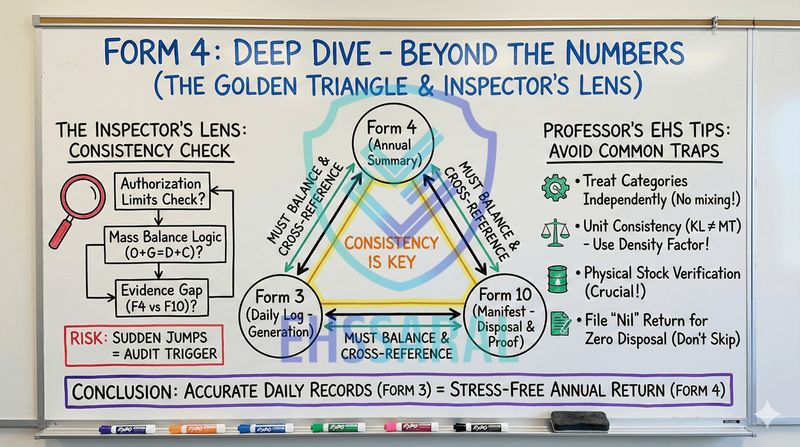
Inspectors do not start by reading each row carefully.
They do three quick mental checks.
First - Authorization check
Is the quantity shown reasonable for this factory?
Is it within approved limits?
Second - Mass balance check
Does:
Opening + Generation = Disposal + Closing?
If math fails, confidence drops.
Third - Evidence check
Does disposal shown in Form 4 match:
Form 10 manifests
Certificates from TSDF or recycler?
If patterns look stable, inspections stay calm.
Sudden jumps attract attention.
Consistency builds trust.
Form 4 never stands alone.
It is connected to two other records:
Form 3 - Daily hazardous waste record
Form 10 - Transport and acceptance proof
Form 4 - Annual summary
These three must tell the same story.
If Form 3 shows generation, Form 4 must reflect it.
If Form 4 shows disposal, Form 10 must prove it.
Break one side of this triangle, and discomfort starts.
Form 4 and Form V are both annual environmental records, but they serve different purposes.
Form 4 deals specifically with hazardous and other waste information under the hazardous waste compliance system.
Form V Environmental Statement covers a much wider environmental picture, including areas such as resource consumption, pollution generation and waste information.
The two returns may therefore contain related hazardous waste information.
Before filing, check whether the hazardous waste quantities used in Form V are consistent with the underlying Form 4 records.
If the numbers differ, understand the reason before submission. Do not simply copy one figure into another return without checking the reporting basis.
You can then add your existing internal link:
Read more: Why Form 4 & Form V Numbers Don't Match
If you have 3-5 waste categories, treat each category as its own mini-balance.
Do not mix categories to “adjust” numbers.
Inspectors spot category mixing quickly because patterns change suddenly.
Each waste row must balance independently: Opening + Generation = Disposal + Closing.
Read more about How India classifies Hazardous Waste: Schedule I, Class A, B, C & Inspector’s Guide
These are patterns seen repeatedly across factories.
If your internal record is maintained in litres but the weighbridge or receiver record is in kilograms, do not use an assumed conversion.
Use an appropriate and supportable density / specific-gravity basis and document the calculation.
More important than choosing a convenient unit is being able to explain how one record was converted into the other.
The exact portal screen differs from one State Pollution Control Board to another, but the preparation logic remains the same.
Complete Form 3 entries up to 31 March.
Do not begin with the portal.
Begin with your records.
For each hazardous waste category, calculate:
Opening Stock + Generation - Quantity Sent Out = Closing Stock
Do this separately for every waste category.
Add the quantities dispatched during the year and compare them with the disposal figures you plan to report.
Do not rely only on your dispatch register.
Verify available TSDF, recycler, co-processor or authorised receiver records against the quantities dispatched.
Walk to the hazardous waste storage area.
Check whether the quantity on paper is reasonably supported by what is actually stored.
Check the waste category, quantity and disposal route mentioned in your current hazardous waste authorization.
Prepare the Form 4 numbers outside the portal first.
Get the totals reviewed before entering them online.
Select the relevant financial year and enter the verified information.
Portal screens and submission workflows differ between states, so follow the current instructions available for your jurisdiction.
Recheck:
Do not use the portal as the place where you calculate your final numbers.
After successful filing, save the acknowledgement or submission receipt with the working papers used to prepare the return.
Most Pollution Control Boards now require online filing.
Portal behaviour differs by state.
Some portals allow draft saving.
Some lock fields immediately after submission.
Know how your state portal behaves before you start.
Once you submit:
Editing becomes difficult
Corrections need explanation
The portal is not Excel.
It does not forgive casual errors.
This is why checking Form 3 before starting Form 4 is critical.
Portal mistakes stay visible.
Portal design differs from state to state.
The field names, draft-saving options, attachments and correction process may also change over time.
Before filing, check the current instructions on your own SPCB or PCC portal.
For Maharashtra units, MPCB currently lists Hazardous Waste Annual Return (Form-4) as an online environmental service.
Mistakes happen.
Even in well-managed units.
What matters is when the mistake is found and how it is handled.
If detected before submission
Correct it properly.
Recheck Form 3 and manifests.
Do not rush.
If detected after submission
Keep supporting records ready.
Be prepared to explain the logic calmly.
If detected during inspection
Transparency matters more than perfection.
Inspectors usually look for intent and clarity, not punishment.
Scale also matters.
A small quantity mismatch with documents available is very different from:
A missing waste category
Disposal shown without any proof
A common situation can look like this:
Form 4 shows 10 MT disposed, but the available manifests support only 8 MT.
Do not immediately adjust the number to make it match.
First check:
The objective is to understand the difference and keep the supporting explanation ready.
Submission is not the end.
After filing:
An acknowledgment appears on the portal
The record stays active
Supporting documents must be preserved
Form 4 is often referred to later:
During consent renewal
During routine inspection
When waste authorization is reviewed
Form 4 is not filed and forgotten.
It stays in your file for years.
Treat it like permanent evidence, not a yearly checkbox.
These are not ideal practices.
These are what stable factories actually do.
Maintain one annual hazardous waste summary sheet
Do a 10-minute monthly internal check
File manifests and certificates immediately
Physically verify closing stock before year-end
Keep one common folder for:
Authorization
Form 3
Form 10
Disposal certificates
When records are calm, inspections are calm.

The difficult part of Form 4 is usually not the form itself. It is bringing together Form 3 entries, Form 10 manifests, disposal records and closing stock at year-end.
A simple monthly reconciliation system can prevent most of this last-minute work. Where digital records are used, the same principle applies: the annual return should be compiled from verified records maintained throughout the year, not reconstructed in June.
Form 4 is not a punishment tool.
It is a visibility tool.
Most compliance issues are not pollution issues.
They are clarity issues.
Regulators respond better to honesty than silence.
They respond better to systems than stories.
Good compliance does not need brilliance.
It needs consistency.
If Form 3 is maintained daily,
Form 10 is filed properly,
Form 4 becomes easy.
And panic disappears.
Before you click “Submit” on the portal, pause for 10 minutes.
Most Form 4 problems are not serious compliance failures.
They are avoidable checking failures.
This checklist is designed to act as a final safety filter.
It helps you confirm that:
your records are complete
your numbers are consistent
your closing balance is real
your submission will not create questions later
Use this checklist every year, even if nothing has changed.
A calm submission today prevents uncomfortable explanations months later.
| Check No. | Checkpoint | What to Verify (Plain Words) | Source Document | Verified (✓) | Remarks / Gap Noted |
|---|---|---|---|---|---|
| 1 | Form 3 Complete | All 12 months are filled. No blank rows. Entries signed or authenticated. | Form 3 Logbook | ||
| 2 | Manifest Match | Total disposal quantity matches Form 3 disposal entries. | Form 10 Manifests | ||
| 3 | Unit Consistency | All quantities are in the same unit (Kg or MT). No mixing. | Form 3, Form 10, Form 4 draft | ||
| 4 | Physical Stock Check | Closing balance on paper matches waste physically present in storage area. | Storage area, Stock register | ||
| 5 | Authorization Valid | Hazardous waste authorization was valid for the full financial year. | HW Authorization | ||
| 6 | Category Check | Waste category codes match exactly with authorization (e.g., 5.1, 35.3). | HW Authorization, Form 3 | ||
| 7 | Certificate Proof | Disposal / recycling certificates available for every manifest. | TSDF / Recycler certificates | ||
| 8 | Density Factor | If Liters were converted to Kg, density calculation is recorded and consistent. | Calculation sheet, TSDF receipt | ||
| 9 | Draft Review | Another person reviewed the numbers before portal submission. | Internal review | ||
| 10 | Login Test | Portal login is active and working before last week of June. | SPCB portal |
Is Form 4 required if no hazardous waste was disposed during the year?
Do not assume that no disposal means no reporting requirement. Check your hazardous waste authorization and the filing process followed by your SPCB or PCC. If waste was generated but not disposed, the generation and closing stock still need to be correctly reported. Where the portal provides for a Nil or Zero return, follow the applicable portal process.
What is the deadline for filing Form 4 annual return in India?
Form 4 is filed annually for the financial year ending 31 March. The standard deadline is 30 June.
What happens if Form 4 quantities do not match Form 3 or Form 10?
Mismatch usually leads to queries during inspection or renewal. Inspectors look for consistency across records, not perfection.
Can Form 4 be corrected after submission?
Most online portals restrict edits after submission. Corrections usually require explanation with supporting records.
How do inspectors verify Form 4 data?
Inspectors typically check authorization limits, mass balance logic, and disposal proof through Form 10 and certificates.
What is Form 4 in hazardous waste management?
Form 4 is the annual return used for reporting applicable hazardous and other waste information to the State Pollution Control Board or Pollution Control Committee for the previous financial year.
What period does Form 4 cover?
Form 4 covers the financial year from 1 April to 31 March.
What is the Form 4 annual return due date?
The annual return is submitted on or before 30 June following the financial year to which the return relates.
What records should be checked before filing Form 4?
Start with Form 3, Form 10 manifests, hazardous waste authorization, disposal or receiver records and the physical closing stock.
How do I calculate closing stock for Form 4?
At a basic level, check whether opening stock plus generation, minus waste sent out or otherwise accounted for, agrees with closing stock. Perform this check separately for each waste category.
Can Form 4 and Form 10 quantities be different?
They can appear different when reporting periods, units, timing or records are not aligned. The difference should be reconciled and understood before Form 4 is submitted.

Founder, EHSSaral
Founder - EHSSaral | Partner - Perfect Pollucon | ISO 14001 Lead Auditor | GHG Protocol Scope 2 | Chemist | Data Scientist | Second-generation environmental professional simplifying EHS compliance for Indian industries through practical, automated, tech-enabled, data driven compliance workflows.
Why BMW Inspections Feel Stricter Today (India) | EHSSaral
MSME Supply Chains & BRSR 2026: Where Compliance Breaks | EHSSaral

GRAP Stage IV Explained: What AQI 450+ Means for NCR Factories | EHSSaral

Sampling Basics for Air, Water & Noise EHS Officer Guide | EHSShala

Chemical Accident Emergency Response Guide for Indian Factories | EHSShala
Form V Environmental Statement: Due Date, Format, Example & Guide
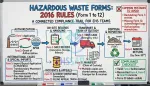
Hazardous Waste All Forms Form 1 to Form 12 Guide
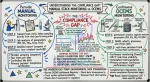
Manual Stack Monitoring vs OCEMS: Why Results Differ in Environmental Compliance

Why EHS Experience Is Being Filtered Out - The Real Hiring Logic | EHSSaral
 Practical Guide for Indian Factories EHSShala.webp)
Hazardous Waste Management Rules in India: Forms, Storage & Compliance