
 EHSSaral.webp)
EHSShala
Environmental Monitoring Mistakes in Indian Factories (Real Issues Explained)
EHSSaral is an Environmental Compliance Intelligence Platform for Industries. Consent Intelligence • Alerts & Tasks • Incident Reporting • Form IV & V • Audit-Ready Records
See how EHSSaral works
20 Aug 2026
By EHSSaral – Simplifying Compliance for EHS Professionals
Ask any factory manager when they last looked at their Environmental Monitoring Calendar, and you’ll likely hear -
“Sir, hum toh lab ko bolte hain, woh kar leta hai.”
And that’s exactly where the problem begins.
After working with factories for over 25 years, we’ve noticed one pattern everywhere - companies treat environmental monitoring like a tick-box exercise rather than a process of awareness. But monitoring isn’t just about collecting samples and filing reports. It’s about knowing what to monitor, when to monitor, and why it matters.
This article will help you understand how to create and manage an Environmental Monitoring Calendar the right way - without confusion or panic before audits.
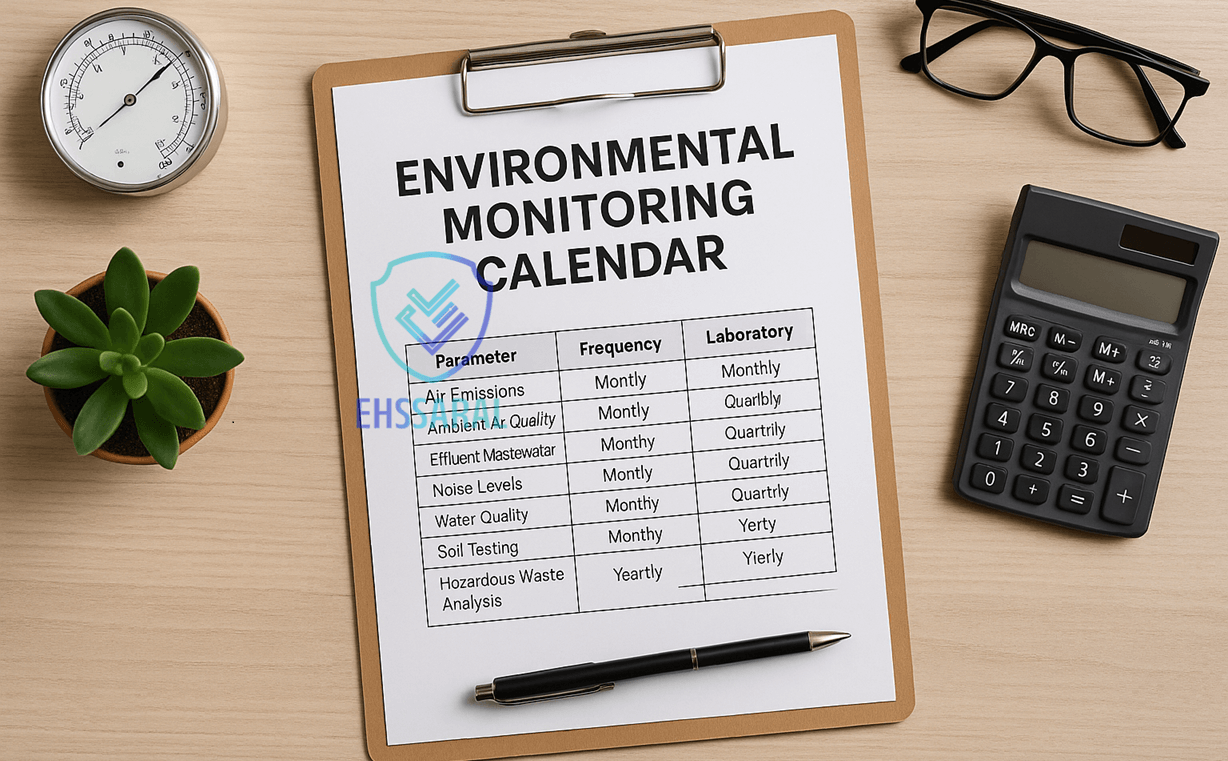
Simply put, it’s your annual plan that lists which environmental parameters you’ll monitor, how often, and through which approved laboratory.
It usually includes monitoring related to:
A good monitoring calendar is like a heartbeat monitor for your factory - it tells you whether your environmental systems are healthy or heading for trouble.
"Manual monitoring is important, but for Online Systems (OCEMS), connectivity is key. Read our guide on Fixing OCEMS Data Gaps to avoid auto-generated notices."
Read more about MPCB Consent Explained for Junior EHS Professionals
| Parameter | Type of Industry | Frequency (Typical) |
|---|---|---|
| Stack Emission Monitoring | Red Category | Monthly |
| Stack Emission Monitoring | Orange Category | Quarterly |
| Ambient Air Quality | Red Category | Monthly |
| Ambient Air Quality | Orange Category | Quarterly |
| Effluent (ETP Outlet) | Red Category | Monthly |
| Effluent (ETP Outlet) | Orange Category | Quarterly |
| Noise Level (Boundary) | All Categories | Quarterly |
| DG Set Emission | All Categories | Half-Yearly |
| Drinking / Process Water | All Categories | Quarterly |
| Soil / Hazardous Waste | Applicable Industries | Yearly |
(Note: Actual frequency depends on conditions mentioned in your MPCB Consent. Always cross-check before finalizing your calendar.)
Read more about Environmental Compliance Calendar Software Tool to simplify MPCB Renewals & Due Dates
After working across hundreds of factories - from pharmaceuticals to foundries - here are some best practices we recommend:
You can coordinate your sampling through Perfect Pollucon Services - a trusted environmental monitoring partner working with NABL-approved laboratories across Maharashtra to ensure reliable and compliant results.
Let’s be honest - these mistakes happen in 80% of industries:
Read calibration & QA/QC in Environmental Monitoring Guide by EHSShala
Creating and maintaining a calendar manually is tedious. EHSSaral’s Environmental Compliance Calendar helps you:
No more missed dates. No more file hunting. Just compliance, simplified.
Environmental monitoring isn’t about ticking boxes - it’s about understanding your factory’s pulse.
After two and a half decades of seeing industries grow, fail, get penalized, and rise again - one truth stands out:
The most compliant factories are not the richest; they’re the most disciplined.
If you create a strong environmental monitoring calendar - and actually follow it - you’ll not only stay compliant but also build trust with regulators, your management, and society.
Because environmental compliance isn’t a burden - it’s a habit of responsible growth.
About EHSSaral
We’re on a mission to simplify environmental compliance for EHS professionals. With decades of on-ground experience and deep understanding of MPCB norms, our tools help industries stay audit-ready, stress-free, and future-focused.
Visit EHSSaral.com to explore how we can help you automate your Environmental Monitoring Calendar and stay ahead of compliance deadlines.
An Environmental Monitoring Calendar is a yearly schedule that outlines which environmental parameters need to be tested, how often, and by which approved laboratory. It helps industries plan air, water, effluent, and noise monitoring in a systematic and compliant way.
Monitoring frequency depends on your industry category (Red, Orange, Green) and the specific conditions mentioned in your Consent to Operate. Generally, Red category industries require monthly stack and effluent monitoring, while Orange category units may need quarterly monitoring. Always verify with your MPCB consent copy.
Missing even one scheduled test can lead to non-compliance remarks during inspections or renewal audits. Pollution Control Boards may issue notices or ask for explanations. A digital system like the EHSSaral Compliance Calendar can help avoid missed schedules through automatic reminders.
Monitoring should always be done by MPCB or NABL-approved laboratories. This ensures that test results are valid and accepted during audits. If you need help identifying an approved lab, Perfect Pollucon Services can connect you with NABL-accredited partners across Maharashtra.
A complete plan includes air emission points, ambient air quality stations, effluent and water sampling points, noise measurement locations, and hazardous waste testing schedules. It should also mention the responsible person, sampling frequency, and laboratory name.
Some industries maintain in-house labs for process checks, but for official compliance reports, you must engage an external approved laboratory. In-house results are useful for internal control but not valid for MPCB submissions.
EHSSaral helps industries digitize their monitoring calendar by mapping frequencies directly from the MPCB consent. It automatically generates reminders, tracks report uploads, and highlights pending activities - ensuring you stay 100% audit-ready without Excel sheets or manual follow-ups.
Ideally, you should maintain monitoring data for at least 5 years or as specified in your consent. This helps during renewals, inspections, and internal audits. Digital storage tools like EHSSaral’s Document Vault make this easy and searchable.
Do not ignore it. Record the incident, identify the cause (e.g., process upset, maintenance issue), and take corrective action immediately. Re-monitor after the fix. Keeping a log of both the deviation and the action taken shows proactive compliance during audits.
Penalties often arise from missing reports, wrong frequencies, or delayed submissions rather than test failures. A structured calendar with digital reminders helps prevent such administrative errors and demonstrates commitment to compliance.

Founder, EHSSaral
Founder - EHSSaral | Partner - Perfect Pollucon | ISO 14001 Lead Auditor | GHG Protocol Scope 2 | Chemist | Data Scientist | Second-generation environmental professional simplifying EHS compliance for Indian industries through practical, automated, tech-enabled, data driven compliance workflows.
Environmental Monitoring Mistakes in Indian Factories (Real Issues Explained)
 by EHSSaral v1.webp)
EADA Portal & Environment Audit Rules 2025: A Practical Guide for Indian Factories | EHSSaral
Environmental Monitoring Guide for Indian Factories | EHSShala
Manual Stack Monitoring vs OCEMS: Why Results Differ in Environmental Compliance
 Practical Guide for Indian Factories EHSShala.webp)
Hazardous Waste Management Rules in India: Forms, Storage & Compliance
Construction & Demolition Waste Management in India Guide | EHSSaral
Hazardous Waste All Forms Form 1 to Form 12 Guide
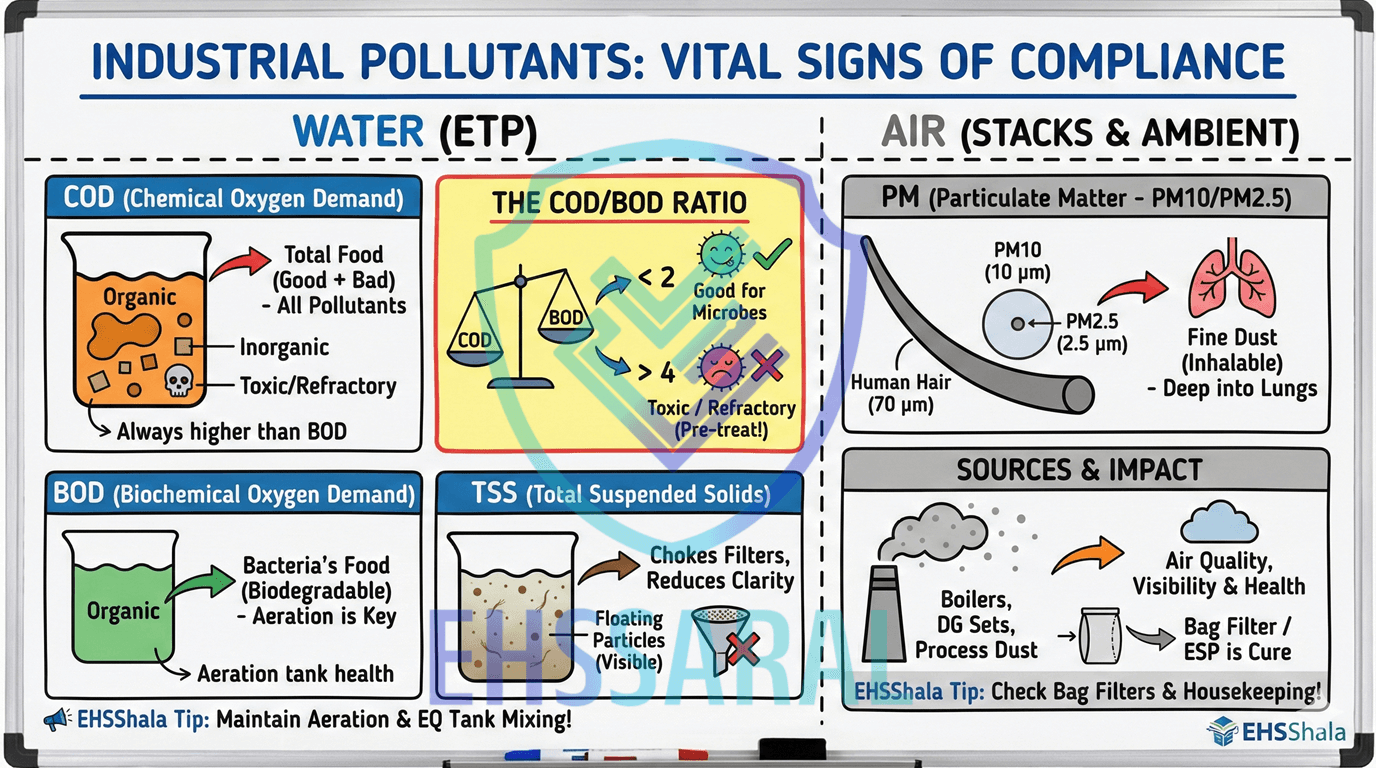
Industrial Pollutants Explained: COD, BOD, TSS & PM (A Practical Guide)
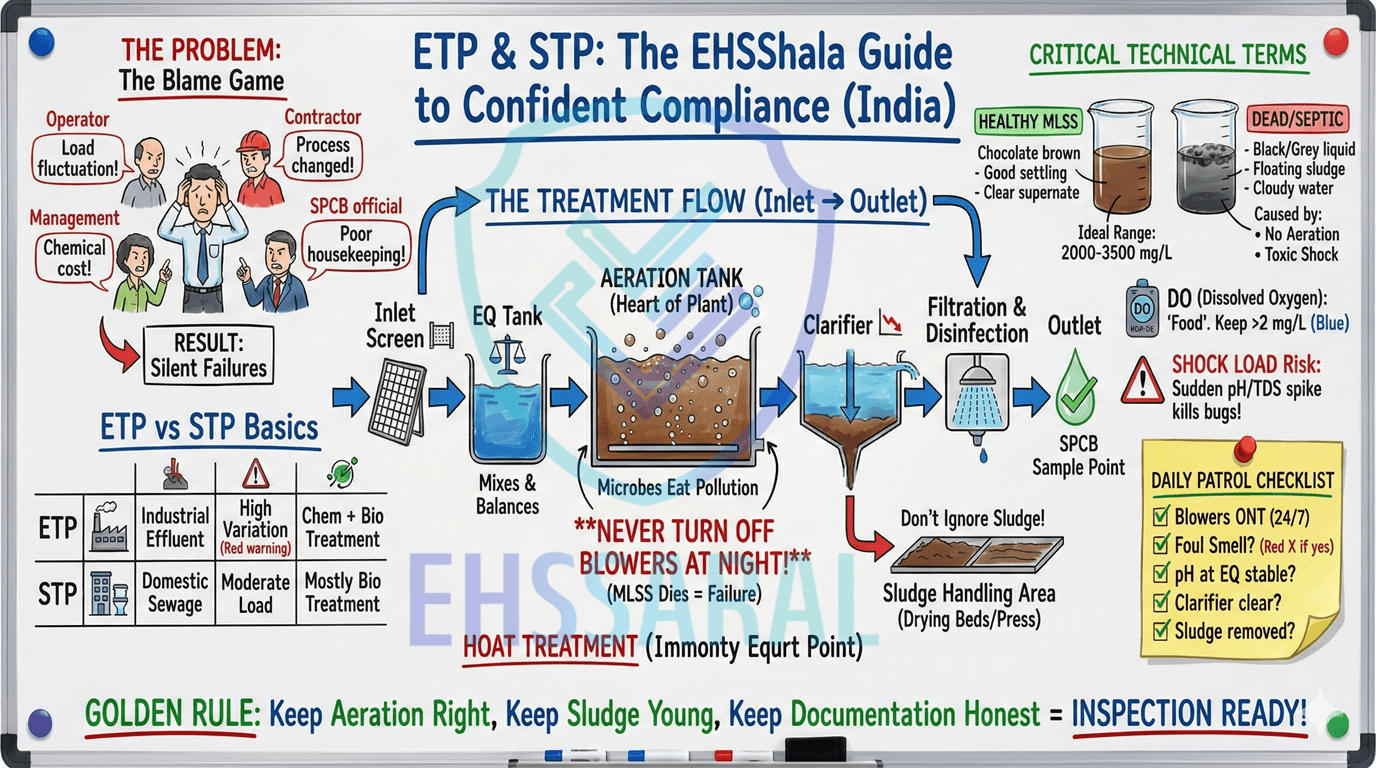
ETP & STP Troubleshooting: The Complete Indian Guide | EHSShala
Plastic Waste Management Rules in India: A Practical Guide for Factories, Warehouses and Offices