
EHSShala
Calibration & QA/QC in Environmental Monitoring Guide | EHSShala
EHSSaral is an Environmental Compliance Intelligence Platform for Industries. Consent Intelligence • Alerts & Tasks • Incident Reporting • Form IV & V • Audit-Ready Records
See how EHSSaral works
9 Jun 2026
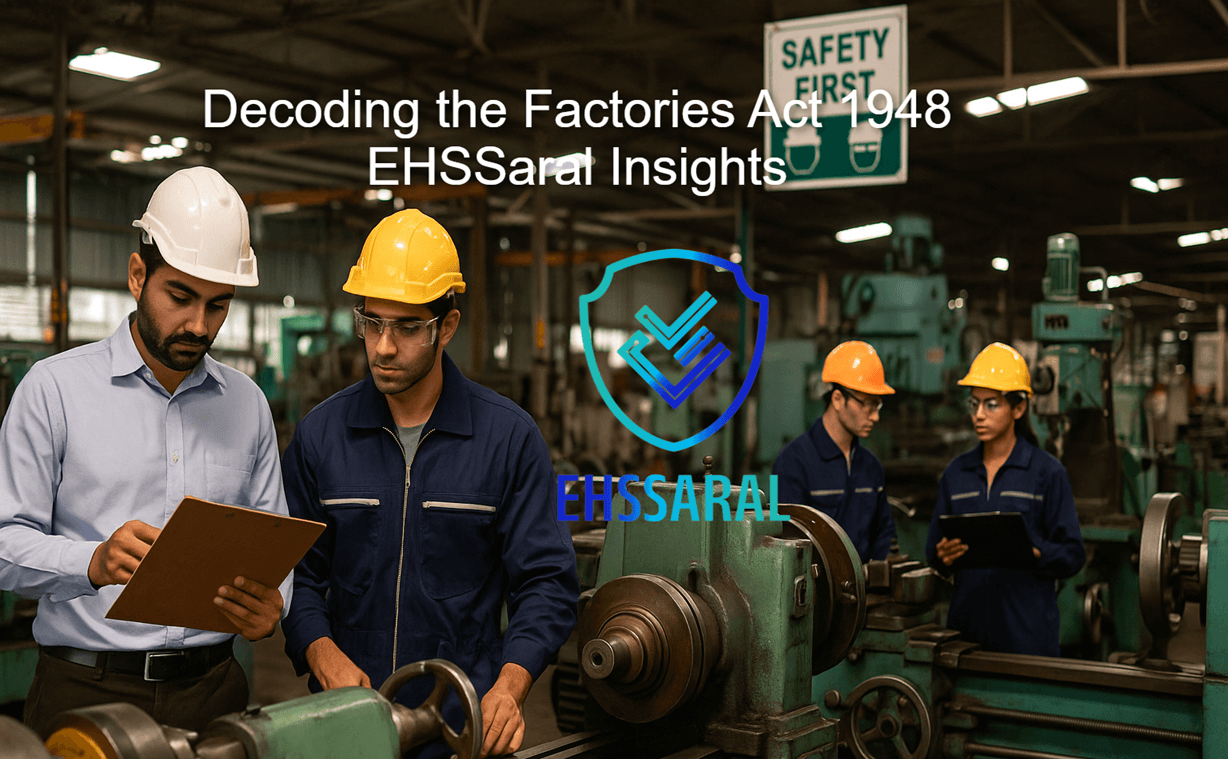
Walk into any Indian factory and you’ll feel two distinct energies. On one side, there’s the rhythm of machines, the hum of productivity, and the quiet pride of people who build the nation’s backbone. On the other, there’s invisible pressure-deadlines, audits, inspectors, and the constant worry of “Are we compliant?”
After visiting hundreds of factories over the past twenty-five years-from textile units in Dombivli to pharma plants in Ankleshwar-one thing has stayed constant: most people see compliance as a box to tick, not a culture to build. The Factories Act, 1948 was never meant to be a punishment tool. It was born to make sure that the pursuit of profit never comes at the cost of human life, dignity, or health.
The Act came into force on 1 April 1949.
Many factory owners today think this law belongs to the post-independence era-outdated and irrelevant in the age of automation and AI. But that’s a dangerous misconception.
The spirit of the Act is timeless: it protects workers, ensures fair working conditions, and sets the base for every modern EHS (Environment, Health & Safety) and ESG (Environment, Social & Governance) requirement.
Every consent from the Pollution Control Board, every safety audit checklist, every welfare inspection - they all trace their roots back to the Factories Act. Without understanding it, no manufacturer can claim to truly understand compliance.
If you only remember five things about the Factories Act, remember these:
Applies to 10+ workers with power or 20+ without power
Covers Health, Safety, Welfare, Working Hours, and Records
Registration and Factory Licence are mandatory
Occupier is legally liable, not supervisors
Non-compliance can lead to fines, closure, or prosecution
In one line:
The Factories Act, 1948 sets the minimum legal standards to keep workers safe, healthy, and treated fairly inside Indian factories.
In the early 1940s, Indian industries were expanding rapidly, but worker welfare was in chaos. Accidents, respiratory diseases, and unsafe machinery were common. The colonial-era Factory Acts (1881, 1891, 1911, 1934) were narrow and inconsistent across provinces.
Learn More about EHS Evolution Pre Bhopal Era Part 1
After independence, the government unified and modernized these into the Factories Act of 1948, aligning Indian industry with global labour standards. It introduced limits on working hours, mandatory safety devices, health and welfare measures, and gave Factory Inspectors real authority.
Even seventy-five years later, it remains the backbone of industrial regulation-updated by amendments and, more recently, integrated into the Occupational Safety, Health and Working Conditions Code (2020).
But the DNA remains the same: human life first.
This is one of the most misunderstood parts of the Act.
Legally, any premises employing:
is a factory under the law and must obtain registration and license under the Factories Act.
Even a small coating unit, fabrication shop, or packaging shed comes under this definition if it crosses those numbers.
A small dyeing unit owner in Bhiwandi once told us, “Sir, we have only 18 workers, we don’t need registration.” During peak season he hired four temporary hands. A surprise inspection followed, and the plant was shut for fifteen days. The financial loss from downtime was ten times the license fee.
That incident taught him-and many others I’ve met since-that compliance starts the day you hire your tenth worker on a powered floor.
The Factories Act, 1948 is a central Indian labour law that regulates:
worker health
workplace safety
welfare facilities
working hours
accident prevention
factory registration and licensing
It applies to all manufacturing units that cross minimum worker thresholds and is enforced by the Directorate of Industrial Safety and Health (DISH) under the Ministry of Labour and Employment.
In simple words:
If people work with machines inside your premises, the Factories Act decides how safely you must operate.
Under Section 2(m) of the Factories Act, 1948, a factory means:
Any premises where:
• 10 or more workers are working (or were working on any day of the preceding 12 months) and power is used in the manufacturing process, OR
• 20 or more workers are working and no power is used.
This definition is critical.
Even if the number of workers fluctuates seasonally, crossing the threshold even once can bring the premises under the Act.
Many small units misunderstand this clause - especially during peak production months.
Under Section 2(k) of the Factories Act, a “manufacturing process” has a wide meaning. It includes activities like:
Making, altering, repairing, finishing, packing, oiling, washing, cleaning, breaking up, demolishing
Generating, transforming, or transmitting power
Pumping oil, water, sewage, or any other substance
Preserving or storing goods in cold storage
Printing, bookbinding, and similar processes
Any process connected to a product meant for use, sale, transport, delivery, or disposal
Practical point: Many units assume they are “only a warehouse” or “only packing”. But if your activity falls under Section 2(k) and you cross the worker threshold, the Act can apply.
If you read the Act line by line, it might look like dry legislation. But beneath every clause lies a simple human truth: every worker deserves to return home safe and healthy.
The Act ensures:
It’s not bureaucracy-it’s the foundation of industrial civilization.
Over the decades, I’ve seen both sides of this truth. In one metal-fabrication factory, a helper lost three fingers because the pulley guard was removed “just for faster cleaning.” The owner paid compensation, but during our later conversation he sighed, “If someone had explained the Act in practical language, I’d have never allowed that.”
That single sentence captures why education around this law still matters.
Unlike large corporates that employ safety officers and compliance teams, small and medium manufacturers rely on local consultants or supervisors who juggle multiple roles. Documents get copied, registers go half-filled, and training logs remain blank until inspection week.
The intention isn’t bad-it’s usually lack of clarity. Owners assume the law is too complex, while staff think compliance is someone else’s job. Over time, “adjustment culture” replaces “accountability culture.”
The Factories Act was meant to end that ambiguity by defining clear responsibilities for both occupier (the person with ultimate control) and manager (the one in daily charge).
Many first-generation entrepreneurs get this wrong.
The occupier is legally responsible for the factory’s safety, health, and welfare provisions, while the manager is responsible for day-to-day operations and record-keeping.
If a fatal accident occurs, the occupier is answerable under law, not the safety officer or shift in-charge.
That’s why awareness sessions for top management are as important as toolbox talks for workers. In one chemical plant, an owner was shocked to learn during an audit that his name appeared on all compliance documents-even though he never entered the shop floor. “Sir, that’s how the law works,” I told him. “Your signature is your accountability.”
Under Section 2(n), the “occupier” is the person who has ultimate control over the affairs of the factory.
From a practical standpoint:
In a company, a director is typically treated as the occupier (as per applicable rules and declarations).
In a partnership, one of the partners is usually designated.
The purpose is simple: accountability should not become a “passing the buck” exercise after an incident.
This is why the occupier’s name appears in licences, statutory filings, and inspector communications.
One of the most misunderstood compliance decisions under the Factories Act is selecting the correct Occupier.
Many companies assume this is just a paperwork formality. In reality, the occupier can be personally prosecuted for serious violations relating to worker safety, health, and welfare.
The correct designation depends on the legal structure of the business:
| Business Type | Typical Occupier |
|---|---|
| Proprietorship | Owner |
| Partnership Firm | One of the Partners |
| Private Limited Company | Director nominated by the Board |
| Government-Owned Factory | Person appointed by Government |
A common mistake is naming a Plant Head, Works Manager, Safety Officer, or HR Manager as occupier even when they do not have ultimate control over factory affairs.
During investigations following major accidents, inspectors often examine whether the occupier designation reflects the actual control structure of the organization.
Before filing factory licence applications or renewal documents, management should verify:
A poorly chosen occupier may create unnecessary legal exposure for both management and the factory.
Another misconception is that safety rules slow down work. In reality, disciplined compliance improves efficiency.
Factories that maintain clean floors, clear aisles, and proper lighting report fewer breakdowns and higher output. Workers feel valued, absenteeism drops, and turnover decreases.
During a monitoring visit to a medium-scale engineering unit in Pune, I noticed a simple visual checklist near every machine-daily oil level, guard check, PPE reminder. The owner said breakdowns had reduced by 30 percent after introducing those sheets.
That’s the unseen ROI of the Factories Act-structured discipline that leads to predictable performance.
Read more about Environmental Monitoring Calendar for Industries by EHSSaral
If you strip away the legal language, the Factories Act is a document of respect-for workers, for machines, and for the environment.
It asks us to pause and ask:
After twenty-five years of seeing both compliant and negligent factories, I can say this confidently: those who respect the Act rarely face disasters. Those who treat it as a hurdle eventually pay in downtime, penalties, or reputation loss.
In Ravi Shankar Sharma v. State of Rajasthan (1993), the court clearly observed that the Factories Act is a welfare legislation. It must be interpreted in a manner that advances worker safety and health - not restricted through narrow technical arguments.
This reinforces what the Act has always stood for: protection first, procedure second.
Every section of the Factories Act, 1948 was written after observing what went wrong inside India’s early industries. Over time, these clauses became the backbone of modern industrial safety and efficiency. Yet, when I talk to factory owners today, many still ask: “Which parts actually matter for us?”
Let’s break down the Act into practical, factory-floor language.
Health provisions focus on the physical conditions in which employees work.
These include cleanliness, ventilation, temperature, lighting, sanitation, and waste disposal.
In simple terms: if a person can’t breathe comfortably or see clearly inside your factory, you’re already out of compliance.
Typical Violations
Best Practices
Field Incident:
In one small engineering unit, employees were eating tiffin lunches near the grinding section because the canteen was under renovation. A routine inspection picked it up and classified it as a “health hazard.” The owner’s intent wasn’t wrong-but ignorance still counted as violation.
Health compliance isn’t about luxury. It’s about creating a space where productivity and dignity coexist.
Safety provisions are the heart of the Act. They cover fencing of machinery, maintenance, lifting devices, explosive or flammable materials, and emergency readiness.
Common Oversights
Ground Reality:
In a packaging plant I once visited, a helper tried clearing a jam from a running conveyor. His glove got pulled in; luckily, the emergency stop was nearby. When we asked why he hadn’t stopped the machine, he said, “It takes five minutes to restart.” Those five minutes could’ve cost him his hand.
That is precisely why the Act insists on both hardware safety (guards, interlocks, sensors) and human safety (training, awareness, supervision).
Best Practices
Certain industries are classified as Hazardous Processes under the Act (Schedule I), including:
Chemical manufacturing
Petroleum refining
Fertilizers
Pesticides
Paints & solvents
Metal smelting
Pharma intermediates
Such factories must follow stricter rules:
Medical surveillance
Safety committees
On-site emergency plans
Mandatory disclosures
If your industry falls under this list, compliance expectations are significantly higher.
A “hazardous process” refers to any industrial activity listed in Schedule I of the Act where raw materials, intermediate products, or finished goods can cause material impairment to health or environment.
Industries include:
• Chemical manufacturing
• Petroleum refining
• Fertilizers
• Pharmaceuticals
• Paints & solvents
• Metallurgical operations
Such factories must comply with Chapter IVA provisions, including:
• Compulsory safety committees
• Medical examination of workers
• Disclosure of hazardous substances
• On-site emergency plans
Hazardous factories are subject to higher inspection scrutiny.
Several inspections and certifications under the Factories Act must be carried out by a government-recognized Competent Person.
A Competent Person is an individual or organization approved by the Chief Inspector of Factories to inspect specific equipment and certify its safety.
Common examples include:
Many factories unknowingly hire consultants who are technically skilled but not officially recognized for statutory certification work.
In such situations, inspection reports may not be accepted during audits or factory inspections.
Factories should obtain the latest approved list from:
Before engaging any agency, always verify that their approval remains valid for the equipment category being inspected.
This section often gets the least attention, but it shapes morale and retention. It covers first-aid boxes, canteens, restrooms, washing facilities, creches, and locker rooms.
Observations from the Field
In many small factories, first-aid boxes exist only on paper. During a random check, I’ve seen boxes containing empty Dettol bottles and rusted scissors. That’s not compliance-that’s negligence.
Minimum Checklist
For larger units (over 250 employees), a canteen is compulsory; over 30 female employees require a crèche.
Tip: Keep these facilities hygienic even when inspectors aren’t visiting-workers notice sincerity faster than inspectors do.
One of the most exploited areas in manufacturing is working time. The Act caps it at 48 hours per week and 9 hours per day, with one weekly off.
Key Rules
Common Violations
Best Practice:
Digitize your attendance and overtime records. Tools like EHSSaral or simple Excel trackers can help maintain proof and transparency. Remember-what can’t be proven during an inspection is considered non-compliance.
Perhaps the most feared section of the Act-and for good reason. Any accident causing death or serious bodily injury must be reported immediately to the Factory Inspector and local authorities.
Why It Matters
Reporting ensures lessons are learned and preventive measures are implemented across industries. Suppressing an incident can lead to prosecution.
From Experience:
In 2012, a small paint-manufacturing unit in Thane delayed reporting a chemical-burn case. When the worker’s family approached the police, an inquiry revealed the factory’s failure to notify authorities. The owner not only paid compensation but also faced suspension of his operating license.
Best Practices
Over time, factories that track and discuss even minor incidents cultivate a culture of vigilance. The goal is to move from reactive compliance to proactive prevention.
The Act lays special emphasis on protecting women and adolescents from hazardous conditions and excessive hours.
These are not mere formalities-they stem from real tragedies that shaped policy.
During one audit in 2018, a young helper in a foundry turned out to be 16 years old. His parents had misrepresented his age to earn extra income. The factory faced an FIR, though the owner later sponsored the boy’s education out of guilt. It reminded everyone that social responsibility begins at the gate.
Traditionally, women’s working hours were restricted to 6:00 AM to 7:00 PM under many state rules.
However, in many states today, women are allowed to work beyond these hours subject to conditions, such as:
Adequate lighting and security
Safe transport to and from the workplace
Written consent (as applicable)
Welfare and rest facilities
Practical point: Always refer to your State Factories Rules / notifications, because this is one area where state-specific updates matter.
One of the biggest compliance mistakes is assuming that the central Factories Act alone is sufficient.
The Factories Act, 1948 provides the framework. However, actual implementation happens through state-specific Factory Rules issued by each state government.
This means a factory operating in Maharashtra may have different procedural requirements compared to one operating in Gujarat, Karnataka, Tamil Nadu, Telangana, or Rajasthan.
Areas where state rules commonly differ include:
Always refer to:
Many non-compliances occur not because factories misunderstand the Act, but because they miss state-specific updates.
For this reason, EHS teams should review state labour department notifications at least once every quarter.
If the shop floor is the heart of your factory, documentation is its nervous system.
The Act requires maintaining registers for:
Many plants fail here not because they don’t maintain data, but because it’s scattered-paper files, Excel sheets, and WhatsApp messages.
Solution:
Centralize your data. Whether it’s a simple shared drive or a cloud-based system like EHSSaral, consistency is key. During audits, an organized record room often speaks louder than any presentation.
While formats vary slightly by state rules, most factories are expected to maintain the following records (or their state equivalents):
| Register / Record | Why it is kept (practical purpose) |
|---|---|
| Register of Adult Workers (often Form 12 / state equivalent) | Worker identity, shift allocation, attendance proof |
| Muster Roll / Attendance Register | Daily presence and wage linkage |
| Overtime Register | Overtime hours + payment proof |
| Accident / Incident Register | Injury record, near-miss tracking, investigation trail |
| Health Register (especially for hazardous units) | Medical surveillance and fitness tracking |
| Leave with Wages Register | Annual leave eligibility and utilisation proof |
| Inspection Book / Inspector Remarks file | Official inspection observations + compliance closure proof |
Annual Returns: Most states require an annual return summarising worker strength, working hours, accidents, and welfare compliance.
Practical point: If records are not produced during inspection, it is usually treated as “not complied”, even if the work was actually done.
Under the Act and State Rules (thresholds can vary slightly by state and hazardous classification):
Safety Officer is typically required when:
1,000 or more workers are employed, or
the factory is notified / classified under hazardous processes (requirements may apply even at lower manpower in some cases)
Welfare Officer is typically required when:
500 or more workers are employed
These roles must be filled by qualified persons and should not exist only “on paper”.
Why inspectors care: In medium to large units, officer appointment is treated as a governance control - it signals whether management is taking safety and welfare seriously.
Instead of fearing inspectors, smart factories treat inspections as free audits.
In my career, the most progressive plants welcomed surprise checks-they saw them as opportunities to improve systems and train teams.
If you’re confident about your processes, inspections become mere conversations.
The Factories Act may look like an old document, but every section still saves lives today.
Compliance is not about doing everything at once; it’s about doing small things consistently-machine guards, record keeping, clean water, rest intervals.
The companies that follow these basics rarely make headlines for accidents.
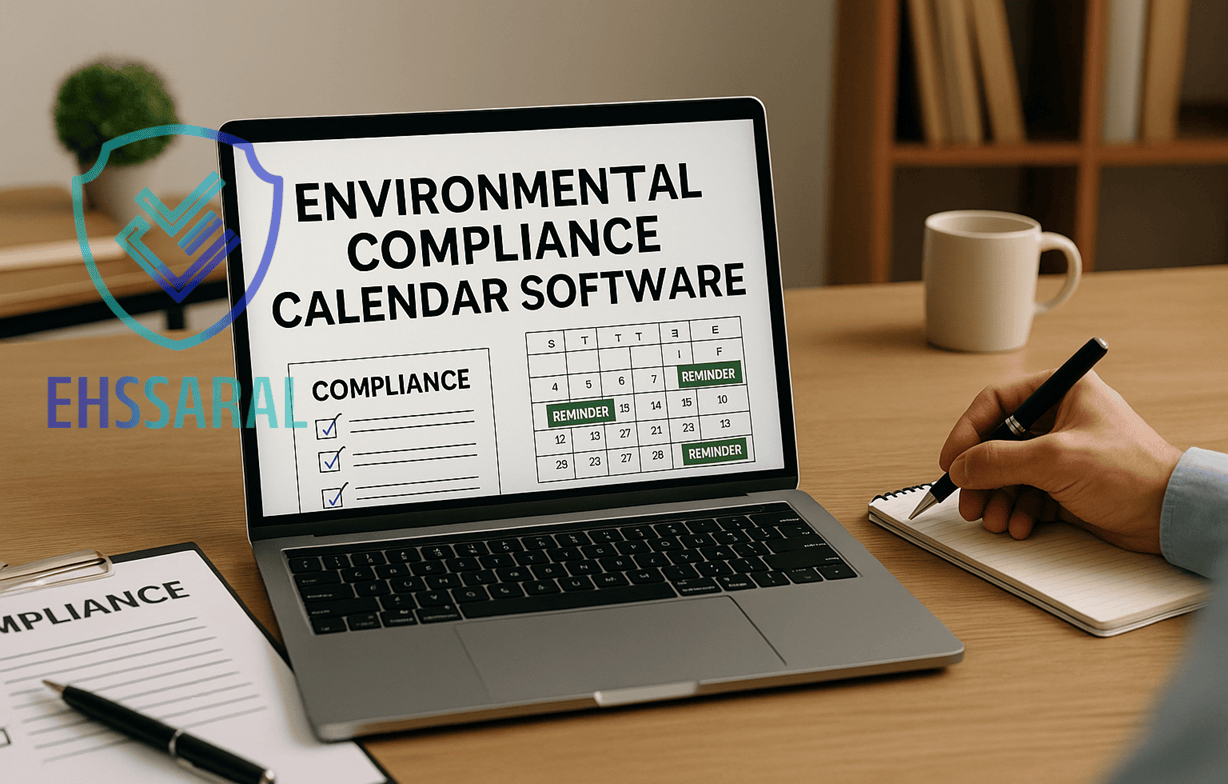
Learn More about Environmental Compliance Calendar Software for Industries
This is a simple, factory-friendly way to prevent “inspection-week panic”:
Daily / Shift-wise
Machine guards in place (no “temporary removal”)
Emergency exits not blocked
PPE availability and use (high-risk areas)
Housekeeping checks in work zones
Monthly
First-aid box inspection + replenishment
Fire extinguisher status check (pressure/expiry)
Electrical panel checks (doors closed, signage, no loose wires)
Overtime and attendance reconciliation (no “hidden notebooks”)
Quarterly
Mock drills (fire / chemical leak / electrical failure as applicable)
Refresher safety training (practical demonstration, not just signatures)
LOTO discipline review for maintenance teams
Emergency lighting / exit signage audit
Annually
Licence renewal / updates (as applicable)
Medical checks for hazardous exposure roles (where required)
Review accident trends + preventive actions
Internal audit of statutory registers and records
Practical point: Consistency beats intensity. Small checks done regularly prevent big surprises later.
After decades of factory visits, audits, inspections, and compliance reviews, certain violations appear repeatedly across industries.
The issue is rarely a lack of intent. More often, it is a lack of systems and follow-through.
The following observations are among the most common non-compliances found during factory inspections:
Temporary removal often becomes permanent, exposing workers to moving parts.
Equipment exists physically but has not been inspected or recharged.
Storage materials, scrap, or pallets obstruct evacuation routes.
Actual overtime differs from recorded overtime.
Training may have occurred, but there is no documentary evidence.
Contract labour is deployed without induction training.
Dust, oil spills, and scrap accumulation create preventable hazards.
Medical supplies are expired, incomplete, or inaccessible.
Minor incidents are ignored until a major accident occurs.
Attendance, accident, leave, and maintenance records are not updated regularly.
Factories rarely get into serious trouble because of one large violation.
Most enforcement actions begin with a pattern of small non-compliances that collectively demonstrate weak management control.
Consistent daily discipline is usually far more effective than last-minute compliance preparation before inspections.
Access the complete Factories Act, 1948 book PDF free download containing all sections, comprehensive study notes, and the latest amendments.
This digital reference manual serves as an essential compliance guide for HR professionals and students alike.
Choose between the Factory Act 1948 PDF in English or the localized Marathi translation to review critical Indian statutory rules regarding worker health, safety, and welfare guidelines.
Click below to instantly save the structured legal document directly to your device.
If you are serious about avoiding inspection stress and last-minute chaos, don’t rely only on reading.
You need a ready-to-use, practical checklist that your team can follow daily.
We’ve created a comprehensive Factory Act 1948 Compliance Checklist based on:
Most factories don’t fail because they don’t know the law.
They fail because:
This checklist helps you move from “reactive compliance” to “system-driven compliance.”
👉 Download Factory Act 1948 Checklist (PDF)
(No login required – use it directly on your shop floor)
Seventy-five years after it was passed, the Factories Act of 1948 is more relevant than ever.
Its spirit - to protect life, promote dignity, and balance production with safety - has quietly evolved into today’s ESG and sustainability frameworks.
Yet most manufacturers don’t realise that their daily compliance struggles are simply modern versions of the same principles written in 1948.
India’s regulatory landscape is being simplified through four labour codes.
One of them, the Occupational Safety, Health and Working Conditions (OSHWC) Code 2020, subsumes the Factories Act.
It doesn’t abolish the old spirit; it upgrades it for the 21st century - with self-certification, digital registers, and integrated state portals.
Under the new framework, factories are expected to:
This shift recognises that compliance isn’t about paper files anymore; it’s about traceability and transparency.
And that’s where technology platforms such as EHSSaral step in - to make the age-old spirit of the Factories Act future-ready.
Every EHS professional knows that environmental law and the Factories Act are intertwined.
The moment a factory begins operations, it enters a web of allied obligations:
Together they ensure that a safe factory also means a clean environment.
Example from the Ground:
A food-processing plant in Navi Mumbai ignored regular cleaning of its effluent-treatment plant because “it’s not in the Factories Act.”
When MPCB officials arrived, they discovered untreated discharge entering a storm drain.
Within 24 hours the plant was sealed, and the owner later told us, “We were compliant on labour law but ignorant on environmental law - and both are sides of the same coin.”
That story repeats across sectors.
Safety without sustainability is incomplete compliance.
When I began my career, compliance meant dusty registers, bound notebooks, and piles of Form-12s.
Audits were like treasure hunts.
Today, with cloud storage, IoT sensors, and mobile apps, that world feels ancient - yet many factories still operate in it.
Why Digital Matters
Digitalisation doesn’t replace the Factories Act - it embodies it.
It helps the occupier prove due diligence without waiting for disasters to justify investment.
After decades in this field, I’ve noticed two kinds of factories.
Type 1: Fear-Driven
Compliance happens only when notices arrive.
Registers are created retroactively.
People see safety as cost and inspectors as threat.
Type 2: Ownership-Driven
Compliance is a habit.
Supervisors track checklists voluntarily.
Owners sit in safety review meetings.
Accidents are treated as learning opportunities, not paperwork exercises.
The second kind of factory rarely faces prosecution.
Their culture naturally aligns with the Factories Act - not because they memorise its clauses, but because they respect its essence.
They treat it as a leadership discipline, not a legal burden.
Lesson 1 - Accidents Don’t Discriminate
I’ve seen multinational plants with world-class systems still face near misses because one worker skipped PPE for “just five minutes.”
Safety has no shortcuts.
Lesson 2 - Documentation Is Memory
A forgotten register once cost a factory its insurance claim after a fire.
If it’s not documented, it’s deemed never done.
Lesson 3 - Training Transforms Behaviour
Posters and slogans fade; demonstration-based training sticks.
When workers understand why a rule exists, compliance becomes self-driven.
Lesson 4 - Maintenance Is Safety in Disguise
Most mechanical injuries trace back to poor maintenance.
A well-lubricated machine is often a safer one.
Lesson 5 - Respect Prevents Resistance
Workers rarely resist safety measures when management treats them with dignity.
The Act’s welfare clauses were written precisely for this reason.
EHSSaral represents the new age of compliance - where law meets automation.
Its purpose aligns perfectly with the Factories Act’s vision: to simplify compliance so industries can focus on production without compromising safety.
Here’s how digital tools make a difference:
When compliance becomes visible and measurable, it ceases to be overwhelming.
That’s the true digital spirit of the Factories Act in 2025.
India’s goal of becoming a global manufacturing hub under Make in India and Viksit Bharat 2047 depends not only on production numbers but also on safety and sustainability standards.
Factories that embrace compliance will attract international buyers, investors, and partnerships.
Those that ignore it will eventually be filtered out by global supply-chain audits.
The Factories Act is not a relic; it’s the moral compass of this industrial transformation.
Future Trends to Watch
Factories that adapt early will enjoy both regulatory peace and reputational advantage.
After more than two decades of working alongside EHS officers, inspectors, and factory owners, one truth stands out:
“The Factories Act is not about avoiding fines; it’s about preventing funerals.”
Every checklist, every register, every PPE audit is written in the memory of someone who once got hurt.
When you treat those lines as lessons, not liabilities, your factory becomes more than a workplace-it becomes a legacy.
So the next time someone calls compliance a burden, remind them: discipline is the real insurance policy.
Harshal T Gajare is the Founder of EHSSaral and a second-generation environmental professional who grew up around factory compliance and monitoring through his family business, Perfect Pollucon Services.
With over 25 years of combined family expertise and his own background in data science, digital systems, and environmental technology, Harshal bridges the gap between traditional EHS practices and modern automation.
Through EHSSaral, he works toward a single goal - helping Indian manufacturers simplify compliance, prevent disasters, and build a safer, smarter Bharat.
| Area | What the Law Requires | Why It Matters |
|---|---|---|
| Health | Cleanliness, ventilation, lighting, sanitation | Prevent disease & fatigue |
| Safety | Machine guarding, fire safety, training, PPE | Prevent accidents |
| Welfare | Drinking water, restrooms, canteen, first aid | Worker dignity |
| Hours | 48 hrs/week, overtime limits, weekly off | Prevent exploitation |
| Records | Registers, inspections, accident logs | Legal proof |
| Registration | Licence before operations | Legal authorization |
| Liability | Occupier responsible | Clear accountability |
Penalties for Non-Compliance (Section 92) – Quick View
Under Section 92 of the Factories Act, if a factory violates provisions relating to safety, health, or welfare, penalties can include imprisonment and/or fines (and can escalate for continuing or repeated violations).
| Situation (practical) | What it can lead to |
|---|---|
| General non-compliance (safety/health/welfare) | Imprisonment up to 2 years and/or fine up to ₹1 lakh (with escalation as applicable) |
| Continuing offence after conviction | Additional fine per day (as applicable) |
| Serious accidents, death, or major injury | Higher scrutiny and tougher action under amended provisions and allied laws |
| Repeat patterns of neglect | Enhanced punishment + reputational and operational risk (suspension/closure scenarios in extreme cases) |
From experience: Most prosecutions don’t start with one big failure. They build when basic non-compliances repeat and documentation cannot prove due diligence.
The official bare Act with latest amendments can be downloaded from:
• Ministry of Labour & Employment website
• State Labour Department portals
Always ensure you refer to the latest state-amended version applicable to your location.
The Act aims to ensure the health, safety, welfare, and proper working conditions of workers employed in factories. It sets minimum standards for hygiene, safety equipment, working hours, and accident prevention.
Any manufacturing premises employing 10 or more workers with power or 20 or more workers without power comes under the purview of the Factories Act, 1948.
Yes. Every factory meeting the definition must register with the respective State Directorate of Industrial Safety and Health (DISH) and obtain a factory licence before starting operations.
The occupier is legally responsible for the overall safety, health, and welfare of workers.
The manager handles day-to-day operations, record maintenance, and compliance documentation.
The maximum limit is 48 hours per week and 9 hours per day.
Workers must get one weekly off and at least 30 minutes of rest after 5 hours of continuous work.
Every accident causing death or serious injury must be reported immediately to the Factory Inspector and local authorities. Minor incidents and near misses should also be documented in an accident register for internal review.
Yes, but only with proper safety, lighting, transport, and welfare arrangements as notified by the respective state government. Employers must ensure safety and consent for women workers during night hours.
Essential facilities include first-aid boxes, clean restrooms, drinking water, washing areas, changing rooms, canteens (for 250+ workers), and crèches (for 30+ female employees).
Violations can lead to fines, prosecution, or even imprisonment of the occupier or manager. Repeated offences attract higher penalties and may result in factory closure or licence suspension.
Platforms like EHSSaral help maintain registers, automate reminders, store compliance documents, and ensure timely renewals - reducing manual effort and avoiding last-minute panic during inspections.
No. While the Factories Act, 1948 is a central law, each state issues its own Factories Rules that govern implementation. Requirements related to licence fees, returns, registers, safety officers, welfare officers, and women night shifts may differ from state to state. Factories should always comply with both the central Act and their applicable State Factories Rules.

Founder, EHSSaral
Founder - EHSSaral | Partner - Perfect Pollucon | ISO 14001 Lead Auditor | GHG Protocol Scope 2 | Chemist | Data Scientist | Second-generation environmental professional simplifying EHS compliance for Indian industries through practical, automated, tech-enabled, data driven compliance workflows.
Calibration & QA/QC in Environmental Monitoring Guide | EHSShala

Isokinetic Sampling Basics: Simple Guide for Stack Monitoring | EHSShala

Why Running Factories Are Getting Closure Notices in 2026 | EHSSaral

Battery Waste Management Rules India - Factory Guide (2026) | EHSShala
Noise Monitoring in Factories Workplace vs Boundary (India Guide) | EHSShala
 ehssaral.webp)
Environmental Monitoring Checklist for Factories (India Guide) | EHSShala
Environmental Compliance Calendar Software – Simplify MPCB Renewals & Due Dates | EHSSaral
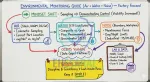
Environmental Monitoring Guide for Indian Factories: Air, Water & Noise | EHSShala
 EHSSaral v1.png)
EADA Random Audit Assignment: Factory Readiness Guide (2025) | EHSSaral
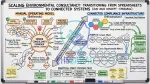
Environmental Consultancy Software: Beyond Excel & WhatsApp