
Blog
EBWGR Certificate: Eligibility, Process, Cost & Records
EHSSaral is an Environmental Compliance Intelligence Platform for Industries. Consent Intelligence • Alerts & Tasks • Incident Reporting • Form IV & V • Audit-Ready Records
See how EHSSaral works
22 Dec 2025
EHSSaral Research Series - SME Compliance in India
Part 1 - Why Good People Still Struggle With Compliance in Indian SMEs
Part 2 - Why Safety Culture Fails in Indian SMEs: People & Compliance Challenges
Part 3 - Systems & Technology Barriers in Indian SME Compliance
Part 4 - Transforming SME Compliance: Zero Surprise Failures in India (You're reading this)
Series Objective: Simplifying compliance challenges faced by SMEs and supporting EHS professionals with practical solutions.
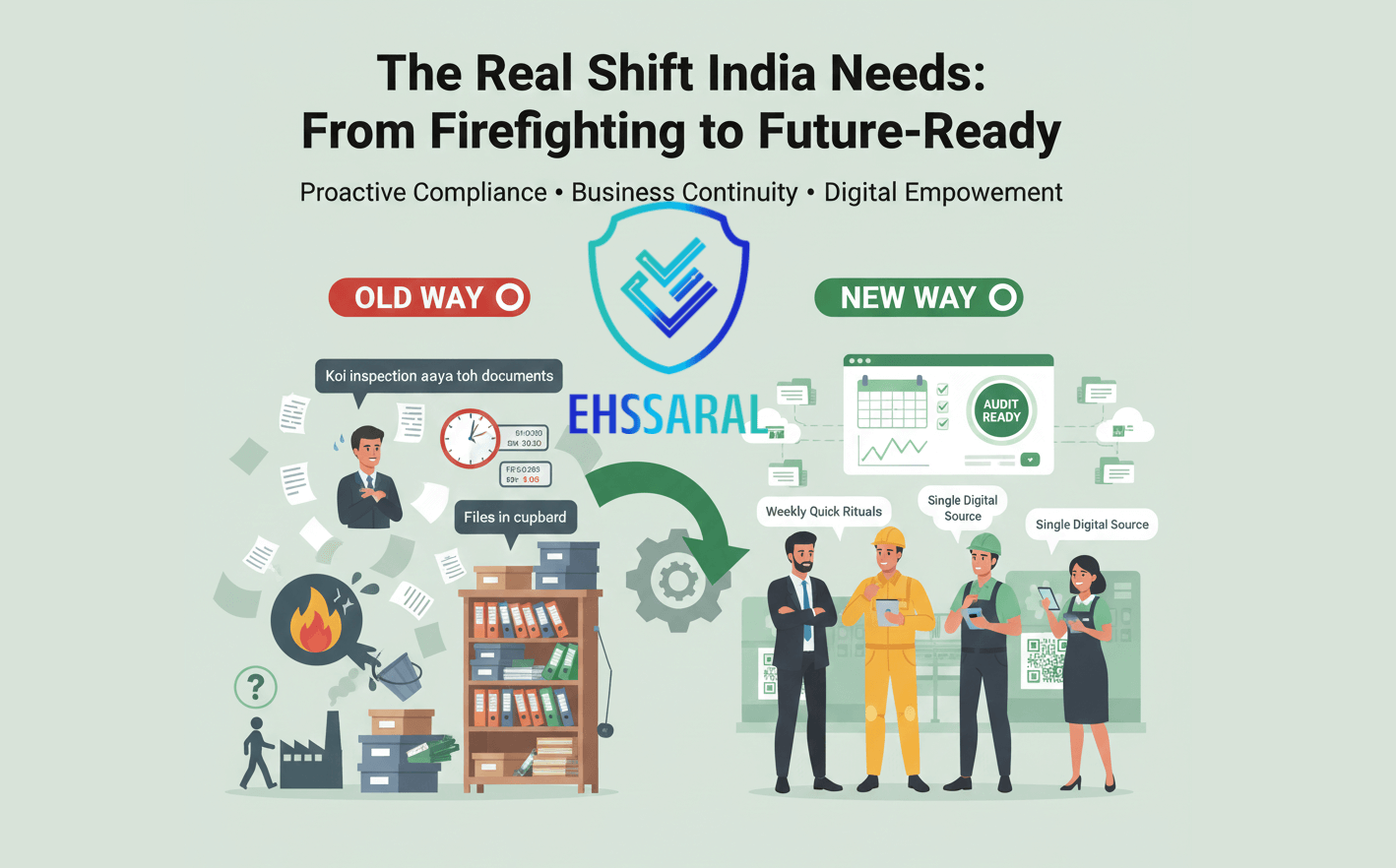
Today, most SME compliance in India is reactive:
'Koi inspection aaya toh documents nikalege.'
(We’ll find documents only if someone visits.)
“Consent renewal? Arey ek-do din mein ho jayega.”
(It will get done in a day or two.)
Compliance feels like tuition homework -
always pending until the teacher appears.
And when the teacher shows up unannounced… panic starts.
But global customers, ESG scorecards, and new digital regulations are changing the game.
To survive the next decade, SMEs must shift to:
Proactive compliance → Zero Surprise Failures
Because every surprise inspection or missed deadline has a cost:
SMEs don’t fail due to big negligence -
they fail because the system was never designed for smooth compliance.
This part explains how to redesign that system.
In every strong factory we studied, one visible pattern emerged:
When the owner shows interest, the whole factory follows.
The EHS officer gets:
✔ Time
✔ Resources
✔ Respect
✔ Support during audits
When owners don’t show interest…
✘ Documentation takes a back seat
✘ Workers ignore PPE
✘ Supervisors push production over safety
Supervisors behave based on what they think owner cares about.
So the first transformation is:
Not just files in a corner cupboard.
Rules don’t change behavior.
Rituals do.
Factories with strong results follow repeatable weekly habits:
| Habit | Benefit |
|---|---|
| 10 min weekly deadline review | No missed renewals |
| Monthly facility audit | Issues caught early |
| Supervisor-led safety talks | Better worker involvement |
| Celebration of zero-incident weeks | Motivation, not force |
| Transparent dashboard | Truth visible → action faster |
These rituals build trust:
Small repeatable actions → Big business protection.
Indian SMEs don’t need complexity.
They just need the right focus:
20% of actions prevent 80% of failures.
The Fail-Proofing Pillars:
1. Dates
2. Documents
3. Knowledge Continuity
If these pillars are strong →
no surprise inspector can shake the business.
Digital isn’t for fancy dashboards or certifications.
Digital is for stress relief:
✔ Reminders come automatically
✔ Documents stored safely
✔ Audit trail always ready
✔ New EHS officer becomes productive fast
It saves sleep, not just time.
Workers may not notice tech.
Boss may not talk about it daily.
But the business becomes stronger silently.
Indian SMEs need solutions that:
✔ cost very little
✔ don’t interrupt production
✔ are easy to repeat
The smartest SMEs reduce risk by building micro-systems.
Think of them as tiny processes that give big protection:
Examples:
| Micro-System | What It Prevents |
|---|---|
| Consent reminder 60-30-7 days before expiry | Unauthorized operations penalty |
| Monthly hazardous waste record check | Missing disposal proof |
| Weekly fire equipment checklist | Non-working equipment during emergency |
| Toolbox talk before risky job | Worker injury & audit NCR |
| One master document drive | Lost compliance proof |
These small systems protect the business from invisible threats:
the ones that hit suddenly when no one is prepared.
Most SMEs actually do the right thing:
But proof is missing.
And auditors/inspectors believe only what they can see on record:
“Proof nahi hai → Kaam nahi hua.”
(No evidence → Work considered not done.)
A strong compliance system converts action into evidence:
✔ Photos
✔ Logs
✔ Gatepass copies
✔ QR-coded labels
✔ Short reports
✔ Vendor acknowledgements
✔ Sign-off by department head
This doesn’t need complex tools.
Just discipline and one single source of truth.
Traditionally in SMEs:
EHS = One person’s responsibility.
In future-ready SMEs:
EHS = Everyone’s responsibility.
Here’s the new chain:
| Who | What they own | Why it matters |
|---|---|---|
| Management | Vision & resources | Sets priority |
| Supervisors | Day-to-day actions | Influence workers |
| Workers | Safe behaviors | Prevent incidents |
| Vendors | Timely reports & documents | Proof & compliance |
| EHS Officer | Monitoring & improvement | System guardian |
This shared accountability reduces pressure on the EHS officer
and increases business confidence.
Leadership / \ Supervisors - Workers
If any one side weakens… compliance collapses.
So strengthening all 3 is the real strategy.
There is a new truth:
In many industries, customer audits decide business survival.
Best SMEs don’t prepare only when someone is visiting.
They stay audit-ready always using:
✔ Clean central document folder
✔ Hazardous waste audits every quarter
✔ Up-to-date MSDS everywhere
✔ Regular toolbox talks
✔ Easy proof for every requirement
✔ Incident RCA closed within 7 days
✔ Digital logs instead of loose papers
When buyers trust the factory, orders grow without negotiation fears.
Where:
Every good action → quickly converted to proof
Every compliance → automatically tracked
Every role → clearly defined
Transparency → Trust → Business growth
This is how SMEs become:
🏅 Preferred vendor
🏅 Sustainable supplier
🏅 Long-term partner
🏅 ESG-compliant organization
Not by spending crores -
but by organizing what is already being done.
You don’t need to overhaul everything.
You just need to fix what fails silently.
This toolkit comes from real factories that have stayed compliant for years – without huge budgets.
One calendar → All deadlines.
What to track:
Add simple reminders:
👉 70% of surprise failures vanish.
Central document control stops “lost proof” disasters.
Create a standard structure:
📁 Compliance Master ├─ SPCB & Legal Docs ├─ Waste Management Records ├─ Fire & Safety Checklists ├─ Calibration & Equipment Logs ├─ Training & Toolbox Talks ├─ Incidents & Corrective Actions └─ Vendor Certificates & AMCs
Everyone uses the same folder.
Proof is 10 seconds away during inspections.
👉 Protection from penalty & panic.
When EHS officer changes, nothing should break.
A simple sheet listing:
👉 Stops repeated mistakes forever.
Every Monday - 15 minutes.
Review:
No presentations. No meetings. No excuses.
Just truth → action → move on.
👉 Smooth audits every time.
Best shop-floor solutions come from workers.
One simple question:
“Aapka kaam aur safe kaise ho sakta hai?”
(How can we make your job safer?)
Workers give real solutions like:
Safety becomes a team sport.
Most SMEs think compliance prevents penalties.
But real value is much bigger:
| Strong Compliance = | Surprise Failures Cause |
|---|---|
| Continuous customer orders | Order hold / blacklist |
| Smooth production | Shutdown due to expired CTO |
| Lower insurance risk | Claim rejections |
| Better workforce morale | Injuries → resignations |
| Access to growth funding | Banks fear “high-risk” units |
Compliance protects cash flow.
It protects jobs.
It protects reputation.
When compliance is strong, business sleeps better.
In the next five years, compliance will become:
| Trend | Impact |
|---|---|
| Digital-first regulation | Auto-monitoring + quicker actions |
| ESG-linked supply chains | Non-compliant vendors removed |
| Data-based inspections | Surprise audits increase |
| Worker skill expectations rise | More process discipline |
| Tech-enabled risk prevention | Less accidents, more trust |
SMEs that adopt simple systems early will:
🏆 Win bigger orders
🏆 Attract top talent
🏆 Grow faster with stability
🏆 Outperform competitors who delay
The future isn’t optional.
It’s already coming.
Most SMEs are not careless.
They are:
✔ hardworking
✔ resourceful
✔ passionate for growth
But the current system forces them into reactive mode.
A better system will:
And that’s the vision of this research series:
Good people deserve systems that help them succeed - not surprise them.
To transform compliance in Indian SMEs:
| Old Way 🛑 | New Way 🟢 |
|---|---|
| React after problem | Prevent problem early |
| One-man dependency | Shared responsibility |
| Paper scattered in files | Single digital source |
| Last-minute firefighting | Weekly quick rituals |
| Fear of inspections | Confidence during audits |
No fancy language.
Just the real formula:
Small Systems + Proof Culture + Simple Digital Support
= Zero Surprise Failures
Because the current system is not designed for SMEs. Compliance tasks are too many for one person, documentation is scattered, deadlines slip silently, and knowledge collapses when staff changes. Hardworking people fail due to structural barriers, not lack of intent.
Focus on three pillars: Dates, Documents, and Knowledge Continuity. One calendar for renewals, one master folder for proofs, and one handover sheet can eliminate most surprise failures.
Simple weekly rituals: supervisor-led safety talks, monthly document checks, quick audits, and celebrating zero-incident weeks. Consistency matters more than budget.
Inspectors and auditors trust only written and recorded evidence. Even if the action is done, without proof it is treated as non-compliance. Documentation is business insurance.
Technology gives peace of mind by automating reminders, securing documents, enabling quick audits, and preventing repeat mistakes when employees change. Digital doesn’t replace humans - it supports them.
Keep records in a single source of truth, ensure timely hazardous waste documentation, train workers regularly, and close incident actions fast. An audit-ready approach protects orders and reputation.

Founder, EHSSaral
Founder - EHSSaral | Partner - Perfect Pollucon | ISO 14001 Lead Auditor | GHG Protocol Scope 2 | Chemist | Data Scientist | Second-generation environmental professional simplifying EHS compliance for Indian industries through practical, automated, tech-enabled, data driven compliance workflows.
EBWGR Certificate: Eligibility, Process, Cost & Records
 EHSSaral.webp)
Environmental Monitoring Mistakes in Indian Factories (Real Issues Explained)
 Guide for Indian Factories EHSShala by EHSSaral.webp)
Ambient Air Quality Monitoring (AAQM) Guide for Indian Factories | EHSShala
Used Oil & Waste Oil Management in India - Factory & EHS Guide | EHSShala
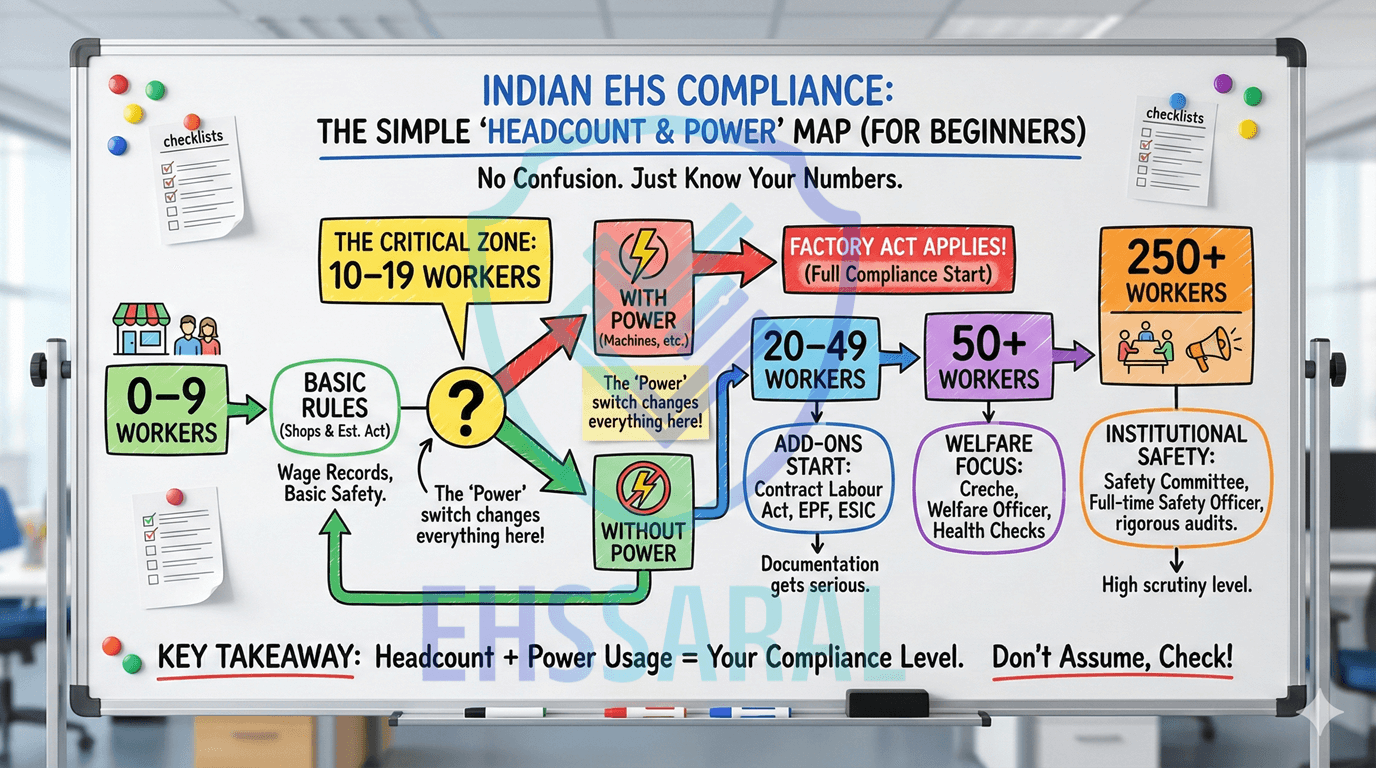
Factory Act & Compliance Thresholds: What Applies to Your Headcount? | EHSSaral
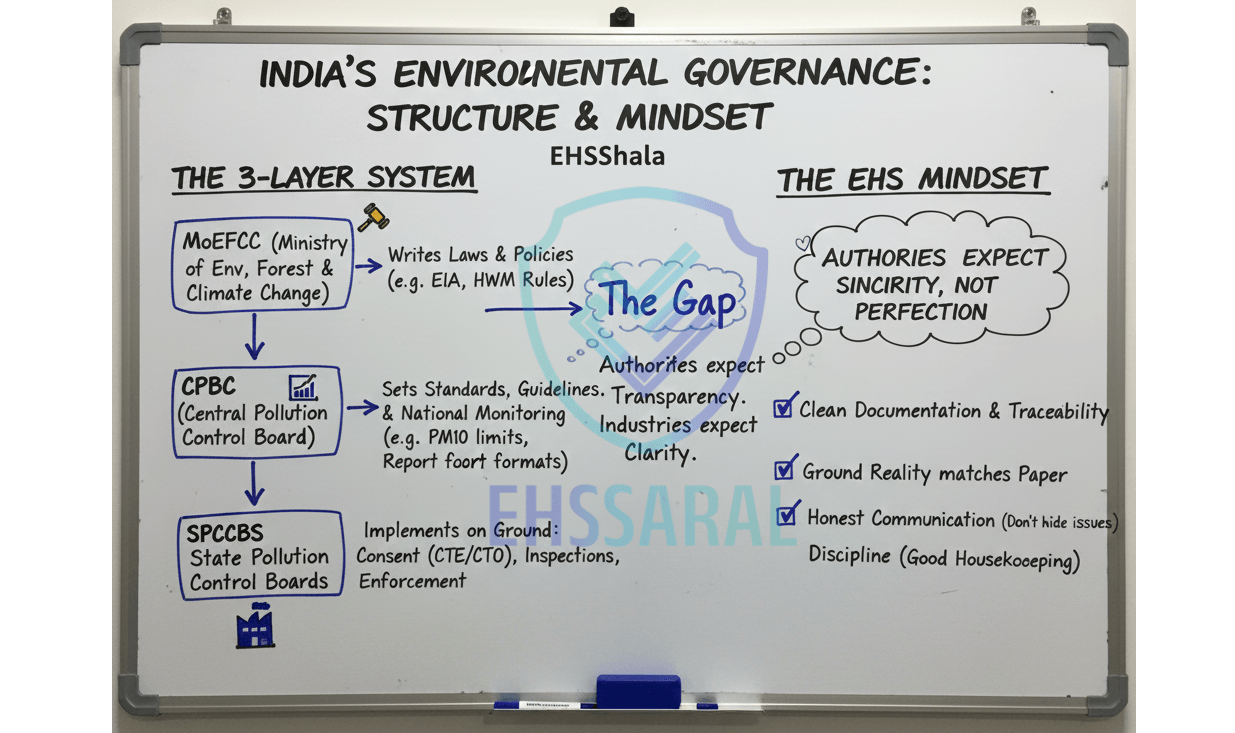
How MoEFCC, CPCB & SPCB Work in India: Expert Guide | EHSShala
Consent Conditions Explained: What Factories Must Actually Follow After Approval | EHSShala
Best Environmental Compliance Software in India (2026): A Practical SME Comparison | EHSSaral
Plastic Waste Management Rules in India: A Practical Guide for Factories, Warehouses and Offices
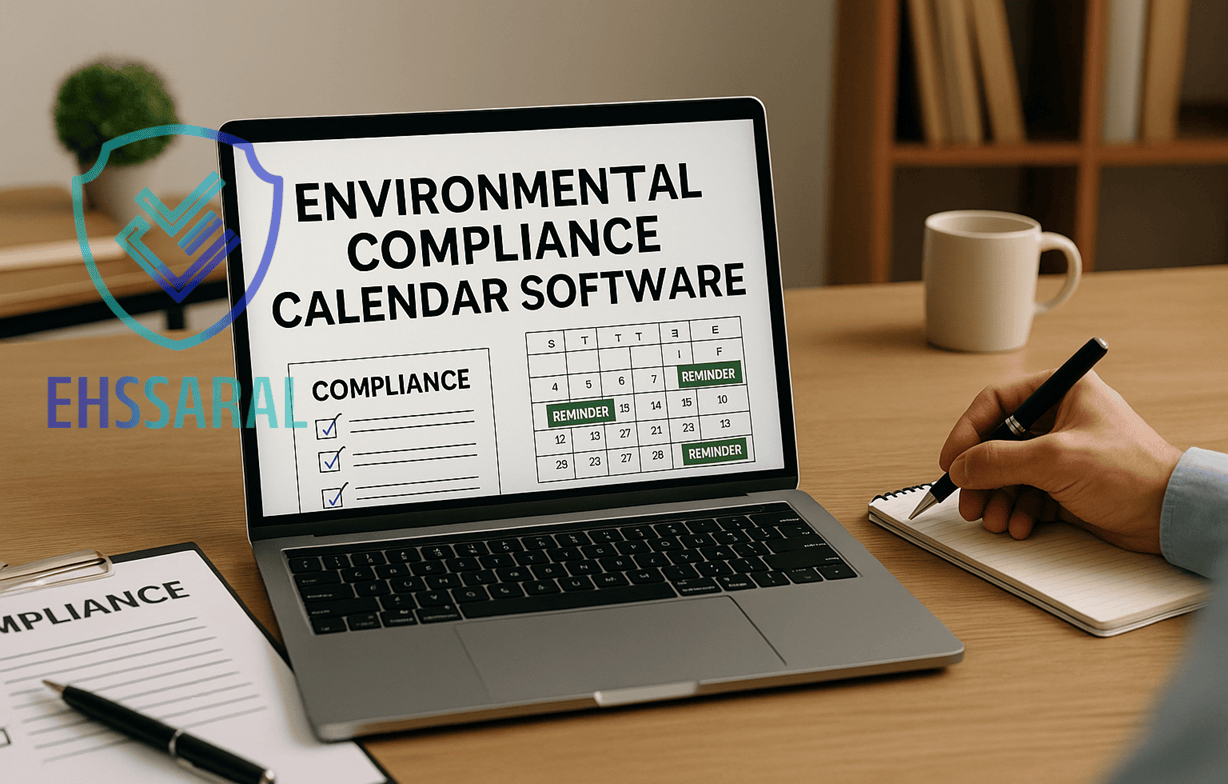
Environmental Compliance Calendar Software – Simplify MPCB Renewals & Due Dates | EHSSaral