
 ehssaral.webp)
Blog
Hazardous Waste Form 4 Portal Errors (MPCB & GPCB Fix Guide)
EHSSaral is an Environmental Compliance Intelligence Platform for Industries. Consent Intelligence • Alerts & Tasks • Incident Reporting • Form IV & V • Audit-Ready Records
See how EHSSaral works
22 Dec 2025

EHSSaral Research Series - SME Compliance in India
Part 1 - Why Good People Still Struggle With Compliance in Indian SMEs (You're reading this)
Part 2 - Why Safety Culture Fails in Indian SMEs: People & Compliance Challenges
Part 3 - Systems & Technology Barriers in Indian SME Compliance
Series Objective: Simplifying compliance challenges faced by SMEs and supporting EHS professionals with practical solutions.
In large companies, compliance is a whole department - environment, health, safety, fire, documentation, audits, training, emergency response… separate teams for everything.
But in Indian SMEs?
It is usually one person doing all of it.
One day he is training workers on PPE.
Next day he is renewing Consent to Operate with SPCB.
Then he is preparing for buyer audit.
And in between, he is running behind contractors for firefighting maintenance.
The job needs a “specialized generalist” - but the system treats him like a low-cost resource.
Yet, the EHS officer often sits alone - no assistant, no supervisor support, and limited budget.
This mismatch between responsibilities vs resources is the first big reason compliance slips.
Most SMEs do not fail compliance because of big disasters.
They fail due to small deadlines silently crossing:
One tiny miss → huge legal identity risk
Expired consent = factory considered unauthorized operation.
That can lead to:
And why do deadlines slip?
Because:
| Real-life reason | What happens |
|---|---|
| Staff turnover | New EHS officer has no clue what is due |
| Workload overload | Priority goes to production & breakdowns |
| No reminders system | Deadlines live in diaries or single Excel |
| Vendor delays | Lab or consultant submits late, factory suffers |
| Owners unaware | “Yeh sab toh chalta rehta hai” mindset |
Compliance is time-bound science.
Not meeting the date → non-compliance, even if everything else is right.
One truth every experienced EHS officer knows:
You may be fully compliant…
but if proof is missing,
you are treated as non-compliant.
Documentation is not paper-work -
it is risk insurance.
In SMEs, documents are usually:
| Problem | Hidden Cost |
|---|---|
| Proof of disposal missing | Hazardous waste violation penalty |
| Calibration reports not filed | Questions on measurement accuracy |
| Permit-to-work records incomplete | Accidental incidents → weak legal defense |
| Unclear organization of records | Audit delays → escalations |
And the biggest vulnerability:
No knowledge continuity.
If an EHS officer leaves -
the factory’s compliance memory leaves with them.
A fabrication SME in Thane had completed all hazardous waste disposal through an authorized vendor.
But the gatepass copies were misplaced inside a cabinet after staff exit.
During SPCB inspection:
“Proof nahi hai? Then you have not disposed. Penalty applicable.”
They managed to recover documents later -
but a small documentation gap created big fear and disruption.
This is why
good people still get into big trouble.
In simple language:
The system is set up in a way
where even hardworking people can fail.
In many SMEs, the same compliance issues keep coming back:
Why does this cycle never fully break?
Because most reactive actions are:
The truth:
Fixing symptoms is easy.
Fixing systems needs consistency.
Example:
If workers are not wearing PPE, we shout.
They follow for 2 days… Revert back on Day 3.
Real root cause may be:
So unless the root trigger is removed,
the failure returns.
Compliance failure is usually silent…
until one small spark becomes a business disaster.
Here are two real India stories (names hidden):
A small packaging factory near Vasai had:
But fire NOC renewal was delayed by 2 months due to multiple people handling documentation.
Then - a small panel fire happened.
Fire department arrived. First question:
“Show valid NOC.”
NOC expired → Fire department filed report →
SPCB involved → Insurance delayed →
Buyer temporarily stopped orders.
One missing document → 3 months business disruption
A chemical SME in Taloja followed disposal rules correctly.
But during drum shifting, no secondary containment → small spill.
Worker slipped → minor injury.
Customer auditor visiting next day asked:
They had what they did…
but no documentation.
Result:
Audit non-conformance → shipment delay → angry management → blame on EHS.
Message:
Even if incident is small,
the business impact can be huge.
Compliance is not only about environment or safety -
it’s about:
Earlier, SMEs mostly worried about inspectors.
Today, pressure comes from:
These auditors check:
If the buyer gives a low score, they simply say:
“We will shift orders to another vendor.”
That hurts more than any penalty.
This creates the compliance choke:
“Logicals kaam bhi hum karenge aur documentation bhi…
par time kahan hai?”
(We will do the actual work AND paperwork… but where is the time?)
CPCB regulatory guideline homepage
We studied SMEs who consistently stay compliant.
Their secrets are simple habit changes:
| Good Habit | Benefit |
|---|---|
| Fixed weekly time for EHS checks | No last-minute panic |
| Clear role responsibilities | Accountability maintained |
| Real root cause analysis | Permanent solutions |
| Good relation with vendors | Faster support |
| Monthly document check | Audit-ready always |
| Visible safety leadership | Workers follow without force |
They didn’t spend crores.
They invested focus.
Small habits → Big protection.
Every Monday morning, top management + EHS review:
Just 15 minutes → Smoother quarter.
✔ Problems repeat because only symptoms are treated
✔ Tiny incidents can become big business issues
✔ Missing documentation → big audit failure
✔ Customer compliance is becoming non-negotiable
✔ Small systems can protect big dreams
In short:
Compliance is not paperwork.
It is business survival insurance.
Many SMEs want safety and compliance to improve - but they feel it is too costly or too complex. The good news is: some of the most impactful solutions are completely free.
Here are practical habits followed by successful SMEs:
1️⃣ Management shows visible support
2️⃣ Use simple dashboards
3️⃣ Vendors chosen not only by cost
4️⃣ Celebrate “zero incident” weeks
5️⃣ Give workers a say in safety
6️⃣ Teach supervisors first
Safety culture is not built by shouting.
It is built by showing.
Try this friendly test: YES / NO
| Question | Risk if “No” |
|---|---|
| Is Consent to Operate valid for all processes? | Very High |
| Do you have 3-month reminders before any compliance expiry? | High |
| Are hazardous waste records complete & filed monthly? | High |
| Are fire systems tested every month? | Medium-High |
| Are all MSDS available at usage points? | Medium |
| Is PPE being used without reminders? | Medium |
| Are training records updated quarterly? | Medium |
| Is there a handover record for each safety task? | High |
| Are incident root cause reports properly closed? | High |
| Do supervisors lead toolbox talks? | Medium |
Score your risk:
Most SMEs fall in the middle - motivated, but overwhelmed.
This is exactly why good people struggle.
International Labor Organization India page
Even with limited resources, SMEs can build a strong base using the “3-Pillar Compliance Model”:
Compliance is time-bound.
👉 A simple calendar + reminders can prevent 70% violations.
If proof is missing, nothing matters.
Key folders to maintain:
👉 One master folder structure → safer audits
If the EHS officer leaves, compliance must not collapse.
👉 This protects business identity
👉 Stops the “repeat mistakes cycle”
| Week | Focus | Daily Time Needed |
|---|---|---|
| 1st Week | Build compliance calendar | 30 min/day |
| 2nd Week | Organize documents folders | 45 min/day |
| 3rd Week | Supervisor safety training | 20 min/day |
| 4th Week | Monthly review system | 15 min/week |
Total cost: ₹0
Total benefits: Peace of mind + ready audits
When systems support people,
compliance becomes effortless.
After speaking with many SMEs and EHS officers, one thing is clear:
Non-compliance is not a result of negligence.
It is a result of a system not designed for SMEs.
Indian SME teams are:
✔ hardworking
✔ skilled
✔ committed to safety and environment
but…
They are overloaded and under-supported.
Compliance failure is:
It’s a structural challenge.
Part-1 showed the foundation issues:
SMEs need simple, scalable ways to stay compliant.
And that’s where the future is heading.
Published under EHSSaral Research Series - Foundation Challenges in SMEs
1. Why is compliance so difficult for Indian SMEs, even when people are sincere?
Compliance is difficult mainly because systems are weak, not because people don’t care. SME teams work with tight budgets, limited staff and rapidly changing regulations. One EHS officer often handles environment, health, safety, fire, training and documentation alone. Without proper tools, reminders and documented handovers, even sincere teams miss deadlines and paperwork.
2. What are the most common compliance mistakes that SMEs make?
Some common mistakes are: missing Consent to Operate or Fire NOC renewal dates, incomplete hazardous waste records, poor storage of documents, outdated forms, irregular safety trainings and no clear incident root cause follow-up. These mistakes are usually due to manual tracking and workload pressure, not intentional violations.
3. How can SME owners support their EHS officers better?
SME owners can help by giving clear authority to EHS officers, reviewing compliance status at least once a month, approving basic budgets for PPE, training and audits, and asking for a simple dashboard of deadlines and risks. Even 15 minutes of management attention every week can reduce future penalties and incidents.
4. Is it necessary to fully digitise compliance to stay safe?
No, full digitisation is not mandatory to start improving. Many SMEs begin with a simple calendar for due dates, a central folder for documents and regular reviews. However, digital tools for reminders, document management and task tracking make life much easier and reduce the chance of human error as the business grows.
5. What is the biggest risk of relying only on manual systems and files?
The biggest risk is that compliance memory leaves with people. When an EHS officer or key staff member resigns, knowledge about deadlines, formats and inspector expectations can disappear. This leads to expired consents, missing reports and stress during inspections, even if the factory was previously compliant.
6. How can an SME start improving compliance in the next 30 days?
A practical 30-day plan is: Week 1 - list all key compliances and due dates on one calendar; Week 2 - organise important documents in a single folder structure; Week 3 - train supervisors and key workers on basic safety and reporting; Week 4 - start a short monthly EHS review meeting to track progress and close open points. Small, consistent steps create long-term protection.

Founder, EHSSaral
Founder - EHSSaral | Partner - Perfect Pollucon | ISO 14001 Lead Auditor | GHG Protocol Scope 2 | Chemist | Data Scientist | Second-generation environmental professional simplifying EHS compliance for Indian industries through practical, automated, tech-enabled, data driven compliance workflows.
Hazardous Waste Form 4 Portal Errors (MPCB & GPCB Fix Guide)
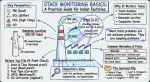
Stack Monitoring Basics for Indian Factories | EHSShala
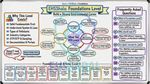
EHSShala Foundations - Core Environmental Basics for EHS Officers

Hazardous Waste Classification in India: Schedule I, Class A, B, C & Inspector’s Guide
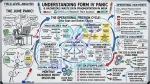
Why Form IV Filing Becomes Difficult for Indian EHS Teams: A Field-Level Analysis
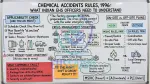
Chemical Accidents Rules, 1996: A Practical Guide for Indian EHS Officers

Why Form IV Readiness Cannot Begin at the End of the Year
Environmental Compliance KPIs for Manufacturing in India

EHSShala Start – Begin Your EHS Learning Journey in India

Free Environmental Compliance Software in India: A Clear, Honest Answer | EHSSaral