
Blog
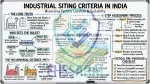
Industrial Siting Criteria in India: Factory Location Guide
EHSSaral is an Environmental Compliance Intelligence Platform for Industries. Consent Intelligence • Alerts & Tasks • Incident Reporting • Form IV & V • Audit-Ready Records
See how EHSSaral works
16 Jul 2026

During a chemical accident, the factory should raise the alarm, protect people, activate the Incident Controller and Site Main Controller, identify the chemical, isolate the source only when safe, call external agencies, control contaminated runoff and maintain a live incident log. The exact response must follow the approved on-site emergency plan and chemical-specific procedure.
A chemical accident does not give much time.
The first few minutes decide whether the situation remains controlled or becomes worse.
This is where most people panic.
The answer is not to remember every rule section. The answer is to follow a clear sequence:
This is a training and preparedness guide.
During an actual emergency, follow the factory’s approved on-site emergency plan, chemical-specific procedure and instructions from the authorised emergency command.
“During a chemical emergency, clarity is more useful than speed without direction.”
This guide is useful for incidents such as:
Not every event requires the same response.
A small contained spill and a toxic gas release need different controls.
The first task is to understand what is happening without exposing more people.
| Step | Main Action |
|---|---|
| 1 | Identify the situation from a safe location |
| 2 | Raise the correct alarm |
| 3 | Protect people |
| 4 | Start headcount |
| 5 | Activate the command structure |
| 6 | Isolate the source only when safe |
| 7 | Use chemical-specific controls |
| 8 | Inform outside agencies |
| 9 | Keep access routes clear |
| 10 | Manage injured persons |
| 11 | Control secondary pollution |
| 12 | Start the emergency time log |
This sequence should be adapted to the factory’s actual emergency plan.
Do not rush towards the source.
First observe from a safe distance.
Try to identify:
Use available information such as:
Do not depend only on smell.
Some chemicals become dangerous before the smell becomes strong. Some can also reduce a person’s ability to smell them after exposure.
“The first person reaching the area should not become the second casualty.”
Raise the alarm as soon as there is a genuine sign of a major release, fire, explosion or dangerous reaction.
Do not wait for complete confirmation if delay can increase exposure.
The alarm should tell people that:
The alarm system should be:
The control room or designated emergency contact should be informed immediately.
Avoid several people making separate calls with different information.
The first priority is life safety.
Move exposed and nearby persons away from the danger area.
Depending on the chemical and situation, people may need to:
Do not assume the normal assembly point is safe.
For a toxic gas release, the nearest assembly point may be downwind.
For a fire or explosion risk, the usual route may be blocked.
The authorised emergency command should select the safe movement direction based on the actual situation.
Evacuation is not always the safest choice.
People may be safer inside a closed building than walking through a toxic gas cloud.
Shelter-in-place may involve:
The decision should consider:
Workers should not make separate evacuation decisions based on rumours.
Headcount is not a clerical activity.
It tells the emergency team whether someone may still be inside the affected area.
Account for:
Visitor, contractor and vehicle records should be available quickly.
Do not send an untrained person back into the area only because someone is missing.
Any rescue entry must be controlled and carried out by trained responders with suitable protective equipment.
A chemical emergency needs one clear command system.
Several people giving instructions can create confusion.
The on-site emergency plan should identify roles such as:
| Role | Main Focus |
|---|---|
| Person noticing the incident | Raise alarm and move to safety |
| Incident Controller | Control the affected area and direct responders |
| Site Main Controller | Take wider site decisions and coordinate outside support |
| EHS team | Hazard information, monitoring, communication and records |
| Security | Gate control, access, crowd control and responder guidance |
| Medical team | First aid, decontamination support and casualty transfer |
| Maintenance or utility team | Safe isolation and emergency shutdown support |
The exact titles may differ between factories.
The important point is that responsibility must be clear before the emergency.
The Incident Controller manages the response near the affected area.
Typical responsibilities include:
This role is usually given to a senior operating person who understands the process and equipment.
The Site Main Controller takes wider control of the site response.
Typical responsibilities include:
This role is commonly assigned to the Plant Head or another senior authorised person.
The actual designation must follow the approved on-site emergency plan.
The EHS officer normally supports the command system through:
The EHS officer should not become the only person capable of managing the emergency.
The system must work even when the main EHS officer is absent.
Stopping the release at its source is often the most effective control.
But isolation should be attempted only when:
Possible isolation actions include:
Do not send a person into a toxic or oxygen-deficient area without suitable respiratory protection and training.
Ordinary cloth masks do not protect against toxic gas or chemical vapour.
The control method must match the chemical.
Do not use the same response for every spill, fire or gas release.
The response may include:
Water should not be used automatically.
Some chemicals react with water or create contaminated runoff.
Read Ozone-Depleting Substances Rules, 2000 - A Practical Guide for Indian Industries
The response may include:
Do not start or stop ordinary electrical equipment inside a vapour cloud unless the equipment is suitable for that hazardous area.
The response may include:
Do not use water directly on every chemical fire.
The Safety Data Sheet and emergency plan should identify unsuitable extinguishing media.
The response may include:
Do not add neutralising material without understanding the reaction.
An uncontrolled neutralisation can create heat, gas, pressure or splashing.
The response may include:
The tanker driver should provide the transport and chemical information needed for response.
Each factory should define emergency levels in its approved on-site emergency plan.
Do not assume that one common Level 1, 2 or 3 system applies everywhere.
A simple decision approach is:
| Situation | Typical Response |
|---|---|
| Small, contained and safely manageable | Local trained response |
| May affect a larger plant area | Activate the on-site emergency organisation |
| May cross the boundary or exceed internal capability | Inform external agencies and activate off-site coordination |
The plan should clearly state:
External support should be requested early when the event may exceed internal capability.
Depending on the situation, this may include:
The person making the call should provide clear information.
| Information | What to State |
|---|---|
| Factory | Name and exact location |
| Entry point | Correct emergency gate |
| Chemical | Name and physical form |
| Accident type | Leak, fire, spill, reaction or explosion |
| Approximate quantity | Known or estimated |
| Present condition | Continuing, isolated or increasing |
| Injuries | Number and type, if known |
| Wind direction | Where relevant |
| Assistance needed | Fire, medical, police or technical |
| Caller | Name and contact number |
Avoid vague messages such as:
“There is a big problem. Please come fast.”
A clearer message is:
“There is an ammonia release from the refrigeration area. The release is continuing. Two persons have possible inhalation exposure. Please enter through Gate 2.”
Clear information helps outside teams prepare before reaching the factory.
Chemical accidents can quickly attract:
Only an authorised spokesperson should communicate externally.
Employees should not share:
Security should prevent crowds from blocking:
The purpose is not to hide information.
It is to ensure that one clear and verified message is shared.
External responders lose valuable time when:
Security should know:
Keep one trained person near the entry point to guide outside teams.
Remove the person from exposure only when it can be done safely.
Basic actions may include:
Do not induce vomiting unless specifically advised for that chemical.
Do not apply random neutralising chemicals to the skin.
The Safety Data Sheet should be sent with the injured person.
The hospital should be informed about:
Keep contaminated clothing isolated.
It may continue releasing vapour or exposing other people.
A chemical emergency may create a second environmental problem.
Common risks include:
Where safe and practical:
Do not wash a chemical spill into a drain only to clear the floor quickly.
“A controlled spill should not become an uncontrolled discharge.”
Mutual aid means support from nearby industries or agreed external agencies.
It may include:
Mutual aid should not exist only as a list of company names.
The factory should know:
A number that has not been checked for years is not a reliable emergency arrangement.
Start recording as early as possible.
Record:
Also record major decisions.
For example:
Do not depend on memory after the event.
A good time log supports:
The all-clear should not be given only because visible smoke or leakage has stopped.
Before giving the all-clear, verify:
Only the authorised person identified in the emergency plan should issue the all-clear.
Workers should not return based on informal messages.
A plan that works during office hours may fail at night.
At 2 AM:
Ask:
“The first few minutes belong to the people already present on site.”
Night-shift readiness should be tested, not assumed.
Not every exercise needs fire engines, water spray and full evacuation.
A tabletop exercise is a discussion-based test.
The team sits together and works through one realistic scenario.
For example:
“A chlorine line fails at 11:30 PM. The main EHS officer is not present. One operator reports eye irritation. The wind is towards the contract canteen.”
The team then answers:
Tabletop exercises are useful for testing:
They do not replace required full-scale drills.
They help identify basic gaps before the larger exercise.
Employees gather to watch.
This blocks responders and increases exposure.
Security and supervisors should control movement quickly.
Several people call fire services, management and authorities with different information.
Use one coordinated communication point.
A dust mask is used for vapour.
A cartridge is used for the wrong chemical.
A breathing apparatus is available, but nobody is trained to use it.
PPE selection must be planned before the emergency.
The normal evacuation route may pass close to the release.
Alternate routes must be known.
The fire is controlled, but contaminated water enters the stormwater system.
Environmental control must be part of the emergency response.
The address is correct, but the factory has several gates.
Emergency calls should mention the exact entry point.
Contractors, visitors and drivers are not included properly.
Maintain current entry records.
If the same alarm, contact or access gap appears repeatedly, the system is not improving.
Close findings with evidence.
Once the immediate danger is controlled, do not treat the event as finished.
The factory should:
Do not restart the affected process only because production is under pressure.
Confirm that:
Employees involved in rescue, injury handling or a severe accident may remain disturbed after the event.
Supervisors should:
This is not weakness.
A serious incident can affect concentration, sleep and decision-making.
Keep:
Do not edit or recreate original records later.
Preserve the first available version.
The investigation should not focus only on who made the final mistake.
Ask:
Review:
Avoid blaming one operator when the wider system created the conditions for failure.
Depending on the event and applicable requirements, the factory may need to:
Do not guess reporting timelines during the incident.
Factories should maintain a site-specific reporting matrix showing:
| Field | What to Include |
|---|---|
| Event type | Leak, fire, injury, explosion, off-site release or other event |
| Concerned authority | Department or agency to be informed |
| Reporting time | Immediate, preliminary or detailed reporting requirement |
| Required form | Form, letter, portal or prescribed report |
| Responsible person | Primary and alternate owner |
| Evidence | Acknowledgement, email, portal receipt or submitted copy |
Check the applicable requirements under:
Keep one person responsible for tracking post-incident submissions and evidence.
| Immediate Check | Status |
|---|---|
| Chemical identified | Yes / No |
| Alarm raised | Yes / No |
| Control room informed | Yes / No |
| Incident Controller activated | Yes / No |
| Site Main Controller activated | Yes / No |
| Evacuation or shelter decision taken | Yes / No |
| People moved to a safe location | Yes / No |
| Headcount started | Yes / No |
| Source isolated where safe | Yes / No |
| External support called | Yes / No |
| Correct gate communicated | Yes / No |
| Injured persons treated | Yes / No |
| Safety Data Sheet sent with casualty | Yes / No |
| Drains isolated | Yes / No |
| Contaminated water contained | Yes / No |
| Emergency time log started | Yes / No |
| Monitoring readings recorded | Yes / No |
| Mutual aid activated if needed | Yes / No |
| Public communication controlled | Yes / No |
| All-clear given by authorised person | Yes / No |
| Evidence preserved | Yes / No |
| Post-incident reporting initiated | Yes / No |
This checklist should support the approved emergency plan.
It should not replace chemical-specific procedures.
Any factory version of this checklist should carry:
Chemical emergency response is not about one brave person solving everything.
It is about a prepared team following a clear system.
The basics remain the same:
Most emergency failures begin with small gaps:
“Good emergency response does not depend on heroics. It depends on preparation.”
A calm team with current information will usually respond better than a large team without clear roles.
Raise the alarm, move people away from danger and activate the factory’s emergency command structure.
No. Shelter-in-place may be safer when the toxic gas cloud is outside the building and evacuation would move people through the affected area.
The Incident Controller manages the response near the accident location and directs trained responders.
The Site Main Controller takes wider site-level decisions, coordinates evacuation and communicates with outside agencies.
The EHS officer supports hazard assessment, gas monitoring, PPE guidance, communication, pollution control, reporting and investigation.
External help should be called early when the event may exceed internal capability, affect people outside the factory or require fire, police, medical or technical support.
Chemical spills and contaminated firefighting water can enter external drains and create a second environmental emergency.
Provide the factory name, exact gate, chemical involved, type of accident, approximate quantity, injuries, wind direction and assistance required.
A tabletop exercise is a discussion-based test where the emergency team works through a realistic scenario step by step.
The authorised person should give the all-clear only after the source is isolated, monitoring is satisfactory and no further reaction or hidden leak is expected.

Founder, EHSSaral
Founder - EHSSaral | Partner - Perfect Pollucon | ISO 14001 Lead Auditor | GHG Protocol Scope 2 | Chemist | Data Scientist | Second-generation environmental professional simplifying EHS compliance for Indian industries through practical, automated, tech-enabled, data driven compliance workflows.
Industrial Siting Criteria in India: Factory Location Guide
Battery Waste Management Rules India - Factory Guide (2026) | EHSShala
The ZLD Mass Balance Trap: How Auditors Calculate Effluent Using Your Water Bills | EHSSaral
Why BMW Inspections Feel Stricter Today (India) | EHSSaral
Why Environmental Non-Compliance Happens in Indian Industries: 6 System Failures
Types of Pollution in Industries Expert Guide | EHSShala

Why Form IV Readiness Cannot Begin at the End of the Year

Consent to Operate (CTO) Explained for Indian Factories | EHSShala
Hazardous Waste All Forms Form 1 to Form 12 Guide

How to Read Your Consent Copy (CTE & CTO Explained Simply) | EHSShala