
Blog
Hazardous Waste Management Software India | EHSSaral
EHSSaral is an Environmental Compliance Intelligence Platform for Industries. Consent Intelligence • Alerts & Tasks • Incident Reporting • Form IV & V • Audit-Ready Records
See how EHSSaral works
8 Jun 2026
 ehssaral.webp)
4-stream waste segregation in factories refers to separating municipal-type waste into Wet, Dry, Sanitary, and Special Care streams under SWM Rules 2026. Bulk Waste Generators must ensure proper processing, vendor authorization, and traceable documentation.
Bulk Waste Generators must process biodegradable waste on-site unless an EBWGR Certificate is obtained to transfer processing responsibility to an authorised vendor.
Definition: Under SWM Rules 2026, factories classified as Bulk Waste Generators must segregate municipal-type waste into four streams and ensure traceable processing through authorized facilities.
Walk through most Indian factories today and you will see bins.
Green bins.
Blue bins.
Sometimes labelled. Sometimes not.
Ask someone:
“Where does this dry waste go after the truck leaves?”
And the answers usually become vague.
SWM Rules 2026 do not just require segregation.
They require:
Accountability
Traceability
Clear handling routes
Article 1 helped you determine whether your factory qualifies as a Bulk Waste Generator (BWG).
This article answers the next question:
“How do we implement 4-stream segregation properly - without confusion, overreaction, or wasted money?”
This is not about adding bins.
It is about designing a system that works even when nobody is watching.
Read about New Solid Waste Management Rules Notified; To Come into Force from April 1, 2026 from PIB
Before you start buying infrastructure, apply this mental filter:
If manufacturing stopped tomorrow, would this waste still exist?
If yes - it falls under SWM 2026.
If no - it likely belongs under Hazardous Waste or other process-specific regulations.
| Waste Item | SWM 2026? | Why |
|---|---|---|
| Canteen vegetable peels | Yes | Municipal-type wet waste |
| Office courier cardboard | Yes | Dry waste |
| Used sanitary pad | Yes | Sanitary stream |
| Broken CFL tube light | Yes | Special care waste |
| Used oil filter from machine | No | Industrial hazardous waste |
| Production scrap metal | No | Process scrap |
This boundary clarity prevents two common mistakes:
Ignoring SWM completely
Over-complicating it with hazardous waste logic
The 4 streams are simple in theory.
But they must be clearly understood on the ground.
Where it arises:
Canteen
Pantry
Garden/landscaping
Includes:
Food leftovers
Fruit and vegetable peels
Tea waste
Flower waste
Handling requirement:
Composting or bio-methanation
Or EBWGR-certified route if on-site not feasible
In most mid-sized factories, canteen waste alone can cross 80-150 kg per day.
Wet waste is usually the largest compliance exposure under SWM 2026.
Where it arises:
Offices
Admin blocks
Canteen packaging
Worker break areas
Includes:
Paper
Cardboard
Plastic bottles
Clean packaging material
Glass
Wood pieces (non-process)
Rubber items
Handling route:
Must go to authorised Material Recovery Facilities (MRFs) for sorting and recycling.
Important distinction:
Dry waste under SWM is different from production scrap.
Do not mix administrative dry waste with manufacturing scrap.
This category is frequently mishandled.
Includes:
Used sanitary pads
Diapers
Tampons
Condoms
Requirement:
Secure wrapping
Separate storage
Safe handling for sanitation workers
In many factories, this waste gets mixed with dry waste due to embarrassment or lack of clear bins.
This must change.
This stream causes the most confusion.
Typical examples:
CFL/tube lights (not LED bulbs)
Mercury thermometers (where still used)
Expired medicines from first-aid room
Small empty paint or chemical containers (residue level)
These items contain hazardous traces.
But they are not bulk hazardous waste under the Hazardous Waste Rules.
They must be collected separately and handed over to authorised agencies or designated collection centres.
This stream should not become a dumping ground for:
Solvent-soaked cloth
Used oil filters
Chemical sludge
Process waste
Cross-contamination here creates regulatory risk under multiple rules.
A common mistake is placing 4 bins everywhere.
That leads to confusion and cost escalation.
Instead, divide your factory into zones.
Includes:
Offices
Reception
Meeting rooms
Photocopy rooms
Required streams:
Dry
Special Care
(Wet only if pantry exists)
Includes:
Canteen
Washrooms
Garden
First-aid room
Required streams:
Wet
Dry
Sanitary
Special Care
This zone needs the most attention.
Includes:
Drinking water stations
Worker break areas
Locker rooms
Required streams:
Dry
Wet (if food is consumed)
Sanitary (if washrooms exist nearby)
Production scrap areas should not be mixed into this system.
| Zone | Streams Required | Typical Locations | Notes |
|---|---|---|---|
| Administrative | Dry + Special Care | Office corridors, reception | Wet only if pantry |
| Welfare | All 4 Streams | Canteen, washrooms | Highest priority |
| Production (municipal areas) | Dry + Wet (+ Sanitary nearby) | Break rooms, water points | Exclude process waste |

Indian shop floors respond to visuals better than policy documents.
Recommended coding:
Green - Wet
Blue - Dry
Yellow - Sanitary
Red or Black - Special Care
But here is an important practical point:
You do not need to replace all bins.
If you already have bins:
Use large colored stickers
Apply clear laminated labels
Add icon-based visuals
Use local language where needed
Cost-effective retrofitting works.
Compliance requires clarity - not new plastic purchases.
Wet waste is where most BWGs will feel pressure under SWM Rules 2026.
The rule is clear:
If you qualify as a Bulk Waste Generator, biodegradable waste must be processed on-site.
If on-site processing is genuinely not feasible, you must obtain an Extended Bulk Waste Generator Responsibility (EBWGR) Certificate and route waste through an authorised third party.
This is not an exemption.
It is an accountability transfer mechanism.
Start with your daily wet waste generation.

| Decision Factor | On-Site Composting | EBWGR Route |
|---|---|---|
| Financial Model | High CAPEX | Recurring OPEX |
| Space Requirement | Dedicated shed | Minimal storage space |
| Odour Risk | Needs monitoring | Vendor responsibility |
| Maintenance | Internal manpower | Vendor-managed |
| ESG Value | Visible circular economy | Dependent on vendor documentation |
| Best Suited For | Large campuses | Space-constrained units |
| Type | Approx Cost |
|---|---|
| Small vermicompost unit (50-100 kg/day) | ₹80,000-1,50,000 |
| Rotary drum (100-200 kg/day) | ₹2,50,000-4,50,000 |
| Bio-methanation (>200 kg/day) | ₹8,00,000+ |
Hidden Costs:
Manpower
Carbon material purchase
Periodic maintenance
| Item | Monthly Cost |
|---|---|
| Wet waste vendor | ₹10,000-15,000 |
| Sanitary waste vendor | ₹3,000-5,000 |
| Special care collection (avg) | ₹1,500-3,000 |
Annual recurring cost: ~₹1.5-2.5 lakhs
A 120 kg/day canteen waste generator may find:
Composting capex: ₹3.5 lakhs
EBWGR annual cost: ₹1.44 lakhs
Break-even ~2-3 years.
The decision is not just financial.
It is operational maturity.
https://static.pib.gov.in/WriteReadData/specificdocs/documents/2026/jan/doc2026129773501.pdf
Many factories assume:
“Vendor collects waste → compliance done.”
That is incorrect.
Under SWM 2026, you remain accountable for where your waste ends up.
EBWGR Certificate copy
Vendor municipal authorization
Processing facility details
Monthly confirmation of quantity processed
End-use proof (compost/biogas)
MRF authorization copy
Weighment slips (stream-wise)
Monthly recyclable recovery summary
End recycler certificate (quarterly)
Authorized collection agency proof
Safe handling certificate
Collection frequency documentation
Transport record
Vendor refuses documentation
Verbal assurances only
Single vendor claiming to handle all 4 streams without separate authorizations
No weighment system
If documentation is weak, your portal records will eventually expose the gap.
When finalizing agreements with waste vendors, avoid vague language.
Include a written accountability clause. For example:
Minimum Vendor Accountability Clause (Dry Waste Example)
Vendor shall provide:
(a) Copy of valid MRF / municipal authorization within 7 days of agreement signing.
(b) Monthly weighment certificate with stream-wise quantity breakdown.
(c) Quarterly end-recycler confirmation or processing certificate.
(d) Immediate written notification if authorization status changes.
(e) Agreement terminable with 30 days’ notice if documentation obligations are not met.
Having documentation obligations written into the contract changes vendor behaviour immediately.
Compliance is not just about pickup - it is about provable downstream processing.
The “Special Care” bin often becomes misunderstood.
Workers start putting:
Oil-soaked cloth
Chemical residues
Process waste
This is dangerous.
Special Care Waste is for small domestic-type items with hazardous traces - not industrial hazardous waste.
Mixing industrial hazardous waste into Special Care creates dual non-compliance:
SWM violation
Hazardous Waste Rules violation
Supervisors must inspect this bin weekly.
In many industrial areas, local bodies lack structured sanitary waste handling systems.
If municipal support is weak, the safest compliance route is:
Tie up with your existing Bio-Medical Waste (BMW) vendor.
Why?
They have incineration infrastructure
They operate under manifest tracking systems
They understand traceability
Sanitary waste bins must be:
Opaque
Placed inside washrooms (not public corridors)
Collected discreetly
Embarrassment leads to mixing.
Design prevents that.
Although the central portal architecture is evolving, expect:
Total waste generated (kg/month per stream)
Wet waste processed on-site vs outsourced
Dry waste recycled %
Special care items collected
Sanitary waste volume
Authorization numbers
Processing facility details
Monthly confirmation uploads
Create an Excel tracking sheet now with:
Daily log entry
Monthly consolidated totals
Vendor dispatch records
Weighment documentation
When the portal activates, you will already have structured data.
Factories that wait for login credentials before preparing data will struggle.
Most factories conduct one awareness session.
Attendance register signed.
Photos taken.
Training marked “completed.”
Two weeks later, waste is mixed again.
Why?
Because segregation is behavioural, not informational.
You must train differently for different roles.
Supervisors are process owners.
They do not need theory.
They need clarity.
4-stream logic and zoning
Vendor handover procedure
Weekly inspection checklist
Escalation protocol for mixing
Documentation expectations
Key Message:
Your job is process control, not punishment.
Supervisors must inspect during collection time - not just bin placement.
Housekeeping is the backbone of compliance.
Training must be visual and physical.
Real waste examples in each bin
How to wrap sanitary waste
Where Special Care waste is stored
How to avoid mixing during collection
Do not conduct this in a conference room.
Train at the actual bin locations.
Key Message:
You protect workers’ health and company compliance.
Keep it short.
Which bin for what
“No mixing” principle
What to do when unsure
Use posters at bin sites.
Reinforce weekly for first month.
Maintain:
Attendance register
Photographs of session
Copy of training material
Quarterly refresher schedule
Portal audits will eventually expect proof of awareness.
If you observe the following within 2-3 weeks of implementation, retraining is required:
The same worker repeatedly puts common items in the wrong bin.
Housekeeping staff still ask, “Which bin?” for routine waste.
Sanitary waste appears in dry bins (privacy design issue).
Special Care bin overflows without pickup planning.
Supervisors do not conduct inspection during collection time.
Composting unit installed but not actively maintained.
Training failure is rarely about knowledge.
It is usually about:
Poor visual cues
No reinforcement
No supervision
Correct early. Small drift becomes systemic failure.
If you expect perfection, you will panic.
Expect friction.
Habit takes time to change.
Fix:
Daily supervisor walkthrough first 14 days.
Embarrassment causes wrong disposal.
Fix:
Ensure opaque bins inside stalls.
Clear signage about privacy.
Nobody knows collection schedule.
Fix:
Pre-define quarterly pickup.
Do not let items pile up.
Bins separated.
Collection trolley not separated.
Fix:
Use partitioned trolley or separate collection sequence.
Inspect during transfer, not just at source.
Improper carbon balance.
Fix:
Engage vendor support first 3 months.
Monitor moisture.
Friction is not failure.
Unmonitored friction becomes non-compliance.
This is the greyest area.
Many factories operate inside industrial parks.
Estate handles:
Processing
Vendor contracts
Portal reporting
You still own:
Segregation at your unit
Staff training
Primary storage
Handover documentation
Documents you must maintain:
Estate BWG registration copy
Waste responsibility agreement
Monthly handover receipt
Estate annual compliance copy
Even inside estate, if your unit independently qualifies:
You must:
Register separately
Maintain your own vendor documentation
Prepare for independent reporting
You cannot hide behind informal estate systems.
Estate provides common bins.
No registration.
No documentation.
This is high risk.
If audit happens, liability may cascade.
Safest route:
Maintain independent documentation even if estate physically collects waste.
Enforcement will increasingly examine both.
Inspectors may check:
Color-coded bins present
Segregation quality
Sanitary bin placement
Absence of foul odour near canteen
Special Care storage location
Composting unit operation (if installed)
Inspectors may request:
Vendor agreements
Authorization certificates
Monthly waste logs
Weighment slips
EBWGR certificate
Training records
Future portal cross-checks will compare:
Reported quantities vs physical capacity
Vendor authorization validity
Stream consistency
If dry waste generation is unrealistically low, it may trigger inquiry.
From field observations, inspections often focus on clarity of accountability rather than volume.
Expect questions such as:
“Show me your wet waste processing route.”
“Where are your vendor authorization copies?”
“Who is your SWM nodal officer?”
“How much dry waste did you generate last month?”
“Where is your sanitary waste collected and stored?”
“If this composting unit fails, what is your backup plan?”
Preparation tip:
Every answer should be supported by:
A document
A log entry
Or a physical demonstration
Verbal explanations without evidence create unnecessary scrutiny.
Looks like:
Random bin placement.
Fix:
Use zoning table.
Map before purchase.
Looks like:
Attendance sheet only.
Fix:
Short weekly reinforcement first month.
Looks like:
Local scrap dealer pickup.
Fix:
Request written authorization copy.
Refuse undocumented route.
Looks like:
Daily entries but no totals.
Fix:
Monthly Excel summary.
Before implementation, management will ask one question:
“What will this cost us?”
Answer calmly - with structure.
| Item | Quantity | Approx Cost | Total |
|---|---|---|---|
| 4-stream bin sets | 15 | ₹3,500 | ₹52,500 |
| Signage (multilingual, laminated) | 20 | ₹800 | ₹16,000 |
| Special Care storage cabinet | 2 | ₹8,000 | ₹16,000 |
| Training materials | Lump sum | - | ₹12,000 |
| Subtotal (No Composting) | ~₹96,500 |
This assumes retrofitting existing bins where possible.
Capex: ₹80,000 to ₹4.5 lakhs (depending on capacity)
Ongoing maintenance cost
Manpower time
Monthly recurring:
Wet waste vendor: ₹10,000-15,000
Sanitary waste vendor: ₹3,000-5,000
Special care collection (avg): ₹1,500-3,000
Annual impact: ~₹1.5-2.5 lakhs
Often overlooked:
Clean dry waste segregation improves scrap value (₹3,000-8,000/month recovery)
Reduced contamination lowers rejection from MRFs
Strong documentation accelerates consent renewals
Cleaner ESG reporting reduces audit friction
Net compliance cost may be lower than initially assumed.
When seeking budget approval, frame SWM 2026 implementation as operational risk control - not housekeeping expense.
You may present it like this:
“SWM 2026 compliance requires approximately ₹1-2.5 lakhs initial investment depending on wet waste route.
However:
▪ Improved dry waste segregation increases scrap recovery value.
▪ Strong documentation reduces audit friction and renewal delays.
▪ Structured segregation strengthens ESG and BRSR reporting accuracy.
▪ Avoids environmental compensation exposure under the Polluter Pays principle.This is not a cost centre.
It is infrastructure for regulatory stability.”
Management responds better to risk mitigation language than bin purchases.
Assume you are starting in early March.
April 1 enforcement is near.
Work in parallel, not sequentially.
Confirm BWG status
Conduct zoning walkthrough
Count required bins
Estimate daily wet waste
Initiate vendor discussions
Check estate documentation (if applicable)
Deliverable:
Clear implementation map + vendor shortlist.
Order bins / retrofitting material
Design signage (icons + local language)
Finalize wet waste route decision
Draft vendor agreements
Create Excel tracking template
Deliverable:
Physical + documentation structure ready.
Install bins as per zoning
Place signage
Train supervisors + housekeeping
Conduct 3-day trial run
Monitor segregation quality daily
Deliverable:
Functioning system before enforcement date.
Worker toolbox talks
Correct mixing issues
Finalize documentation files
Consolidate first monthly log
Photograph infrastructure for records
Deliverable:
Audit-ready state.
If timelines are tight, prioritize:
4-stream bins clearly labelled
Sanitary waste separate collection
Vendor authorization copies
Wet waste processing route defined
Daily log initiated
Supervisor audit system
Staff refresher training
Monthly consolidated summary
Special Care quarterly pickup plan
Compost quality monitoring
Segregation quality audits
ESG dashboard integration
Compliance requires functioning systems, not perfection.
If you implement only the Must-Have list by April 1, you are audit-defensible. Everything else improves quality but is not day-one critical.

Ask yourself:
Are all required zones mapped?
Are 4 streams physically visible?
Is sanitary waste stored discreetly?
Does Special Care waste have defined pickup?
Do we have vendor authorization copies?
Is wet waste route documented?
Is daily log maintained?
Is one person designated SWM nodal officer?
Can we explain where each stream goes after dispatch?
Are photographs available as evidence?
If you answer “no” to more than three - your system needs reinforcement.
4-stream segregation is not about perfection.
It is about predictability.
If waste movement depends on memory, compliance will fail.
If waste movement depends on system design, compliance becomes calm.
SWM Rules 2026 are not introducing something radically new.
They are formalizing accountability.
Factories that treat this as a structured operational project - not a housekeeping issue - will experience:
Fewer audit surprises
Cleaner ESG disclosures
Better scrap recovery
More stable compliance
Start with zoning.
Document everything.
Fix friction early.
That is how 4-stream segregation becomes routine - not reactive.
No.
SWM Rules apply to municipal-type solid waste generated within factories, such as:
Canteen waste
Office paper
Sanitary waste
Small batteries and bulbs
It does not replace Hazardous Waste Rules for process-generated industrial waste.
If your factory qualifies as a Bulk Waste Generator (BWG) under the threshold criteria, additional responsibilities apply.
Special Care Waste under SWM includes small, intermittent items such as:
CFL tubes
Small batteries
Expired medicines
Residue-level empty containers
Hazardous Waste refers to bulk industrial waste from production processes such as:
Chemical sludge
Used oil filters
Solvent residues
Contaminated rags
If you generate it in kilograms per day from manufacturing, it is likely Hazardous Waste - not Special Care.
If you qualify as a Bulk Waste Generator and generate biodegradable waste, on-site processing is the primary requirement.
However, if on-site processing is genuinely infeasible due to space or operational constraints, you may obtain an Extended Bulk Waste Generator Responsibility (EBWGR) Certificate and outsource to an authorised vendor.
This is not an exemption - it transfers processing responsibility while maintaining traceability.
Only if that vendor has separate, valid authorizations for each stream.
In practice:
Dry waste → Authorised MRF
Wet waste → Composting/Bio-methanation facility
Sanitary waste → Authorised incineration route (often BMW vendor)
Special Care → Designated hazardous trace collection
One vendor claiming to manage all streams without documentation is a compliance risk.
Typically:
Notice issued for improper segregation
Corrective action deadline provided
Repeated violation may lead to environmental compensation
More importantly, portal data mismatches can trigger scrutiny in later audits.
Mixed waste usually signals poor training or supervision - not infrastructure failure.
Without composting infrastructure, initial setup may range from ₹80,000 to ₹1.5 lakhs depending on bin count and signage.
If on-site composting is installed, capital expenditure may increase to ₹2-5 lakhs.
Recurring vendor costs (EBWGR route) may range from ₹1.5-2.5 lakhs annually.
Improved scrap segregation can partially offset recurring costs.
It depends.
If the estate is registered as BWG and manages processing centrally, your responsibility may be limited to segregation and documentation.
However, if your unit independently crosses BWG thresholds, you may still be required to maintain independent compliance records.
Never assume estate management eliminates individual accountability.
Quarterly collection is common, but frequency depends on volume.
Do not allow accumulation beyond safe storage limits.
Maintain collection records and vendor certificates.
The Rules mandate segregation but do not rigidly enforce a single national color scheme.
However, best practice in industrial setups follows:
Green - Wet
Blue - Dry
Yellow - Sanitary
Red/Black - Special Care
Consistency and visibility matter more than brand-new bins.
Typically:
EHS Manager
Facility Head
Compliance Officer
The nodal officer should:
Maintain monthly records
Coordinate vendors
Oversee segregation quality
Respond during inspection
Clear accountability prevents audit confusion.
Yes.
Even if you do not meet BWG thresholds, structured segregation:
Improves scrap recovery
Reduces contamination
Strengthens ESG reporting
Prepares for future regulatory tightening
It is a low-risk operational improvement.
Treating it as a housekeeping exercise.
SWM 2026 is about:
Accountability
Documentation
Downstream traceability
Bins alone do not create compliance.
Systems do.

Founder, EHSSaral
Founder - EHSSaral | Partner - Perfect Pollucon | ISO 14001 Lead Auditor | GHG Protocol Scope 2 | Chemist | Data Scientist | Second-generation environmental professional simplifying EHS compliance for Indian industries through practical, automated, tech-enabled, data driven compliance workflows.
Hazardous Waste Management Software India | EHSSaral
EBWGR Certificate: Eligibility, Process, Cost & Records
Ultimate MPCB Form IV Checklist for Maharashtra Industries
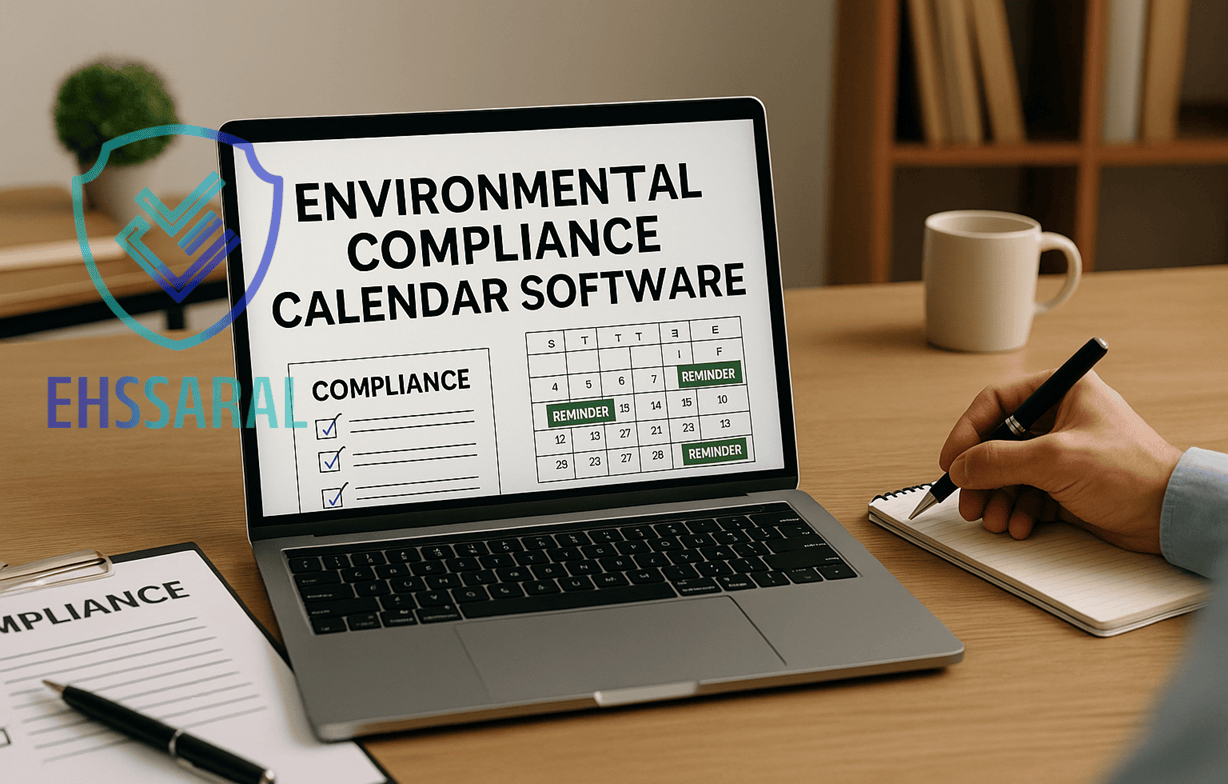
Environmental Compliance Calendar Software – Simplify MPCB Renewals & Due Dates | EHSSaral
Common Hazardous Waste Mistakes in Indian Factories | EHSShala
 by EHSSaral v1.webp)
EADA Portal & Environment Audit Rules 2025: A Practical Guide for Indian Factories | EHSSaral
Chemical Accidents Rules, 1996: A Practical Guide for Indian EHS Officers

150 Essential EHS Terms Explained Simply | EHSShala

Consent to Operate (CTO) Explained for Indian Factories | EHSShala
The Hidden Costs of Manual Environmental Compliance in India