Environmental Monitoring Checklist for Factories (India Guide) | EHSShala
EHSSaral is an Environmental Compliance Intelligence Platform for Industries. Consent Intelligence • Alerts & Tasks • Incident Reporting • Form IV & V • Audit-Ready Records
Environmental Monitoring Checklist for Factories (India Guide)
A practical, factory-ready system for Indian EHS professionals
Environmental monitoring checklist for factories in India covering air, water, noise, and hazardous waste compliance in a practical, audit-ready format.
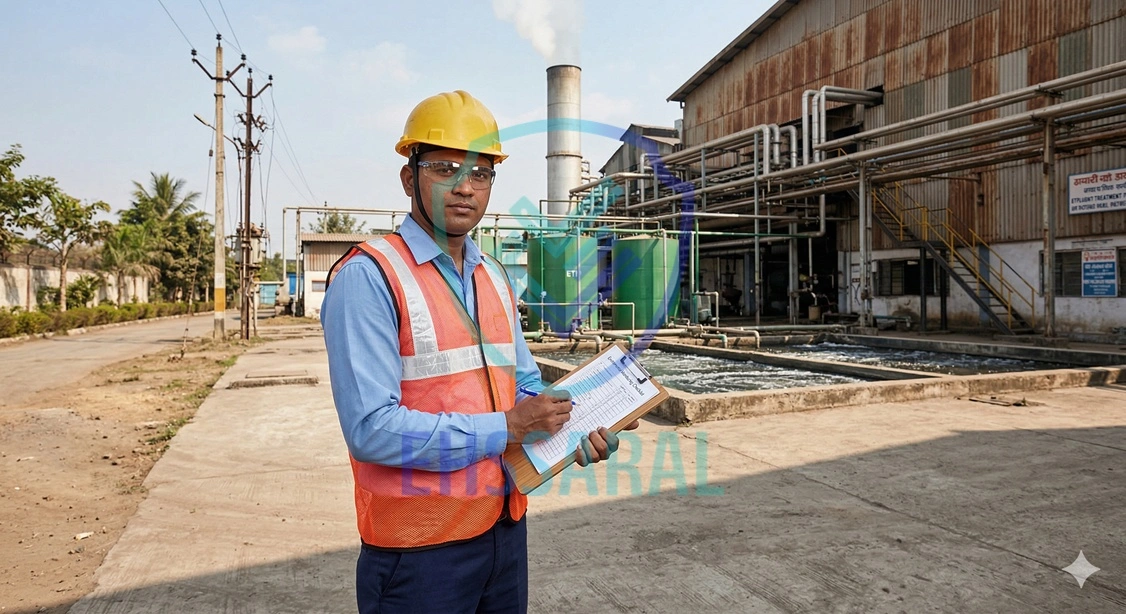
Environmental monitoring in Indian factories usually does not fail because one number suddenly crosses the limit. It fails because small system gaps are ignored over time. Sampling points are not ready, process conditions are not normal, reports are filed without review, and data mismatches stay unexplained. This guide gives a practical environmental monitoring checklist for Indian EHS professionals covering pre-monitoring readiness, on-site verification, post-report review, monthly checks, and system validation.
What This Guide Covers
Why monitoring problems rarely start with limits
What environmental monitoring actually means on site
Where monitoring usually breaks
Pre-monitoring checklist
On-site monitoring checklist
Post-monitoring checklist
Monthly compliance review checklist
System validation checklist
What to do when something fails
Industry-specific monitoring add-ons
Hazardous waste monitoring checks
The human side of monitoring
Where monitoring is moving
A simple monitoring system that actually works
Why Monitoring Problems Rarely Start with Limits
Most people think environmental monitoring problems start when limits are crossed.
In real factories, that is rarely true.
Problems usually start much earlier. Small things get ignored:
Sampling point not ready
Equipment not working properly
Report received but never reviewed
These look like minor issues on that day.
But over time, they build into bigger gaps.
“Most compliance issues don’t start when limits are crossed. They start when the system becomes casual.”
This is why some plants get surprised during inspections.
They feel everything is under control. Reports are there. Numbers look fine.
But when someone looks closely, the system does not hold.
What Environmental Monitoring Actually Means on Site
Before going into checklists, it is important to be clear about what we are managing.
Environmental monitoring is not just one activity.
It includes multiple things happening at different places in the plant:
Stack emission monitoring (boilers, DG sets, process stacks)
Effluent monitoring from ETP or STP
Ambient air quality monitoring
Noise monitoring (plant boundary, DG sets)
Hazardous waste storage and handling checks
Each of these has:
Different frequency
Different parameters
Different sampling methods
And most importantly - different chances of failure.
For a junior EHS officer, all of this can feel scattered.
But on site, it is actually one system.
If one part becomes weak, it starts affecting the overall compliance picture.
Where Monitoring Usually Breaks (What Actually Happens)
This is where most people will recognize their own plant.
Monitoring rarely fails in a dramatic way.
It breaks in small, routine situations.
Before Monitoring
This is the stage most people underestimate.
Some common situations:
Stack platform is not safe, so sampling is postponed
Ladder access blocked with stored material
Stack port sealed or damaged, technician cannot use it
ETP not running properly on that day
So what happens?
Lab comes. Waits. Adjusts. Sometimes takes sample in compromised condition. Sometimes leaves and reschedules.
And slowly, the monitoring schedule starts drifting.
During Monitoring
On paper, this is the most controlled stage.
In reality, this is where silent errors happen.
Common situations:
Technician samples from easier point instead of correct one
DG set is running at low load, not actual condition
Process is partially shut, but sampling still happens
No one from plant supervises the activity
Everything gets done.
Report also comes.
But the data does not represent actual plant conditions.
After Monitoring
This is where maximum problems start.
Not because of wrong data.
Because of no attention.
Common situations:
Report received on email, never checked properly
Same value repeated for months, no one notices
One month report missing, but no tracking system
Units mismatch (mg/L vs ppm), but ignored
“In many factories, monitoring is done. But not managed.”
This is the real issue.
Most plants don’t fail because they don’t know what to do. They fail because no one is tracking whether it is actually being done.
How to Use This Checklist (Before You Jump In)
Before going into detailed checklists, one important point.
This is not a document to be filled after everything is over.
It should be used:
During actual monitoring activity
While preparing for lab visit
While reviewing reports
Keep it simple:
One printed copy near your desk
One soft copy on your system
Responsibility clearly assigned
If responsibility is not clear, checklist becomes paperwork.
If responsibility is clear, checklist becomes control.
Environmental Monitoring Checklist Structure
Instead of one long list, we will break it into practical stages.
This matches how work actually happens on site.
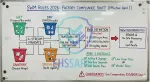
Pre-Monitoring (Before lab arrives)
During Monitoring (On-site activity)
Post-Monitoring (After report comes)
Monthly Review (System check)
System Validation (Data reliability check)
If you follow these five stages properly, most monitoring issues reduce automatically.
1. Pre-Monitoring Checklist (Before Lab Visit)
This stage decides whether your monitoring will be meaningful or not.
If preparation is weak, even a good lab cannot help.
This is one of the most common ground-level issues.
Check:
Stack sampling port available and usable
Platform safe and accessible
Ladder condition okay
Effluent sampling point clean and reachable
For stack monitoring, do not just check whether the port exists. Check whether it is practically usable and whether the access arrangement supports safe and proper sampling. Many factories have a sampling point on paper, but not in a condition that supports correct monitoring in real life.
Many times, sampling point exists.
But practically, it is not usable.
That difference matters.
Equipment Check
Before lab comes, basic equipment status should be known.
Flow meter working
pH meter calibrated
Pumps operational
Power supply available
If these are not working, sampling may still happen.
But the data will not be reliable.
Process Condition
This is very important.
Sampling should represent normal operation.
Check:
Production running at normal load
No shutdown or abnormal condition
ETP / STP running properly
“Sampling during unstable conditions creates misleading data.”
Lab Selection
One practical mistake seen often is selecting a lab based only on convenience.
Always check:
NABL accreditation
Approval or acceptance by the relevant Pollution Control Board
MoEF&CC recognition wherever applicable for the required work
If the lab is not properly approved for the required monitoring, the report may create trouble later even if the values look fine.
A Small Habit That Changes Everything
Before every monitoring activity, take 5 minutes and just walk through the plant.
Look at stack
Look at ETP
Look at access
You will immediately know if something is not ready.
This small habit prevents last-minute confusion.
2. On-Site Monitoring Checklist (During Activity)
This is the stage where most people feel things are under control.
Lab has come. Sampling is happening. Work is moving.
But this is exactly where silent mistakes happen.
Not because of intention. Because no one is really watching closely.
Lab Coordination
Start with basic clarity.
Lab technician identity verified
Equipment brought is as per requirement
Parameters understood by technician
Don’t assume everything is correct.
A 2-minute conversation at the start avoids confusion later.
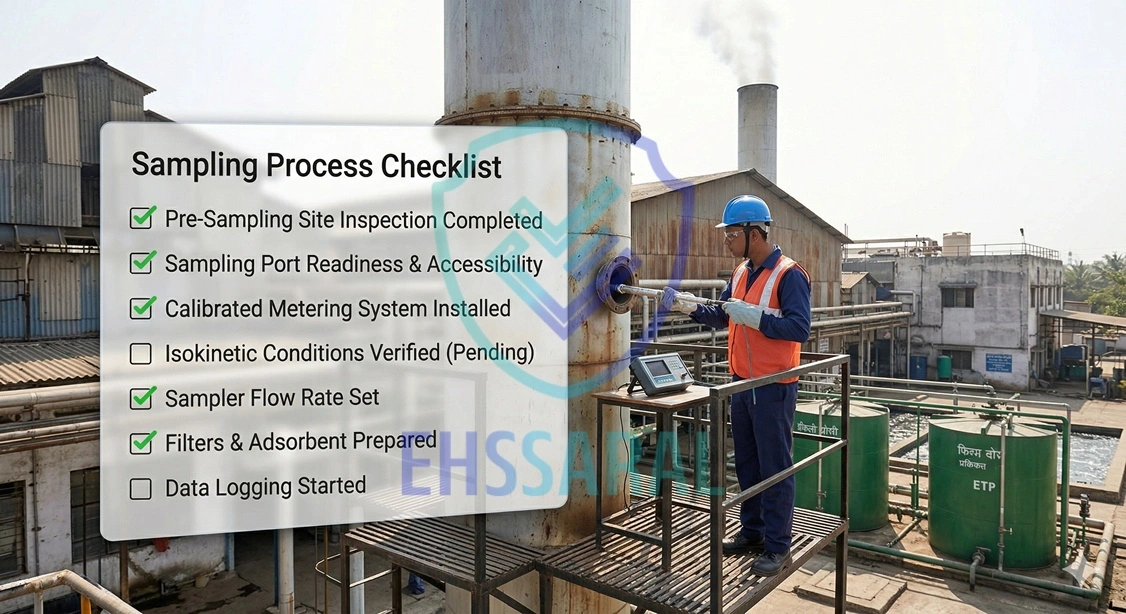
Sampling Verification
This is critical.
Check:
Correct stack or point is selected
Sampling port actually used (not bypassed)
Correct method followed
For stack monitoring:
Isokinetic sampling should be followed for particulate matter
In many cases, sampling gets done.
But not from the correct condition or method.
And this difference is not visible in the report.
Stack & ETP Reality Checks
Some things you should physically observe:
For Stack:
Is the port actually usable or just present?
Is the technician able to insert probe properly?
Is the platform stable enough for proper work?
For ETP:
Is there any bypass line open?
Is flow actually passing through treatment?
Is sampling being done from final discharge point?
These are simple checks.
But they directly affect data credibility.
Process Observation
Do not just stand near the technician.
Look at the plant condition.
Any visible emissions from stack?
Any unusual odour?
Any fluctuation in process?
If process is not stable, data will reflect that.
Or worse - not reflect it correctly.
Documentation During Monitoring
Many problems start because documentation is weak.
Ensure:
Field data sheet is filled properly
Time and date recorded correctly
Signatures taken
Photos taken if needed
This becomes your proof later.
Not the report alone.
The 5-Minute Pre-Monitoring Briefing (Most Plants Skip This)
This one habit changes monitoring quality completely.
Before the lab arrives, quickly inform:
Shift supervisor
Operator (ETP / boiler)
Maintenance person
Say clearly:
“Lab is coming. Keep process normal. Don’t adjust anything.”
This avoids common issues:
Operator reducing load to “show better result”
Maintenance doing repair during sampling
Someone stopping process thinking it helps
Monitoring is not an exam to pass.
It is a system to understand your plant.
3. Post-Monitoring Checklist (After Report Comes)
This is the most ignored stage.
And also the most important one.
Because this is where data becomes decision.
Report Validation
When report comes, do not just file it.
Check:
All required parameters are covered
Units are correct
Values are within limits
Many times, report is correct.
But no one reads it properly.
Data Review
This is where experience starts building.
Compare:
Current report vs previous reports
Any sudden increase or decrease
Any unusual pattern
Also check whether the report broadly aligns with process reality and past trends. If your plant has OCEMS, do a quick comparison at review stage, but keep the detailed mismatch analysis for the monthly system validation step. That is where this issue should be reviewed properly.
Ignoring it creates bigger problems later.
Record Keeping
Good record keeping reduces stress during inspection.
Ensure:
Report stored in proper folder
Soft copy + hard copy available
Easy to retrieve when needed
In many plants, data exists.
But cannot be found when required.
That creates panic.
Action Tracking
If everything is within limits, good.
If not, act immediately.
Identify issue
Note it properly
Plan corrective action
“Data is useful only when it leads to action.”
What to Do When Something Fails (CAPA Made Practical)
This is where most EHS officers feel pressure.
A value crosses limit.
First reaction is usually panic.
But handling this properly actually builds trust.
Step 1: Verify First
Before reacting, check:
Was sampling done correctly?
Was process stable?
Any temporary disturbance?
Do not assume result is wrong.
But do not assume it is final truth either.
Step 2: Identify Real Cause
Look at actual plant condition.
Common causes:
ETP overloaded
Scrubber not working properly
Bag filter damage
Production spike
Avoid vague thinking.
Be specific.
Step 3: Record Properly (This Is Where Most People Struggle)
Many people write very generic statements.
That creates doubt.
What NOT to write:
“Temporary issue. Will improve.”
What to write:
“Stack PM observed at 142 mg/Nm³ (limit 50, as per latest notification). Root cause: Bag filter rupture identified on 15-May. Filter replaced on 18-May. Re-monitoring planned on 25-May.”
“Trying to hide data creates bigger problems later.”
Honest systems always perform better in the long run.
4. Monthly Compliance Review Checklist
Daily activity can feel under control.
But if you don’t step back once a month, small gaps start building quietly.
Monthly review is where you check:
👉 “Is my system actually working?”
Frequency Check
Start with the simplest question:
Were all required monitoring activities done this month?
Check:
Stack monitoring (as per frequency)
Effluent monitoring
Ambient monitoring
Noise monitoring
In many plants, one month gets missed.
Then next month also slips.
And suddenly there is a gap during inspection.
Data Consistency Check
Look at your reports together.
Not one by one.
Ask:
Do values look realistic?
Any sudden jump or drop?
Any repeated values?
For example:
COD: 82 → 85 → 83 → 84 → 85 → 85
This looks “good”.
But sometimes it is too consistent.
That creates doubt.
OCEMS vs Manual Data (Where Applicable)
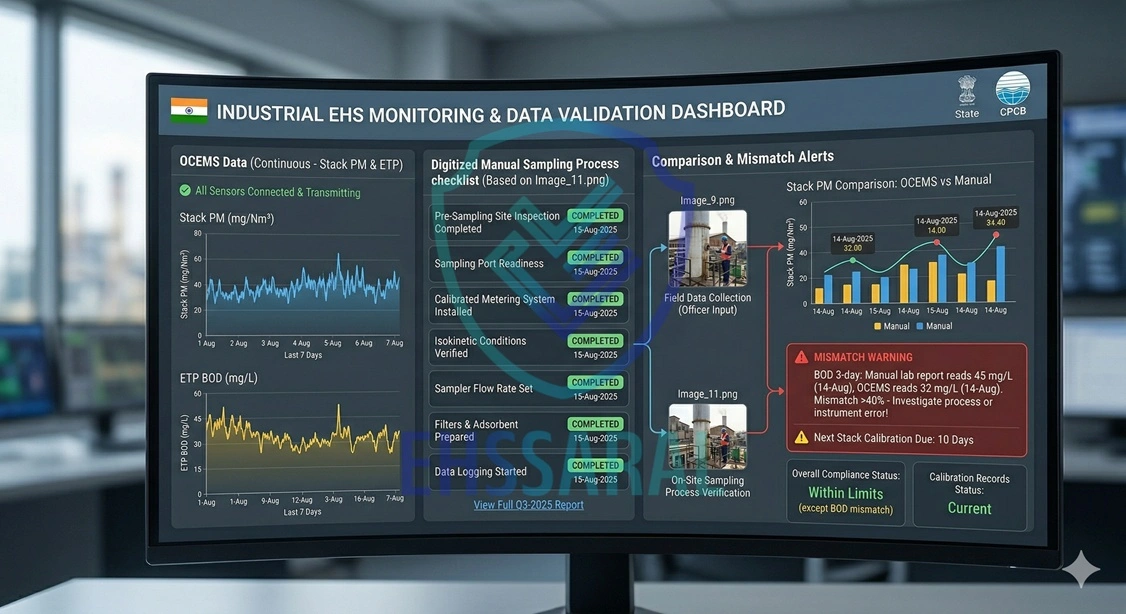
If your plant has OCEMS, this is the right stage to compare it properly with manual monitoring.
Check:
Are the trends broadly aligned?
Does manual data look unusually clean while OCEMS shows frequent spikes?
Is the OCEMS system working but not transmitting properly to the server?
Is there any long gap in OCEMS records?
Manual and OCEMS data will not match exactly. They are different systems. But they should not tell completely different stories. If they do, don’t ignore it. Find out whether the issue is process-related, instrument-related, or data-related.
Calibration & Maintenance Check
Monitoring is only as good as your instruments.
Check:
Flow meters calibrated
pH meters calibrated
OCEMS calibration records available
In many plants, instruments are installed.
But calibration is ignored.
Documentation Audit
This is where most stress comes during inspection.
Check:
All reports available
Properly filed
Easy to retrieve
If it takes 20 minutes to find one report, system is weak.
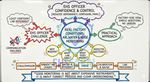
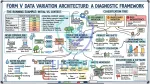
5. System Validation Checklist (Is Your Data Reliable?)
This is a step most factories completely skip.
They focus on doing monitoring.
But don’t check whether their data actually makes sense.
Manual vs OCEMS Alignment
Compare:
Manual monitoring results
OCEMS trends
Ask:
Are they roughly in the same range?
Do trends match over time?
If manual says everything is stable, but OCEMS shows spikes…
That will definitely raise questions.
Data Logic Check
Look at your data like a human, not like a file.
Ask:
Does this number make sense?
Is it possible in real conditions?
Example:
COD always exactly 85
Stack PM always 98 when limit is 100
pH always same
Stack temp mismatch
Flow vs load mismatch
These patterns look “safe”.
But they don’t look real.
Some examples help here.
If ETP pH is recorded as 7.2 at every reading across the day, that deserves a second look. In a real plant handling variable wastewater, values usually move at least a little. If they never change, the process may be unusually stable, the instrument may be stuck, or the reading may not be based on actual measurement.
The same applies to stack data. If stack temperature is recorded too low for the type of boiler or process running, the number may not match actual operating conditions. Good monitoring is not just about entering values. It is also about asking whether the data makes physical sense.
Repeatability Check
If same monitoring is repeated:
Are results reasonably consistent?
Or completely different each time?
Too much variation also indicates a problem.
Either in process or in monitoring.
“Inspectors don’t just see numbers. They try to understand your system.”
Red Flags Inspectors Notice Immediately
There are certain patterns that immediately create doubt.
Even if everything looks compliant.
What Raises Suspicion
Same value repeated for months
Values always just below limit
OCEMS data not matching manual reports
Missing reports for some months
No record of any failure ever
In real systems, variation happens.
Zero variation looks unnatural.
What Builds Trust
Slight variation in values
Proper documentation of issues
Clear corrective actions
Data that can be explained
“Clean records build more trust than perfect numbers.”
In pharma, internal air quality matters as much as external.
Chemical / Process Industry
Hazardous waste drum condition
Proper labeling
Secondary containment
Leaks and storage issues are common inspection points.
Construction / Infrastructure
Dust suppression system working
Water sprinkling records
Noise monitoring near boundary
These are highly visible issues.
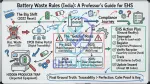
Hazardous Waste Monitoring (Often Ignored)
Many plants focus heavily on air and water monitoring but become weak in hazardous waste record control.
Check:
Form 3 daily logbook is maintained properly
Form 4 annual return is filed correctly and on time
Waste containers are labeled properly
Storage area condition is good
Different waste streams are not mixed casually
Secondary containment is intact where needed
In many inspections, hazardous waste issues are not about one dramatic violation. They are about poor housekeeping, weak records, and careless storage practices.
If you don’t have these formats today, your system is depending on memory. And memory always fails under pressure.
How to Use This on Mobile
Save checklist as PDF
Open during inspection
Tick in real time
This avoids memory-based mistakes.
How Inspectors Actually See Monitoring
Inspectors don’t just check numbers.
They try to understand:
Is your system reliable?
Can you explain your data?
Are your records consistent?
If your system is clear, inspection becomes smooth.
Final Thought
Environmental monitoring is not just about taking samples.
It is about:
Control
Consistency
Clarity
Good compliance does not need brilliance. It needs consistency. And consistency needs a system. The real question is whether your plant is building that system, or still depending on memory, follow-ups, and last-minute firefighting.
Frequently Asked Questions
What is an environmental monitoring checklist?
An environmental monitoring checklist is a structured system used by factories to track air, water, noise, and hazardous waste compliance activities. It helps ensure all required monitoring is done on time and properly recorded.
Why is environmental monitoring important for factories in India?
Environmental monitoring ensures compliance with Pollution Control Board requirements (CPCB/SPCB), helps avoid penalties, and identifies process issues before they become serious violations.
What is the difference between OCEMS and manual monitoring?
OCEMS (Online Continuous Emission Monitoring System) provides real-time continuous data, while manual monitoring is periodic sampling done by laboratories. Both should align in trends but may not match exactly.
How often should environmental monitoring be done?
Monitoring frequency depends on Consent to Operate (CTO) and Environmental Clearance (EC) conditions. It can be monthly, quarterly, or continuous depending on parameters and industry type.
What are common mistakes in environmental monitoring?
Common mistakes include poor sampling conditions, not reviewing reports, repeated unrealistic values, missing records, and ignoring data mismatches between systems.
What should be checked before environmental monitoring?
Before monitoring, ensure sampling points are accessible, equipment is working, process conditions are normal, and the selected lab is properly approved.

 ehssaral.webp)