
 based on Pollution Index (PI) scores for 2025 environmental compliance V1.webp)
EHSShala
Industry Categorization in India: Red, Orange, Green, White & Blue | EHSShala
EHSSaral is an Environmental Compliance Intelligence Platform for Industries. Consent Intelligence • Alerts & Tasks • Incident Reporting • Form IV & V • Audit-Ready Records
See how EHSSaral works
20 Aug 2026
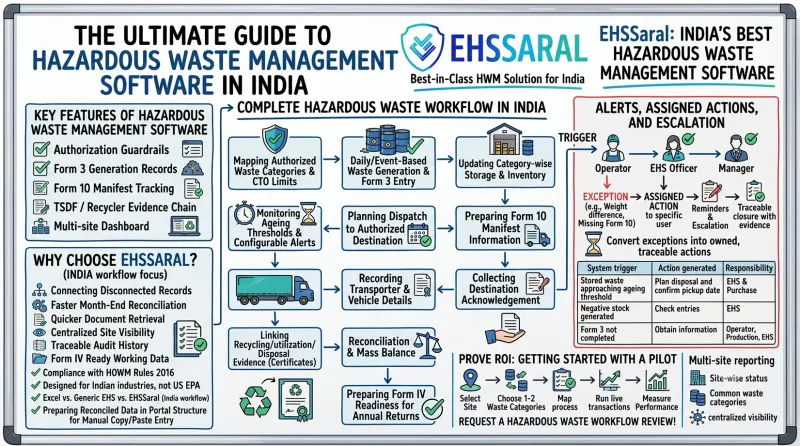
This page targets a commercial-investigation search: users are learning about features while evaluating software. Keep the deeper operational articles on Form IV readiness, reconciliation and waste management under Research or EHSShaala, then internally link them to this page.
In many Indian plants, hazardous waste information is available—but not in one connected system.
Daily generation may be recorded in a Form 3 register. Dispatch details may be maintained in Excel. Form 10 manifests may remain in physical files, while weighbridge slips, transporter documents and disposal certificates arrive through email or WhatsApp.
Each record may exist independently. The difficulty begins when the EHS team needs to answer a few connected questions:
These questions become particularly important during physical stock verification, annual-return preparation, internal audits and regulatory inspections.
Hazardous waste management software can bring these records together. However, a general waste-inventory application may not fully address the workflow followed by an Indian hazardous waste generator.
The system should understand how authorization limits, Form 3 records, stored quantity, Form 10 movements, destination acknowledgements and Form IV working data connect with one another. It should also convert identified exceptions into assigned actions, reminders, escalations and traceable closure records.
This guide explains what Indian industries should expect from hazardous waste management software, where manual systems commonly become difficult and how to evaluate available solutions.
Hazardous waste management software is a digital system used to record, track, verify and report hazardous waste from the point of generation to storage, transportation, receipt and final recycling, utilization, treatment or disposal.
This complete movement is commonly described as cradle-to-grave hazardous waste tracking.
For an Indian factory, the practical lifecycle may include:
The applicable obligations arise from the Hazardous and Other Wastes (Management and Transboundary Movement) Rules, 2016, as amended from time to time.
Industries should also review:
The framework has been amended from time to time. Industries should therefore verify the current Rules, their hazardous waste authorization, consent conditions and the filing procedure followed by the applicable State Pollution Control Board.
Software should be treated as an operational control system—not as a substitute for reviewing current legal and site-specific requirements.
Excel is flexible, familiar and inexpensive. For a plant with one waste category and a small number of movements, it may initially appear sufficient.
The limitations usually become visible as the number of waste categories, users, documents, vendors and reporting requirements increases.
Waste generation and waste dispatch are two separate operational events.
For example, ETP sludge may be generated throughout April but dispatched only in May. If the system records only the disposal transaction, it cannot reliably explain:
A sound system should record generation first and link the subsequent dispatch to the available stock.
Form 3 may be updated daily, while the Form 10 manifest is prepared when a vehicle is dispatched.
When these records are maintained in different files, the team must manually determine which generation entries contributed to each dispatch.
This becomes difficult when one dispatch combines material generated over several days, production batches or operating areas.
In many plants, annual reconciliation begins only when Form IV data is being prepared.
By that time, the team may need to review an entire year of:
A small monthly difference can become a significant year-end reconciliation problem when it remains unresolved.
A dispatch does not necessarily close the transaction.
The vehicle may leave with the manifest and gate pass, but the destination acknowledgement, accepted weight or recycling or disposal certificate may arrive later.
Unless pending evidence is tracked separately, the record may show “disposed” even though the supporting evidence chain is incomplete.
Hazardous waste authorization documents are frequently stored in a compliance folder, while generation data is maintained in a register or spreadsheet.
As a result, the person recording waste may not have immediate visibility of:
Software can bring these requirements closer to day-to-day operations through category-level guardrails and alerts.
TSDFs, recyclers, utilizers, co-processors and transporters may have different documents and validity periods.
The document may exist, but the operational team may not immediately know whether:
A plant may possess every required document and still face difficulty retrieving the complete record.
The Form 10 copy may be in a physical file, the gate pass in ERP, the weighbridge slip with security and the receipt acknowledgement in an email folder.
The practical requirement is not merely document storage. It is transaction-linked evidence.
A spreadsheet can highlight a cell or show an overdue date. However, it may not answer:
This is where an alert must become an assigned and traceable action.
Hazardous waste software should cover the complete operational chain rather than functioning only as a digital register.
| Workflow stage | Question the system should answer | Required software support |
|---|---|---|
| Authorization mapping | Which waste categories and quantities are permitted? | Category, source, quantity, unit, pathway and validity mapping |
| Waste generation | What was generated, when and from which process? | Daily or event-based Form 3 records |
| Storage | What quantity should currently be at the site? | Category-wise calculated stock |
| Storage ageing | Which quantity requires disposal planning or review? | Generation date, ageing visibility and configurable alerts |
| Physical verification | Does actual stock agree with calculated stock? | Physical-stock entry and variance identification |
| Dispatch planning | What quantity is ready for movement? | Stock availability, approval and destination selection |
| Manifest management | Is the dispatch supported by the required movement record? | Form 10 data and manifest tracking |
| Transportation | Who transported the waste? | Transporter, vehicle and dispatch details |
| Receipt confirmation | What quantity did the destination receive? | Acknowledgement and weight comparison |
| Final evidence | Is recycling, utilization, treatment or disposal supported? | Certificate and supporting-document linkage |
| Exception management | What is incomplete or inconsistent? | Alerts for missing documents, variances and overdue transactions |
| Action management | Who needs to resolve the exception? | Assigned task, due date, reminder and escalation |
| Reconciliation | Do generation, dispatch and stock figures agree? | Category-wise mass balance |
| Annual return | Is the year’s information ready for review? | Form IV working data |
| Audit preparation | Can every reported number and action be traced? | Transaction-linked records, evidence and action history |
This provides a practical interpretation of cradle-to-grave tracking for Indian industries.
The foundation of hazardous waste inventory management is a simple relationship:
Opening stock + waste generated = waste dispatched + closing stock
Software should preserve all four components separately. It should not merely display a final balance.
| Particular | ETP sludge |
|---|---|
| Opening stock | 1.20 MT |
| Generated during the period | 8.50 MT |
| Dispatched during the period | 7.90 MT |
| Expected closing stock | 1.80 MT |
| Physical stock observed | 1.55 MT |
| Difference requiring review | 0.25 MT |
The system should highlight the 0.25 MT difference. It should not silently adjust one of the records to make the balance agree.
The EHS team may need to examine:
The outcome of the review should also be recorded. This creates a traceable explanation instead of an unexplained correction.
The software should map every relevant waste stream against:
The system may then compare recorded generation with the mapped quantity and draw attention to categories requiring review.
These controls are operational guardrails. They do not replace professional interpretation of the authorization.
The software should support daily or event-based generation records containing, as applicable:
Entry should be simple enough for routine use. A system that requires excessive information for every small transaction may eventually push users back towards offline registers.
Role-based responsibility is also useful. Production, utilities or ETP operators may submit data, while the EHS team reviews and confirms the statutory classification.
A hazardous waste inventory dashboard should show:
Waste should remain separated by category and unit. Combining spent oil, ETP sludge and contaminated containers into one total provides little operational value.
The system should also retain the basis of calculation. A displayed closing stock without traceable transactions is only another spreadsheet total.
Storage-age alerts should be configurable according to the applicable Rules, authorization, SPCB direction, waste stream and any approved site-specific condition. One universal reminder period should not be assumed for every situation.
Form 10 tracking should connect the physical movement of waste with the corresponding digital transaction.
Relevant information may include:
The transaction should remain open or incomplete until the required acknowledgement and evidence have been received and reviewed.
Software should distinguish between different stages of evidence.
| Status | What it means |
|---|---|
| Dispatch recorded | Waste has left the generating site |
| Receipt acknowledged | Destination has confirmed receipt |
| Quantity verified | Received quantity has been compared with dispatch quantity |
| Waste accepted | Destination has accepted the consignment |
| Final evidence received | Relevant recycling, utilization, treatment or disposal record is available |
| Transaction reviewed | EHS team has checked and closed the evidence chain |
The exact evidence will depend on the waste, pathway, destination and applicable procedure.
This distinction prevents a plant from treating every dispatched consignment as a fully closed transaction.
The system should compare related records, including:
Useful alerts may include:
An alert should lead to review and resolution. It should not automatically modify a statutory record.
Identifying an exception is useful only when it leads to timely action.
A hazardous waste management system should therefore do more than display a warning on a dashboard. It should convert the exception into a clear action for the person responsible for resolving it.
Each action should contain:
Examples may include:
| System trigger | Action generated | Possible responsibility |
|---|---|---|
| Stored waste approaching the applicable ageing threshold | Plan disposal and confirm the pickup date | EHS and Purchase |
| Disposal vendor has not confirmed collection | Follow up and record the revised schedule | EHS or Vendor Coordinator |
| Destination acknowledgement remains pending | Obtain and upload the acknowledged document | EHS |
| Returned Form 10 copy remains pending | Follow up with the transporter or destination | EHS |
| Recycling or disposal certificate is pending | Obtain the final supporting evidence | EHS and Purchase |
| Dispatch and receipt quantities do not agree | Verify both weighment records and document the explanation | EHS and Stores |
| Physical stock differs from calculated stock | Conduct stock verification and resolve the discrepancy | EHS, Stores and Process Owner |
| Negative stock is generated | Check for missing, duplicate or incorrectly dated entries | EHS |
| Form 3 entry is not completed on time | Obtain and verify generation information | Operator, Production and EHS |
| Waste is recorded without a storage location | Complete and verify the storage record | Operator and Stores |
| Generation approaches the mapped authorization quantity | Review the forecast and required management action | EHS Head and Plant Head |
| Vendor authorization is nearing expiry | Obtain and verify the renewed document | Purchase and EHS |
| Vendor document has expired | Hold vendor selection or dispatch until reviewed | EHS Manager and Purchase |
| Vendor is not mapped for the relevant waste category | Recheck destination suitability | EHS Manager |
| Form IV preparation date is approaching | Complete pending reconciliation and evidence review | EHS Manager |
| Disposal request awaits internal approval | Follow up with the approving authority | EHS Officer and Department Head |
| Uploaded document has not been reviewed | Assign verification to the designated reviewer | EHS Reviewer |
| Assigned action remains overdue | Escalate it to the configured reporting authority | Department Head or Plant Head |
Alerts may be sent through the dashboard, email or other configured communication channels.
Reminder and escalation logic should reflect the organization’s responsibility matrix rather than notifying every user about every exception.
For example, a missing destination acknowledgement may first be assigned to the EHS Officer. If it remains unresolved beyond the configured period, the system may remind the officer, notify Purchase or the vendor coordinator and later escalate it to the EHS Manager.
The action should remain open until the responsible user records the response and uploads the relevant evidence. Where necessary, a reviewer should verify the resolution before closure.
The complete workflow is:
Exception identified → action assigned → reminder sent → escalation if overdue → evidence uploaded → resolution reviewed → action closed
The software should not automatically change a statutory record merely to clear an alert. Any correction should remain traceable through the audit history.
Form IV should be the output of records maintained throughout the year—not a separate data-collection exercise started shortly before filing.
A well-designed system should make category-wise information available for review, including:
The final return should still be reviewed by the responsible person before submission through the applicable SPCB portal or filing process.
At present, EHSSaral does not directly submit Form IV to SPCB portals. The system prepares reconciled working data in a portal-aligned format so that the responsible user can review and copy the information into the relevant portal.
You may also read: Why Form IV Readiness Cannot Begin at the End of the Year.
The system should maintain relevant details for each service provider or destination, such as:
Automated reminders can draw attention to expiring documents.
However, software should not claim that a service provider is currently authorized unless the source and date of verification are clear.
Each dispatch should have one consolidated evidence trail.
Depending on the process, this may contain:
This makes retrieval easier during audits and also shows which document or action is still pending.
For multi-location companies, the software should provide both site-level responsibility and centralized visibility.
A corporate dashboard may show:
Standardized waste names, units and transaction statuses are particularly important. Without common definitions, a central dashboard may combine data prepared using different assumptions.
Want to see how your existing hazardous waste records would work in one connected system?
Begin with one site and one waste category. EHSSaral can map the journey from Form 3 and stored quantity to Form 10, destination evidence, assigned actions and Form IV working data.
Request a Hazardous Waste Workflow Review
Global software terminology does not always map directly to Indian operating records.
| Common software term | Practical Indian interpretation |
|---|---|
| Waste profile | Authorized waste category, source and pathway |
| Container inventory | Category-wise waste stored at defined locations |
| Accumulation tracking | Generation date, quantity and storage duration |
| Manifest tracking | Form 10 and associated movement records |
| Vendor management | Transporter, TSDF, recycler, utilizer or co-processor documentation |
| Disposal confirmation | Destination acknowledgement and supporting evidence |
| Exception management | Identification of missing, inconsistent or overdue records |
| Workflow automation | Assignment, reminder, escalation and verified closure |
| Compliance report | Form 3 data, reconciliation and Form IV working figures |
| Audit trail | Linked records, documents, actions and approvals |
| Cradle-to-grave tracking | Authorization → generation → storage → dispatch → destination → evidence → reporting |
The difference is important. A platform may offer sophisticated container tracking but still require substantial configuration before it can support Form 3, Form 10 and Form IV workflows.
| Capability | Excel and registers | Generic global EHS platform | India-specific hazardous waste workflow |
|---|---|---|---|
| Daily generation | Manually recorded | Usually configurable | Structured around Form 3 data |
| Generation-to-dispatch linkage | Manual reconciliation | Depends on module configuration | Connected within the waste transaction |
| Form 10 management | Separate document or template | Custom setup may be required | Linked with dispatch and destination |
| Category-wise stock | Formula-dependent | Inventory capability varies | Opening + generation − dispatch |
| Storage-age visibility | Manually calculated | May be configurable | Category and transaction-level alerts |
| Physical-stock variance | Manually investigated | May be configurable | Calculated and physical stock compared |
| Authorization mapping | Separate document | Usually requires configuration | Category, limit, pathway and validity mapped |
| Destination evidence | Stored in folders | Attachments generally possible | Linked to the corresponding dispatch |
| Assigned follow-up | Dependent on email or verbal follow-up | Workflow capability varies | Exception converted into an owned action |
| Reminder and escalation | Manually managed | Often configurable | Connected with hazardous waste events |
| Closure evidence | Maintained separately | Depends on configuration | Linked with the action and transaction |
| Form IV readiness | Year-end consolidation | Custom report may be required | Built from year-round operational records |
| Indian terminology | Dependent on the user | Often uses global terminology | Designed around Indian EHS workflows |
| Multi-site consistency | Difficult to standardize | Available with configuration | Common categories, units and status logic |
| Initial effort | Low | Usually higher | Depends on sites, records and workflow |
| Ongoing control | Highly person-dependent | Depends on implementation quality | Exception-based review and evidence tracking |
| SPCB filing | Manually entered by the user | Depends on available integration | Portal-aligned output for user review and entry |
A sophisticated platform is not automatically a better fit.
The correct choice depends on the organization’s scale, existing systems, internal approvals, integration requirements and hazardous waste complexity.
Direct portal integration is often assumed when buyers hear the term “compliance automation.” This needs to be explained clearly.
At present, SPCB portals relevant to this workflow generally do not provide publicly documented open APIs through which third-party software can reliably submit hazardous waste returns across states.
Portals, formats and filing processes may also differ between MPCB Maharashtra, TNPCB Tamil Nadu, GPCB Gujarat and other State Pollution Control Boards.
EHSSaral therefore currently follows a review-and-copy approach:
This is not direct SPCB portal integration, and EHSSaral does not claim to submit statutory returns on behalf of the occupier.
The approach reduces repeated consolidation and provides the user with verified working data, while keeping final review and portal submission under the control of the responsible person.
If an SPCB introduces a suitable, officially supported API in the future, an integration would still need to be developed and tested for that specific portal before direct submission could be offered.
EHSSaral is currently being introduced through pilot rollouts. Therefore, the figures below are planning estimates—not measured customer outcomes or guaranteed savings.
They illustrate where connected records may reduce repeated work.
| Activity | Fragmented manual approach | Connected digital workflow | Potential operational benefit |
|---|---|---|---|
| Monthly stock reconciliation | Consolidating several files and physical records | System-generated category balance for review | Faster identification of differences |
| Finding documents for one dispatch | Searching folders, emails and physical files | Opening the transaction-linked evidence set | Reduced retrieval effort |
| Checking pending acknowledgements | Reviewing dispatches individually | Open-transaction dashboard with assigned follow-up | Quicker vendor coordination |
| Monitoring storage ageing | Checking dates across registers | Configurable alerts and disposal-planning tasks | Earlier visibility of pending stock |
| Resolving discrepancies | Informal calls and spreadsheet corrections | Assigned action with evidence and review | Better accountability and traceability |
| Preparing annual working data | Rebuilding the year from multiple sources | Reviewing accumulated records and exceptions | Lower year-end consolidation effort |
| SPCB portal filing | Recalculating or reformatting figures during filing | Copying reviewed, portal-aligned working data | Reduced repetitive preparation |
| Multi-site status review | Collecting separate spreadsheets | Standardized central dashboard | Improved management visibility |
For planning purposes, a factory using multiple registers and spreadsheets may estimate that connected records could reduce repetitive consolidation and retrieval effort by approximately 30–60%.
Actual results will depend on:
These estimates should be validated during the pilot against an agreed baseline.
Software can improve visibility, discipline and traceability. It cannot independently ensure environmentally sound hazardous waste management.
It does not replace:
Software improves process control. Responsibility remains with the occupier and the people operating and reviewing the system.
A credible software provider should clearly explain these boundaries.
Storage visibility should include more than quantity and ageing. Plants also need to understand whether neighbouring waste streams, containers and containment areas are compatible. See the practical hazardous waste compatibility and segregation guide.
EHSSaral is being developed around the way hazardous waste records move through an Indian factory.
The workflow connects:
EHSSaral does not treat Form IV as an isolated form-filling activity. The objective is to build annual-return readiness from operational records maintained throughout the year.
The broader EHSSaral workflow is designed around a connected operational cycle:
Requirement identified → task assigned → reminder sent → evidence uploaded → exception reviewed → action closed → record available for audit
For hazardous waste management, this may mean:
Storage-age alert → disposal task assigned → vendor pickup followed up → Form 10 linked → acknowledgement received → transaction reviewed and closed
This helps move hazardous waste management from passive recordkeeping to active process coordination.
EHSSaral’s hazardous waste workflow is informed by the practical environmental compliance experience behind Perfect Pollucon Services, which has worked with Indian industries for more than 25 years.
That experience is in environmental compliance and plant-level processes—not 25 years of software development.
EHSSaral is currently preparing pilot rollouts with:
The pilots are intended to test the hazardous waste workflow in two different manufacturing environments.
As these implementations are still being rolled out, EHSSaral does not present estimated benefits as verified customer results.
The pilots will be used to validate:
Verified outcomes will be published only after sufficient live transactions have been completed and measured against an agreed baseline.
Suitable for plants moving away from physical registers, disconnected spreadsheets and individual document folders.
Useful when management needs consolidated visibility while each site continues to maintain and review its own operational records.
Relevant where different wastes have different sources, units, storage practices, destinations and supporting documents.
Helpful when waste is sent to TSDFs, recyclers, utilizers, reprocessors or co-processing facilities and each pathway produces a different evidence trail.
Particularly relevant where Form 3, Form 10, weighment records, destination acknowledgements and Form IV are prepared from separate datasets.
Useful where EHS teams frequently need to follow up for:
Large companies may have site-specific approvals, ERP references, gate processes or management reporting formats.
EHSSaral’s pilot process can evaluate how these steps should be reflected without adding unnecessary work to day-to-day operations.
EHSSaral’s current hazardous waste generator workflow is primarily intended for industrial occupiers and their EHS teams.
Transporters, standalone recyclers, TSDF operators and facilities requiring complete treatment-process or fleet-management systems may need different operational modules.
Before choosing a system, ask the following questions:
| Question | Why it matters |
|---|---|
| Is the system designed for Indian hazardous waste records? | Generic terminology may not map directly to Form 3, Form 10 and Form IV |
| Can it map authorized categories, quantities and pathways? | Daily records should remain connected with site permissions |
| Does it separate generation from dispatch? | These are different operational events |
| Can it calculate category-wise stock? | Closing stock should remain continuously visible |
| Can calculated stock be compared with physical stock? | Differences require timely review |
| Can it monitor storage ageing? | Waste awaiting disposal should become visible before the applicable threshold |
| Can one dispatch hold all supporting evidence? | Audit traceability depends on document linkage |
| Does it track destination acknowledgement? | Dispatch alone may not complete the evidence chain |
| Can it compare dispatch and receipt quantities? | Differences should be identified and explained |
| Can alerts be assigned to named users or departments? | A dashboard warning without clear ownership may remain unresolved |
| Can reminder and escalation periods be configured? | Different actions require different response timelines |
| Can notification responsibility vary by event? | Storage, vendor, reconciliation and filing actions may belong to different teams |
| Does the system retain evidence of action closure? | Reviewers may need to see how an exception was resolved |
| Can managers view overdue actions across sites? | Central visibility helps prevent recurring follow-up gaps |
| Does it support Form IV working data? | Annual readiness should emerge from operational records |
| Can it track vendor-document validity? | Outdated documents should be identified before transactions |
| Does it support multiple sites? | Central reporting requires standardized definitions |
| Can responsibilities and approvals be configured? | Workflows differ across organizations |
| Can existing records be migrated? | Historical data may be needed for continuity |
| Does it integrate directly with the required portal? | Buyers should distinguish direct submission from portal-aligned working data |
| What remains manual? | Buyers need clear automation boundaries |
| How will pilot success be measured? | Expectations should be agreed before implementation |
EHSSaral’s current position: EHSSaral prepares reviewed and reconciled working data for users to copy into the applicable SPCB portal. It does not currently submit returns directly to SPCB portals because the relevant portals generally do not provide publicly documented open APIs for this workflow.
A hazardous waste software pilot does not need to begin with every site and every waste category.
A controlled approach may provide more useful results.
Choose a plant where the current workflow and records are reasonably understood.
ETP sludge and used oil, for example, may help test different generation, storage and disposal patterns.
Document:
Before the pilot, estimate the present effort required for:
Use actual operational entries rather than only demonstration data, subject to the agreed pilot scope and access controls.
Assess whether the system identified:
Also examine:
Compare the system-generated working data with the fields required in the applicable SPCB portal.
The objective is to confirm that the user can review and copy the information without reconstructing the annual figures during filing.
| Pilot indicator | Suggested measure |
|---|---|
| Record completeness | Percentage of transactions with required fields |
| Evidence completeness | Percentage of dispatches with linked documents |
| Reconciliation status | Number of unresolved category-wise differences |
| Acknowledgement follow-up | Average number of pending transactions |
| Retrieval time | Time required to produce a complete dispatch record |
| Action ownership | Percentage of exceptions assigned to the correct stakeholder |
| Response time | Average time between alert generation and first action |
| Overdue actions | Number and percentage unresolved after the due date |
| Closure evidence | Percentage of closed actions supported by evidence |
| Escalation effectiveness | Percentage of escalated actions resolved within the configured period |
| User effort | Time spent on repeated entry and consolidation |
| Portal preparation | Time required to prepare reviewed filing data |
| Adoption | Percentage of expected records entered on time |
Only after this review should the organization estimate broader savings or plan a multi-site rollout.
It is a digital system that records and tracks hazardous waste from generation through storage, dispatch, receipt and final authorized management.
It may also support inventory reconciliation, alerts, action assignment, evidence management and statutory-reporting preparation.
Hazardous waste tracking software records where waste originated, how much was generated, where it was stored, when it moved, who transported it and which authorized facility received it.
A complete system should also track whether the destination acknowledgement and final evidence were obtained.
A system designed for Indian hazardous waste workflows should support the information required for Form 3 records.
The configured format should be reviewed against the current Rules, authorization and applicable SPCB requirements.
Software can prepare and track Form 10 information if that capability is configured.
The organization should verify the current prescribed format, handling of copies, signatures and applicable state procedure.
Yes. The system can calculate ageing from the recorded generation or storage date and create an alert before a configured threshold.
The threshold should be configured according to the applicable Rules, authorization, SPCB direction, waste stream and any approved site-specific condition.
Yes. Different events may be assigned to different users or departments.
For example, a missing Form 3 entry may involve the ETP operator, a vendor-document renewal may involve Purchase and EHS, and an unresolved authorization-limit alert may require review by the EHS Head and Plant Head.
EHSSaral can create and assign a follow-up action to the responsible internal stakeholder and support reminders through configured channels.
Whether a notification is sent directly to an external vendor depends on the communication channel and workflow configured for the implementation.
No. EHSSaral does not currently integrate directly with SPCB portals or submit statutory returns on behalf of the user.
At present, relevant SPCB filing portals generally do not provide publicly documented open APIs that allow third-party systems to submit hazardous waste returns reliably across different states.
EHSSaral therefore prepares reconciled working data in the corresponding portal structure. The responsible user reviews the figures and copies them into the applicable SPCB portal.
Supporting records and evidence remain available in EHSSaral for verification during filing.
EHSSaral prepares the working data required for Form IV, but the final submission is completed by the user through the applicable SPCB portal.
The current approach is:
Year-round records → reconciliation → review → portal-aligned output → user entry → final submission
This avoids suggesting a direct portal integration that is not presently available.
The standard inventory relationship is:
Opening stock + generation − dispatch = calculated closing stock
The calculated quantity should periodically be compared with physical stock.
The system should flag the difference and assign it for review.
The responsible team may need to check measurement basis, moisture variation, weighbridge records, missing entries, unit conversions, transaction dates and duplicate records.
The reason and corrective action should remain traceable.
It means tracking waste throughout its lifecycle—from identification and generation to storage, transport, receipt and final recycling, utilization, treatment or disposal.
Software can compare recorded generation with mapped authorization quantities and generate alerts.
The alert is an operational indicator and should be reviewed by the responsible EHS professional. It should not be treated as an automatic legal interpretation.
Yes. A hazardous waste system can link acknowledgements, weighment records and relevant certificates with individual dispatch transactions.
It can also create follow-up actions where required evidence remains pending.
Yes, provided the system supports site-level roles, standardized categories, comparable units and centralized dashboards without removing responsibility from individual plants.
Structured Excel records can generally be assessed for migration.
Data cleaning may be necessary where waste descriptions, units, dates or transaction references are inconsistent.
Depending on the transaction, these may include:
EHSSaral is being designed around Indian factory workflows connecting authorization information, Form 3 records, category-wise stock, Form 10 movements, destination evidence, reconciliation, assigned actions and Form IV working data.
EHSSaral is currently preparing pilot rollouts with an engineering manufacturing company in Tamil Nadu and a chemical manufacturing company in Maharashtra.
The pilots will evaluate the workflow using live operational requirements and agreed performance measures.
As these implementations are still at the rollout stage, EHSSaral does not yet claim verified customer savings or compliance outcomes.
Pricing may depend on:
A workflow review helps define the appropriate scope before commercial recommendations are made.
Hazardous waste management software should do more than digitize a register.
Its real value lies in connecting records that are usually maintained separately:
Authorization → Form 3 → storage → Form 10 → transportation → destination evidence → reconciliation → Form IV working data
It should also connect every identified issue with the people responsible for resolving it:
Exception → assigned action → reminder → escalation → evidence → verified closure
When these chains remain connected, the EHS team can identify missing records, ageing stock, pending acknowledgements and mass-balance differences while they are still manageable.
When the records remain fragmented, the same questions return during monthly reviews, audits and annual filing exercises.
Direct filing automation is presently limited because SPCB portals generally do not expose publicly documented open APIs for this workflow. EHSSaral therefore follows a transparent and practical approach: prepare reconciled data in the required structure, allow the responsible person to review it and enable the user to copy it into the applicable portal.
EHSSaral is being developed to support this India-specific evidence and action chain. Organizations considering a pilot can begin with one site and one waste category, establish the present workload and evaluate the system using measurable operational results.
Request a hazardous waste workflow review using one waste category from your plant.
Good hazardous waste management begins with traceable daily records and timely ownership—not year-end reconstruction.

Founder, EHSSaral
Founder - EHSSaral | Partner - Perfect Pollucon | ISO 14001 Lead Auditor | GHG Protocol Scope 2 | Chemist | Data Scientist | Second-generation environmental professional simplifying EHS compliance for Indian industries through practical, automated, tech-enabled, data driven compliance workflows.
Industry Categorization in India: Red, Orange, Green, White & Blue | EHSShala
Hazardous Waste Rules & Management Explained | EHSShala
Why Running Factories Are Getting Closure Notices in 2026 | EHSSaral
Other Waste Streams in Indian Factories | Battery, E-Waste, Plastic & More | EHSShala
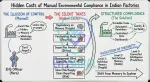
The Hidden Costs of Manual Environmental Compliance in India
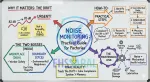
Noise Monitoring in Factories Workplace vs Boundary (India Guide) | EHSShala
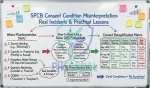
SPCB Consent Conditions: Common Compliance Mistakes Explained | EHSSaral
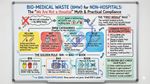
Bio-Medical Waste Management for Non-Hospitals (India) | EHSShala
Consent Conditions Explained: What Factories Must Actually Follow After Approval | EHSShala
Sampling Basics for Air, Water & Noise EHS Officer Guide | EHSShala