
Blog
Late Filing Penalty for Form 4 SPCB: What Happens If You Miss the 30 June Deadline?
EHSSaral is an Environmental Compliance Intelligence Platform for Industries. Consent Intelligence • Alerts & Tasks • Incident Reporting • Form IV & V • Audit-Ready Records
See how EHSSaral works
13 Aug 2026
Form IV may be filed annually, but its numbers are created throughout the year. Understand the silo, timing and visibility gaps that make hazardous waste returns difficult-and why continuous readiness matters.
Form IV is an annual return.
But the numbers reported in Form IV are not created annually.
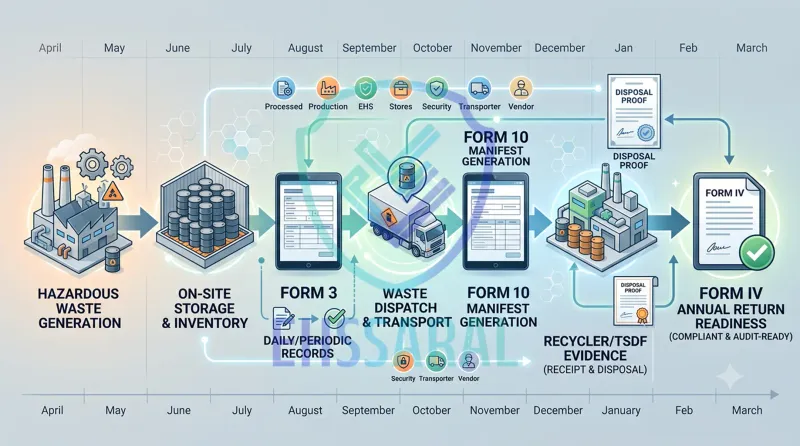
They are created throughout the year-when hazardous waste is generated, stored, weighed, dispatched, transported, received by an authorised facility and supported by the relevant records.
This is where confusion usually starts.
In many Indian plants-whether filing through MPCB, GPCB or another State Pollution Control Board-the Form IV process is still treated as an activity that begins only a few weeks before the submission deadline.
The EHS team starts collecting Form 3 records, Form 10 manifests, weighbridge slips, vendor acknowledgements, disposal certificates and storage details.
The documents may exist.
However, their existence does not automatically mean the Form IV return is ready.
The real question is whether those records are complete, consistent, traceable and logically connected with one another.
That is why Form IV readiness cannot begin at the end of the year.
EHSSaral’s Hazardous Waste Management System connects Form 3 records, Form 10 manifests, storage balances, TSDF/recycler evidence and Form IV preparation in one traceable workflow.
A Form IV hazardous waste return brings together several movements and balances recorded during the financial year.
These may include:
The annual return is therefore not an isolated document.
It is a summary of hundreds of operational events that took place across twelve months.
A quantity may first appear in a production, maintenance or ETP record.
It may then be entered into the hazardous waste register.
Later, the same quantity may appear on a weighbridge slip, Form 10 manifest, transporter record, recycler acknowledgement or TSDF certificate.
By the time Form IV is prepared, all these records are expected to tell a reasonably consistent story.
When they do not, the EHS team must reconstruct that story manually.
Read more about Hazardous Waste Management Software India - EHSSaral
Many plants maintain hazardous waste records sincerely.
The difficulty is often not the complete absence of documentation.
The difficulty is that records are maintained:
A plant may therefore have most of the required files and still struggle to prepare a reliable annual return.
For example, Form 3 may show one quantity, the transporter record may show another, the weighbridge slip may show a slightly different weight and the final disposal document may arrive several weeks later.
Each record may be valid in its own context.
The challenge is reconciling all of them into one annual quantity that can be explained later.
Over the years, environmental compliance teams associated with Perfect Pollucon Services have repeatedly seen the same pattern.
The plant often has most of the required records, but the figures become difficult to reconcile because the documents were created by different people, at different times and for different operational purposes.
The difficulty usually lies not in one missing form.
It lies in connecting the complete movement of hazardous waste across the year.
This is the difference between having records and having Form IV-ready records.
Read more about Ultimate MPCB Form IV Checklist for Maharashtra Industries
Hazardous waste data rarely sits with one person from beginning to end.
In day-to-day operations, different parts of the process may be handled by different teams.
These teams may know when waste was generated and from which process.
They may record ETP sludge generation, spent chemicals, process residue, discarded containers or used oil.
The EHS team may maintain Form 3 records, coordinate dispatches and review hazardous waste authorisation and consent conditions.
Stores may maintain drum counts, storage details and issue or receipt records.
The gate team may record vehicle entry, exit time, transporter details and dispatch documents.
Accounts may hold invoices, vendor information and payment-linked records.
External parties may provide manifests, weighment acknowledgements, receipt confirmations and final disposal or recycling evidence.
All these records contribute to the final annual return.
However, they are often maintained separately.
The EHS officer may know that the information exists somewhere, but still spend several days locating it, checking it and resolving differences.
When information is divided across departments and vendors, it also reaches the Form IV process at different times.
This is where the silo problem becomes a timing problem.
Read more Hazardous Waste Forms Under 2016 Rules: Form 1 to Form 12 Guide
Hazardous waste records are not created simultaneously.
The generation entry may be made on one date.
The waste may remain in storage for some time.
The dispatch may take place later.
The manifest may be completed at different stages of movement.
The final disposal or recycling evidence may arrive after another delay.
This timing gap creates practical difficulties.
Hazardous waste may be generated regularly but dispatched only after a sufficient quantity accumulates.
Generation records and disposal records therefore naturally cover different dates and quantities.
A recycler, TSDF or transporter may send acknowledgements and certificates after the physical movement is complete.
By that time, the EHS team may already have updated one set of records but not another.
In some plants, closing stock is not actively reviewed during the year.
It is derived at the time of annual filing using the basic balance:
Opening stock + generation − disposal = closing stock
Mathematically, the calculation appears simple.
Operationally, it becomes difficult when the underlying entries have not been reconciled periodically.
Hazardous waste may be recorded in:
When unit conversion is postponed until annual filing, small inconsistencies accumulate.
The problem is not necessarily one major error.
It is often several minor differences that become difficult to explain when reviewed together.
This is one of the least discussed weaknesses in annual environmental reporting.
Management usually sees the final Form IV return.
It may see the total quantity generated, dispatched and stored.
What management may not see is the effort required to make those numbers reliable.
The final return may hide:
From a management perspective, the return may appear complete.
From an EHS perspective, the process behind it may have involved several days of calls, follow-ups, spreadsheets and manual reconciliation.
This creates a visibility gap.
The issue becomes more serious when an experienced EHS officer changes roles or leaves the organisation during the year.
The company may retain the folders, spreadsheets and email attachments.
However, it may lose the practical understanding of:
The data remains with the company, but the logic behind the data may leave with the employee.
That is not merely an EHS inconvenience.
It is a process-continuity risk.
Read CPCB Hazardous waste and other waste management rules
A dependable Form IV process should not begin with a search for twelve months of records near the filing deadline.
It should begin much earlier, when the underlying hazardous waste activities are taking place.
Form IV should emerge from a process that is already being maintained.
The annual return should be the output of:
When Form IV becomes the starting point, the team must reconstruct the year.
When it becomes the output, the team mainly reviews and confirms what has already been maintained.
That is the practical shift companies need to consider.
Online MPCB FORM 10 Manifest application portal
A good Form IV process does not need to be complicated.
However, it should achieve a few basic outcomes consistently.
A quantity reported in Form IV should be explainable through the underlying records.
The purpose is not to create more paperwork.
The purpose is to ensure that the number can be followed back to its source.
The descriptions used in internal records, authorisation documents, manifests and annual returns should remain reasonably aligned.
Frequent changes in naming create confusion during reconciliation.
Waiting until year-end makes quantity differences harder to investigate.
Periodic review allows the team to identify gaps while the event is still recent.
A pending manifest, acknowledgement or certificate is easier to follow up when the dispatch is recent.
It becomes more difficult when the team is tracing several months of older movements.
Senior teams do not need to review every hazardous waste transaction.
However, they should have enough visibility to understand whether the annual return is supported by a stable process.
The knowledge should not remain only in one employee’s spreadsheet, inbox or memory.
A new EHS officer should be able to understand how the records connect without rebuilding the entire year.
An experienced EHS professional’s time is more valuable when spent investigating unusual quantities, category concerns and pending records.
It should not be consumed by repeatedly locating routine documents.
The cost of manual Form IV preparation is not limited to the time taken to fill the return.
The larger cost is the repeated effort required to rebuild confidence in the numbers.
EHS teams may need to contact production, stores, security, accounts and external vendors several times for missing information.
An experienced professional may spend hours copying figures, checking filenames, matching dates and converting units.
This work may be necessary, but it is not always the best use of senior technical time.
When the data is compiled late, plant heads and compliance teams receive less time to review unusual trends or inconsistencies.
A spreadsheet may work well when maintained by the person who created it.
The difficulty begins when another person has to understand its formulas, assumptions, colour codes and manually corrected entries.
Even when the final total is correct, confidence remains low if the team cannot quickly produce the supporting trail.
Year-end reconstruction does not improve the underlying process.
It only helps the organisation complete the current filing.
The following year, the same document chase begins again.
Read more Late Filing Penalty for Form 4 SPCB: What Happens If You Miss the 30 June Deadline?
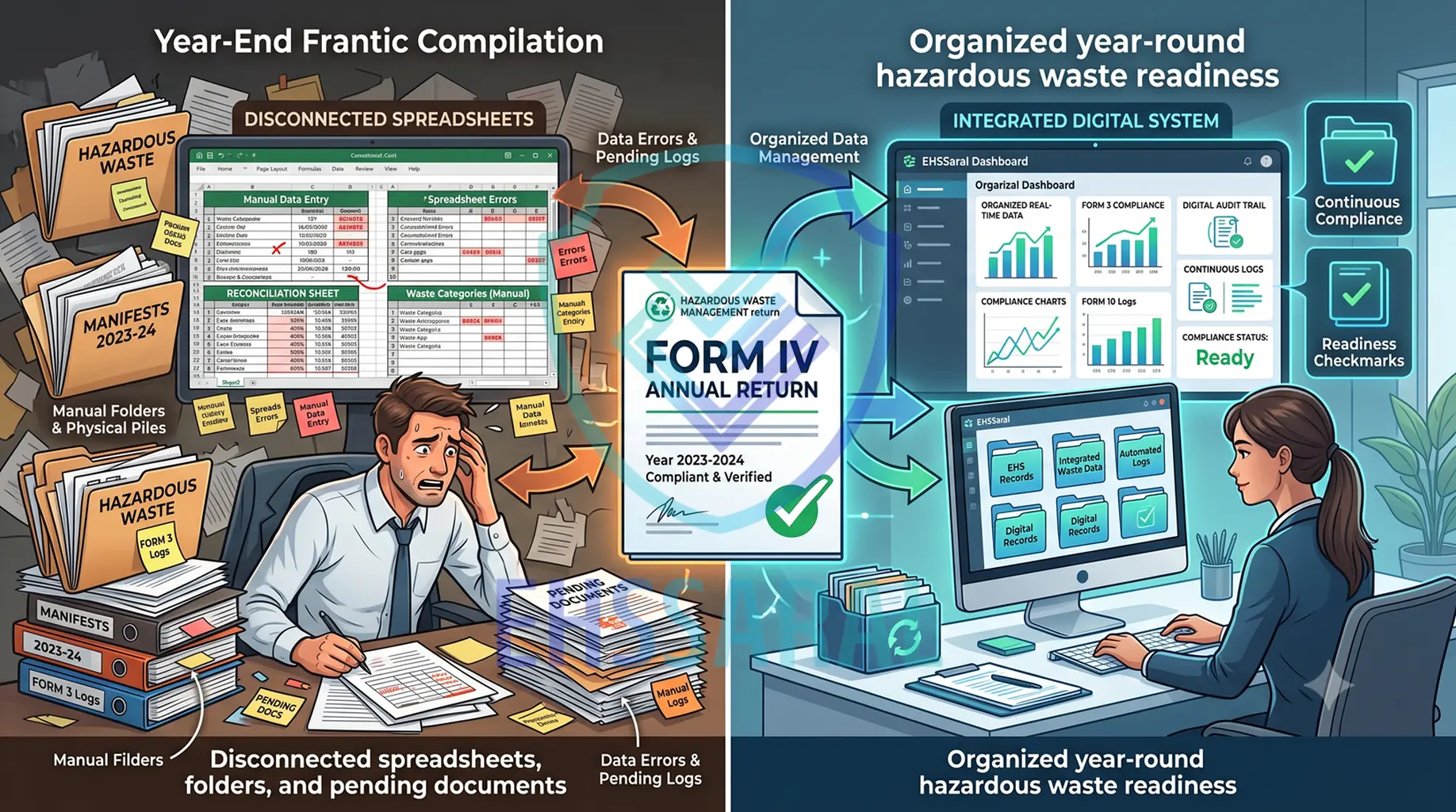
The required change is not simply from paper to software.
It is from deadline-based preparation to process-based readiness.
| Year-end approach | Continuous-readiness approach |
|---|---|
| Form IV work begins close to the filing deadline | Records remain review-ready through the year |
| Waste quantities are reconciled after several months | Quantity differences are reviewed periodically |
| Closing stock is calculated mainly for annual filing | Closing stock is checked during the year |
| Manifests and certificates are collected when urgently needed | Supporting evidence is followed up closer to the transaction |
| Departments maintain disconnected versions of the same activity | Relevant records are connected around the waste movement |
| Management sees only the submitted return | Management has visibility over underlying data quality |
| Process knowledge remains with one experienced employee | Records remain understandable during staff changes |
| Every year begins with another reconstruction exercise | Each year builds on maintained and traceable records |
This is not about removing human review.
Form IV still requires professional judgment.
The objective is to reduce the amount of time spent rebuilding basic information so that the EHS team can focus on the areas that genuinely require attention.
Digital tools can help when they support hazardous waste readiness throughout the year.
Companies should therefore avoid evaluating a system only on whether it can generate a Form IV format.
A form generator addresses the final presentation of the return.
It does not necessarily improve the quality, continuity or traceability of the records behind it.
EHSSaral is an India-focused environmental compliance automation platform designed to help industries maintain Form IV-ready hazardous waste records throughout the year.
EHSSaral combines technology and automation with practical environmental compliance knowledge informed by the long-standing field experience of Perfect Pollucon Services.
The purpose of automation is not to remove professional judgment.
It is to reduce repeated record chasing and manual reconstruction, so EHS teams can spend more time reviewing the matters that genuinely require their attention.
Before the next Form IV cycle begins, every plant should ask one question:
Is our Form IV process ready throughout the year, or does readiness begin only when the filing deadline approaches?
The answer usually reveals whether the organisation has a filing process or a hazardous waste management process.
Both may eventually produce a return.
Only one builds continuity, visibility and confidence over time.
EHSSaral is being developed around a simple practical idea:
Form IV should emerge from an organised and continuously maintained hazardous waste process-not from a last-minute reconstruction exercise.
Good compliance starts with understanding the process behind the paperwork.
Explore Form IV Automation with EHSSaral
Form IV is an annual return, but the information required for it is generated throughout the financial year. Waiting until filing time to organise the records can make reconciliation difficult.
The process commonly involves Form 3 records, Form 10 manifests, opening and closing stock, generation quantities, dispatch details, weighbridge records and disposal or recycling evidence.
Differences may arise because of delayed entries, unit conversions, dispatch timing, closing-stock calculations or inconsistent waste descriptions. The records should be reviewed together before annual filing.
Excel can support recordkeeping, particularly in smaller operations. The difficulty arises when several departments, waste categories, vendors and document versions need to be reconciled over the year.
A generator may prepare the final format, but it may not resolve incomplete records, quantity differences, missing evidence or year-round process gaps behind the return.
Industries can improve readiness by reviewing waste generation, dispatch, closing stock and supporting documents periodically rather than compiling everything near the annual deadline.
Form IV automation uses a structured digital process to help organise, review and maintain hazardous waste information required for annual reporting.
EHSSaral is an India-focused environmental compliance automation platform designed to help industries maintain Form IV-ready hazardous waste records throughout the year.
Harshal T Gajare is the founder of EHSSaral and Partner in Perfect Pollucon LLP, an India-focused environmental compliance automation platform. His work combines data, process design and automation with the practical environmental compliance experience of Perfect Pollucon LLP, which has supported Indian industries for over two decades.

Founder, EHSSaral
Founder - EHSSaral | Partner - Perfect Pollucon | ISO 14001 Lead Auditor | GHG Protocol Scope 2 | Chemist | Data Scientist | Second-generation environmental professional simplifying EHS compliance for Indian industries through practical, automated, tech-enabled, data driven compliance workflows.
Late Filing Penalty for Form 4 SPCB: What Happens If You Miss the 30 June Deadline?
Environmental Monitoring Calendar for Industries - Expert Guide by EHSSaral

Managing Safety Without Authority: Handling Protected Contractors in Indian Plants | EHSSaral
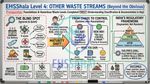
Other Waste Streams in Indian Factories | Battery, E-Waste, Plastic & More | EHSShala

Consent Conditions Explained: What Factories Must Actually Follow After Approval | EHSShala
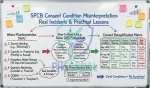
SPCB Consent Conditions: Common Compliance Mistakes Explained | EHSSaral
 List, Rules & Compliance Guide ehssaral.webp)
Orange Category Industries in India (2026): List, Rules & Compliance Guide
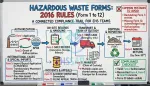
Hazardous Waste All Forms Form 1 to Form 12 Guide
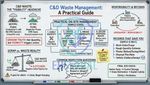
Construction & Demolition Waste Management in India Guide | EHSSaral
150 Essential EHS Terms Explained Simply | EHSShala