
Blog
Is Your Factory Heat-Ready? 5 New Compliance Realities for the 2026 Indian Summer
EHSSaral is an Environmental Compliance Intelligence Platform for Industries. Consent Intelligence • Alerts & Tasks • Incident Reporting • Form IV & V • Audit-Ready Records
See how EHSSaral works
20 Jan 2026
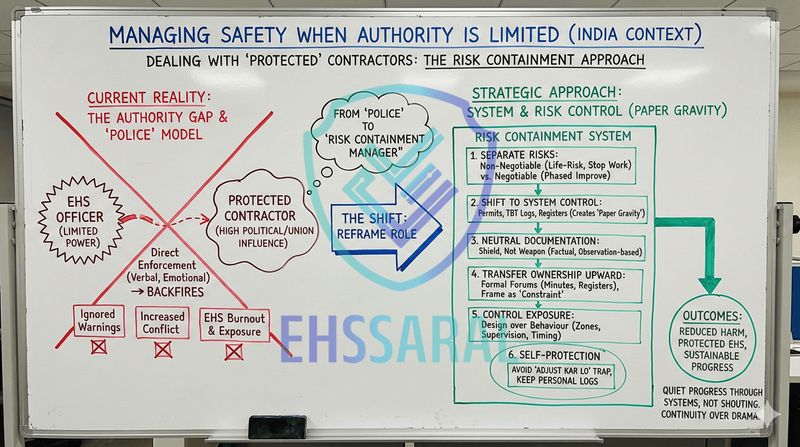
In many Indian plants, safety problems do not come from a lack of rules.
They come from unequal power.
Every EHS professional eventually encounters a contractor who cannot be treated like others. Not because their work is better, but because their position is protected - by long-standing relationships, local influence, union backing, or operational dependency.
This article exists because most safety literature pretends this reality does not exist.
In day-to-day operations, EHS officers are told:
But no one explains what to do when:
This gap creates silent stress.
“Manage safety - but don’t create problems.”
The goal here is not confrontation.
The goal is risk control, personal protection, and long-term improvement - within real Indian constraints.
Strategic patience is not acceptance.
Every system improvement creates space for the next one.
Why good professionals still struggle with compliance
This article is written for:
This article is not for:
EHSSaral’s philosophy is simple:
Continuity over drama.
Systems over shouting.
In many Indian industrial belts, some contractors become operationally untouchable.
Common reasons include:
Over time, safety enforcement around such contractors becomes uneven.
This is not always due to bad intent.
Often, it is due to fear of disruption.
The unspoken expectation placed on EHS is:
“Manage safety - but don’t disturb operations.”
This is where confusion usually starts.
Why safety culture breaks down in Indian SMEs
Textbook enforcement assumes authority.
Reality often does not.
When authority is limited:
The result is predictable:
Enforcement without authority creates exposure.
This does not mean giving up on safety.
It means changing how safety is applied.
Why Most Environmental Non-Compliance Is a System Failure, Not Intent by EHSSaral
Verbal safety control collapses first because it is:
More importantly, it places all risk on the EHS officer.
Later, when something goes wrong, the question is never:
“What system failed?”
It is always:
“Did you tell them?”
Systems distribute risk.
Verbal authority concentrates it.
International guidance on contractor safety management
When removal is not possible, the EHS role must evolve.
Not into silence.
Not into compromise.
But into risk containment.
A risk containment manager focuses on:
Safety is improved through systems, not personalities.
This shift matters psychologically.
Many EHS officers feel guilt because they cannot “fix everything.”
Experienced professionals understand something different:
You are not failing if you are containing risk.
Why compliance alone does not improve safety
You may not control:
But you do control:
This is not surrender.
This is professional maturity.
Not all violations are equal.
One of the most dangerous mistakes in contractor-heavy plants is treating every issue the same way - especially when authority is limited.
Good EHS judgment is about priority, not emotion.
These require immediate intervention, regardless of contractor status:
These are not compliance risks.
They are fatality risks.
Indian occupational safety framework
These allow controlled, phased improvement without escalation:
The mistake is not tolerating these risks.
The mistake is escalating them like life-threatening ones.
When everything is treated as an emergency, nothing is.
This is the question most EHS officers ask silently.
When a life-risk is created by a protected contractor, the instinct is to either:
Both are dangerous.
The correct response is system-driven stop-work, not personal enforcement.
Stop-work must be:
For example:
Stop-work is a process decision, not a confrontation.
This keeps safety intact without triggering politics.
When authority is limited, verbal safety control fails first.
Instructions like:
feel active, but leave no trace.
Later, when something goes wrong:
This is where experienced professionals stop relying on voice and start relying on systems.
Verbal control fails because it is:
More importantly, it concentrates all risk on the EHS officer.
Systems distribute risk.
System control does not require power.
It requires consistency.
Quiet tools that work:
None of these threaten anyone.
But together, they create paper gravity.
Paper gravity works because:
Contractors may ignore advice.
They rarely ignore records.
This is not bureaucracy.
This is self-protection.
documentation as protection rather than punishment
This distinction protects careers.
Many EHS officers unintentionally hurt themselves by documenting aggressively.
This escalates politics.
It does not improve safety.
Good documentation is:
Example of unsafe phrasing:
“Management is ignoring unsafe practices by Contractor X.”
Example of safer phrasing:
“During routine inspection, work at height was observed without fall protection in Contractor X work zone. Immediate control applied by suspending permit.
Mitigation options:
(a) Install lifeline and anchor points
(b) Use mobile scaffold
Decision required before resumption.”
Notice the difference:
Documentation should protect you, not provoke others.
When authority is limited, ownership must move upward.
But how it moves matters.
Direct accusations backfire.
Neutral framing survives.
Junior officers often write:
“Management has accepted this risk.”
This sentence may be true - but it is dangerous.
In Indian hierarchies, it sounds like:
Tone matters as much as content.
Instead of framing risk as negligence, frame it as constraint.
For example:
“Operational constraint noted: immediate shutdown for correction is currently not feasible due to production schedule. Interim administrative controls (barricading, supervision, permit restriction) applied until next planned maintenance window.”
This:
This is governance - not escalation.
Risk ownership should move through:
Not through:
Formal forums create shared memory.
Reducing surprise failures through systems
One of the hardest truths in Indian EHS work is this:
You may not change behaviour immediately.
But you can still reduce harm.
Waiting for behaviour to improve before acting increases exposure.
Experienced professionals work the other way around - they control exposure first.
These measures do not require confrontation or authority.
They require planning.
You may not control who works.
But you can control how, where, and when work happens.
This approach quietly saves lives.
Warnings rely on behaviour change.
Exposure control relies on design.
Design does not argue.
Design does not forget.
Design does not escalate.
This is why mature safety systems focus more on controls than instructions.
Every safety situation can be evaluated using two questions:
When risk is high and authority is low, the correct response is:
This article exists for exactly this quadrant.
This is the moment most EHS officers fear the most.
When an incident involves a protected contractor:
Your response in the first 24 hours matters more than any report later.
The goal is not defence.
The goal is clarity.
What to do immediately:
What to avoid:
Facts create protection.
Explanations create exposure.
Avoid language like:
Use language like:
Example of unsafe phrasing:
“Contractor ignored safety rules despite multiple warnings.”
Example of safer phrasing:
“At the time of incident, work was observed without fall protection. Permit conditions required fall-arrest system. Deviation noted.”
One sounds accusatory.
The other is factual and defensible.
When power dynamics exist, facts are your only neutral ally.
People may debate intent.
People may debate authority.
People rarely debate timestamps and records.
This is not about escaping responsibility.
It is about ensuring responsibility is shared accurately.
This section is uncomfortable - but necessary.
Many capable EHS professionals burn out not because of workload, but because of moral stress.
They know what is unsafe.
They know what should change.
They also know what they cannot change immediately.
Holding all three truths at once is exhausting.
Acknowledging this is not weakness.
It is realism.
These signals often appear before serious incidents:
That last one is critical.
Small adjustments become new standards.
Temporary compromises become permanent erosion.
Experienced professionals quietly build these habits:
This is not fear-driven behaviour.
It is professional discipline.
You do not need to fight power to reduce risk.
Often, your strongest allies are:
These teams also suffer from unsafe contractors - just differently.
When safety is framed as operational stability, not compliance pressure, resistance reduces.
You cannot change every contractor.
You cannot fix every power imbalance.
But you can build systems that:
You may not change everything.
But you can build systems that make the next EHS officer’s job safer.
That is not passive work.
That is legacy work.
Long-term EHS career sustainability
It is not telling you to:
EHSSaral does not believe in martyrdom.
Good EHS work is steady, visible, and boring - in the best way.
In Indian plants, authority is uneven.
That does not mean safety must be.
When power is limited:
Impact is not measured by how many people you confronted.
It is measured by how many risks were reduced quietly.
That, in many factories, is real progress.

Founder, EHSSaral
Founder - EHSSaral | Partner - Perfect Pollucon | ISO 14001 Lead Auditor | GHG Protocol Scope 2 | Chemist | Data Scientist | Second-generation environmental professional simplifying EHS compliance for Indian industries through practical, automated, tech-enabled, data driven compliance workflows.
Is Your Factory Heat-Ready? 5 New Compliance Realities for the 2026 Indian Summer
Environmental Inspection India: What Inspectors Check | EHSSaral
Environmental Monitoring Guide for Indian Factories | EHSShala
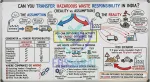
Can You Transfer Hazardous Waste Responsibility in India? (What the Law Says)
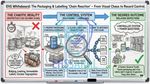
Hazardous Waste Packaging & Labelling in India (Inspector Guide) | EHSShala
 Guide for Indian Factories EHSShala by EHSSaral.webp)
Ambient Air Quality Monitoring (AAQM) Guide for Indian Factories | EHSShala
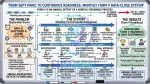
Form V Data Collection: Monthly System for Factories
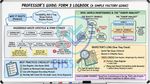
Form 3 Logbook Explained: Simple Guide for Indian Factories | EHSShala
Consent to Establish (CTE) Explained: Process, Documents, Rules & Common Mistakes | EHSShala
Environmental Monitoring Guide for Indian Factories: Air, Water & Noise | EHSShala